Radio Waves Carry News of Climate Change

Colin price
The ionosphere, one of the regions of the upper atmosphere, plays an important role in global communications. Ionized by solar radiation, this electricity-rich region is used for the transmission of long wave communications, such as radio waves. Now Prof. Colin Price of Tel Aviv University (he discovered the link between lightning and climate change) has found that the radio waves reflecting back to Earth from the ionosphere offer valuable news on climate change as well.

The new research shows that the strength of radio signals on the ground is a reliable indicator of temperature change above. Price and his team used simple radio antennae on the ground to measure radio waves broadcast by navigational transmitters around the globe, then compared information on the strength of these radio signals with data on temperature fluctuations in the upper atmosphere. They discovered that climate change in the upper atmosphere — caused by an abundance of greenhouse gases — may lead to a greater absorption of radio waves. Weaker signals could therefore be indicative of greater climate change.

Detailed in the Journal of Geophysical Research, this simple, cost-effective measurement can be a valuable contribution to the ongoing effort to track climate change, says Prof. Price, adding to measurements of ground and lower atmospheric temperatures to create a more holistic picture.

On the Earth’s surface and in the lower atmosphere, an increase of greenhouse gases has a warming effect, the gases acting as a “blanket” and keeping heat from escaping from the Earth into space. But these gases, including carbon dioxide, are increasing in the upper atmosphere as well, where they have a cooling effect.

When cooled, the ionosphere contracts and descends into the atmosphere to where air is denser — leading to a higher absorption of radio waves, Price explains. By examining satellite-gathered data on the temperature in the upper atmosphere and comparing results to measurements of radio wave amplitudes collected on the ground, the researchers were able to uncover a clear correlation, consistent over time. As the upper atmosphere gets colder, radio signals lose their strength.

While the sun is certainly the driving force behind changes in temperature in this region, it accounts for only 60 to 70 percent of temperature variations, says Prof. Price. The remaining variability could not be systematically measured until now. By adding measurements of radio waves taken on the ground to solar radiation estimates, researchers can now explain approximately 95 percent of temperature changes in the upper atmosphere.

According to Price, this new technique will be a valuable addition to current methods of monitoring climate change, such as the measurement of ground temperatures. Without the need for expensive equipment like satellites, monitoring the upper atmosphere can be done inexpensively and continuously. And because temperatures in the upper atmosphere fluctuate more dramatically than those on the ground — for every one degree of warming in the lower atmosphere, there is a corresponding ten degree cooling in the upper atmosphere — changes are far easier to monitor.

Using this system might reveal more about the ionosphere than ever before. The region is notoriously difficult to monitor; there are no weather balloons or airplanes that can go high enough, and it is too low for orbiting satellites. But with this method, it could be possible to study long and short term changes in the ionosphere, such as the impact of solar storms or thunderstorms on the upper atmosphere.

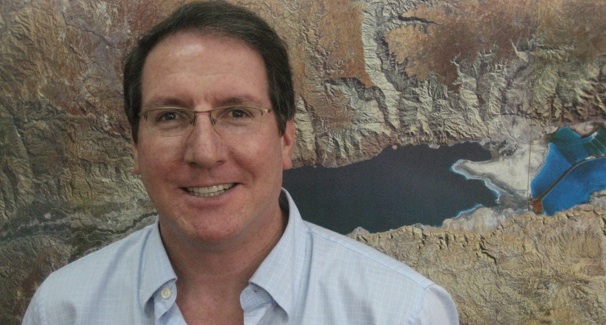
Image above of Colin Price

Karin Kloosterman
Karin Kloostermanhttp://www.greenprophet.com
Karin Kloosterman is an award-winning journalist, innovation strategist, and founder of Green Prophet, one of the Middle East’s pioneering sustainability platforms. She has ranked in the Top 10 of Verizon innovation competitions, participated in NASA-linked challenges, and spoken worldwide on climate, food security, and future resilience. With an IoT technology patent, features in Canada’s National Post, and leadership inside teams building next-generation agricultural and planetary systems — including Mars-farming concepts — Karin operates at the intersection of storytelling, science, and systems change. She doesn’t report on the future – she helps design it. Reach out directly to [email protected]
1 COMMENT
  1. They study the details but ignore the implications of approaching ecocide from humanity’s growing mass of pollution. That’s because they represent corporations that believe they can grow the economy forever without consequences. But in fact the biosphere is in crisis and slipping toward collapse.

LEAVE A REPLY

Please enter your comment!
Please enter your name here

TRENDING

Huge Fish Nursery Discovered Under Freezing Arctic Seas

In 2019, an underwater robot camera exploring the seabed...

Remilk makes cloned milk so cows don’t need to suffer and it’s hormone-free

This week, Israel’s precision-fermentation milk from Remilk is finally appearing on supermarket shelves. Staff members have been posting photos in Hebrew, smiling, tasting, and clearly enjoying the moment — not because it’s science fiction, but because it tastes like the real thing.

The US leaves 66 United Nations organizations to “put America first”

The world needs a reset and to restart well intentioned cooperation projects from start. Because right now the UN and EU projects look like software built on code from the 80s, rickety, patched, slow to adapt, and prone to crashing under the weight of outdated assumptions.

Turkey named as climate change COP31 home in 2026

Murat Kurum as President-Designate of COP31

Ancient air trapped in Canadian salt bubbles foretells climate future

Opening these samples is like cracking open air that existed long before dinosaurs, before forests, before animals of any kind. As lead researcher Justin Park put it: “It’s an incredible feeling to crack open a sample of air that’s a billion years older than the dinosaurs.”

Qatar’s climate hypocrisy rides the London Underground

Qatar remains a master of doublethink—burning gas by the megaton while selling “sustainability” to a world desperate for clean air. Wake up from your slumber people.

How Quality of Hire Shapes Modern Recruitment

A 2024 survey by Deloitte found that 76% of talent leaders now consider long-term retention and workforce contribution among their most important hiring success metrics—far surpassing time-to-fill or cost-per-hire. As the expectations for new hires deepen, companies must also confront the inherent challenges in redefining and accurately measuring hiring quality.

8 Team-Building Exercises to Start the Week Off 

Team building to change the world! The best renewable energy companies are ones that function.

Thank you, LinkedIn — and what your Jobs on the Rise report means for sustainable careers

While “green jobs” aren’t always labeled as such, many of the fastest-growing roles are directly enabling the energy transition, climate resilience, and lower-carbon systems: Number one on their list is Artificial Intelligence engineers. But what does that mean? Vibe coding Claude? 

Somali pirates steal oil tankers

The pirates often stage their heists out of Somalia, a lawless country, with a weak central government that is grappling with a violent Islamist insurgency. Using speedboats that swarm the targets, the machine-gun-toting pirates take control of merchant ships and then hold the vessels, crew and cargo for ransom.

Leopoldo Alejandro Betancourt López Turned Ocean Plastic Into Profitable Sunglasses

Few fashion accessories carry the environmental burden of sunglasses. Most frames are constructed from petroleum-based plastics and acrylic polymers that linger in landfills for centuries, shedding microplastics into soil and waterways long after they've been discarded. Leopoldo Alejandro Betancourt López, president of the Spanish eyewear brand Hawkers, saw this problem differently than most industry executives.

Why Dr. Tony Jacob Sees Texas Business Egos as Warning Signs

Everything's bigger in Texas. Except business egos.  Dr. Tony Jacob figured...

Israel and America Sign Renewable Energy Cooperation Deal

Other announcements made at the conference include the Timna Renewable Energy Park, which will be a center for R&D, and the AORA Solar Thermal Module at Kibbutz Samar, the world's first commercial hybrid solar gas-turbine power plant that is already nearing completion. Solel Solar Systems announced it was beginning construction of a 50 MW solar field in Lebrija, Spain, and Brightsource Energy made a pre-conference announcement that it had inked the world's largest solar deal to date with Southern California Edison (SCE).

Related Articles

Popular Categories