2013 Aga Khan Architecture Awards Betters Muslim Communities in Iran, Morocco and Lebanon

Maria Grazia Cutuli Primary School, Herat, Afghanistan

The nominees for the 2013 Aga Khan Award for Architecture were recently announced: 20 candidates – half hailing from the Middle East – all vying for a million dollar prize. The award is given triennially to projects that set new standards of excellence in architecture, planning, historic preservation and landscape architecture, particularly those placed in locales with high Muslim populations.

Chosen projects exhibit subjectively determined “architectural excellence“, and must tangibly improve local quality of life. Special attention is given to designs that use regional resources and to projects likely to inspire similar efforts in other locations.

Check out the map of this year’s projects:

[googlemaps https://maps.google.com/maps/ms?msa=0&msid=215163320814695362539.0004dbbe3c6f2ce974e6a&ie=UTF8&t=m&source=embed&ll=30.145127,53.085938&spn=124.767668,215.859375&output=embed&w=425&h=350]

Ten of the nominees are planted in the Middle East, and while traditions of Islamic form and function persist, styles of this year’s finalists are all over the drawing board.

Sleek apartments in Iran; a medley of schools in Damascus, Herat and Kigali; a Moroccan bridge and a reconstructed refugee camp in Lebanon all won a nod from a judging panel of architects and scholars.

The “class of 2013” blows fresh air in the Euro-centric world of modern design.  There’s not a single world-record-grabber, and a blessed scarcity of steel and glass curtainwall.

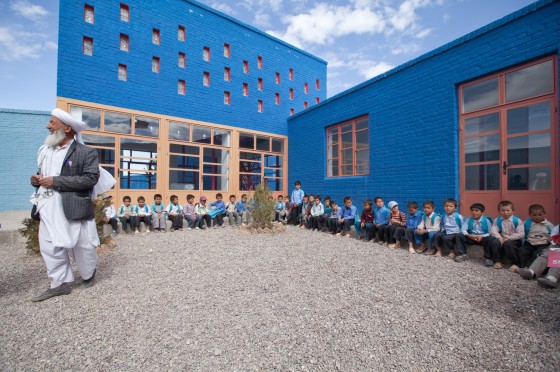
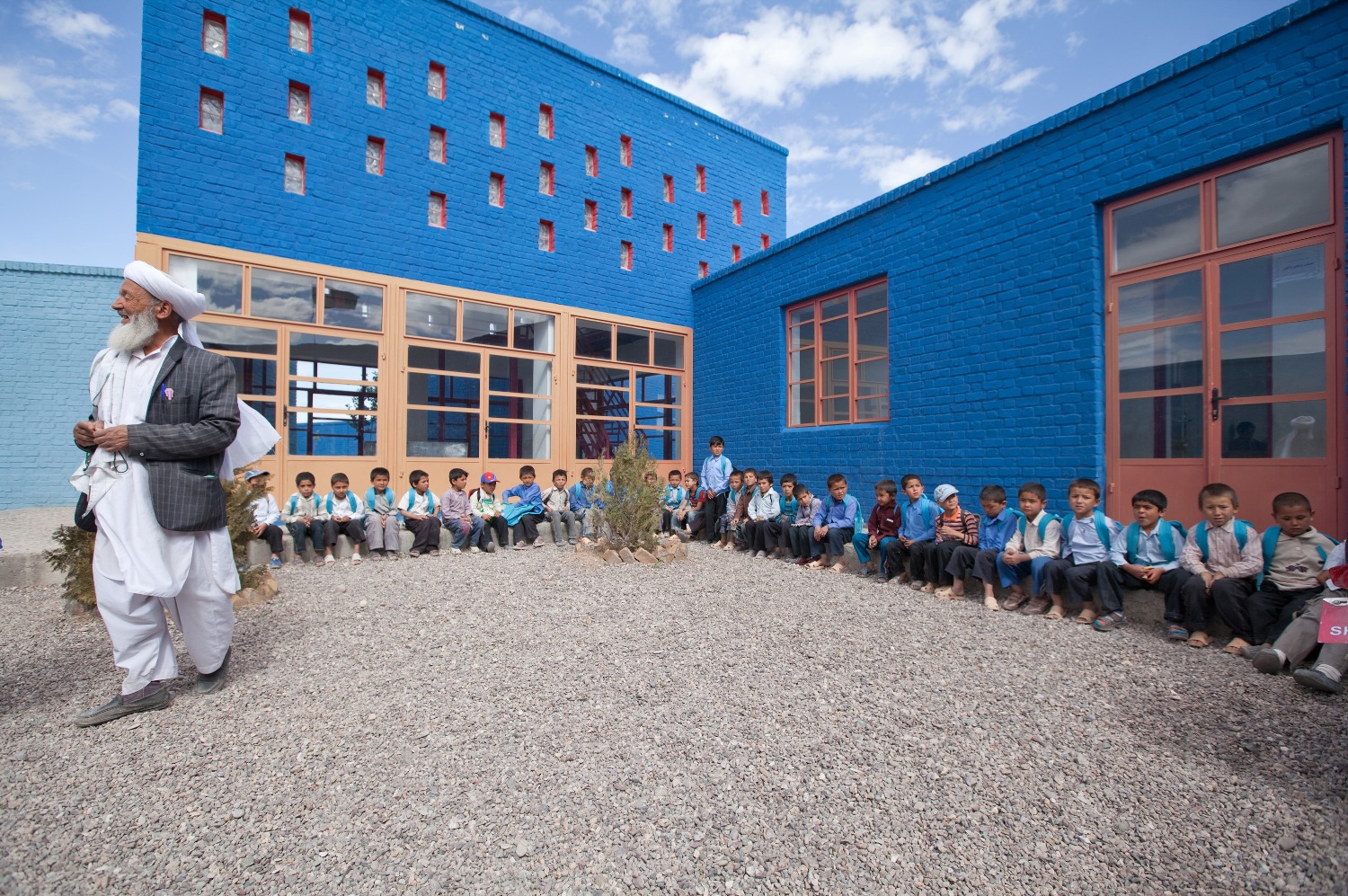
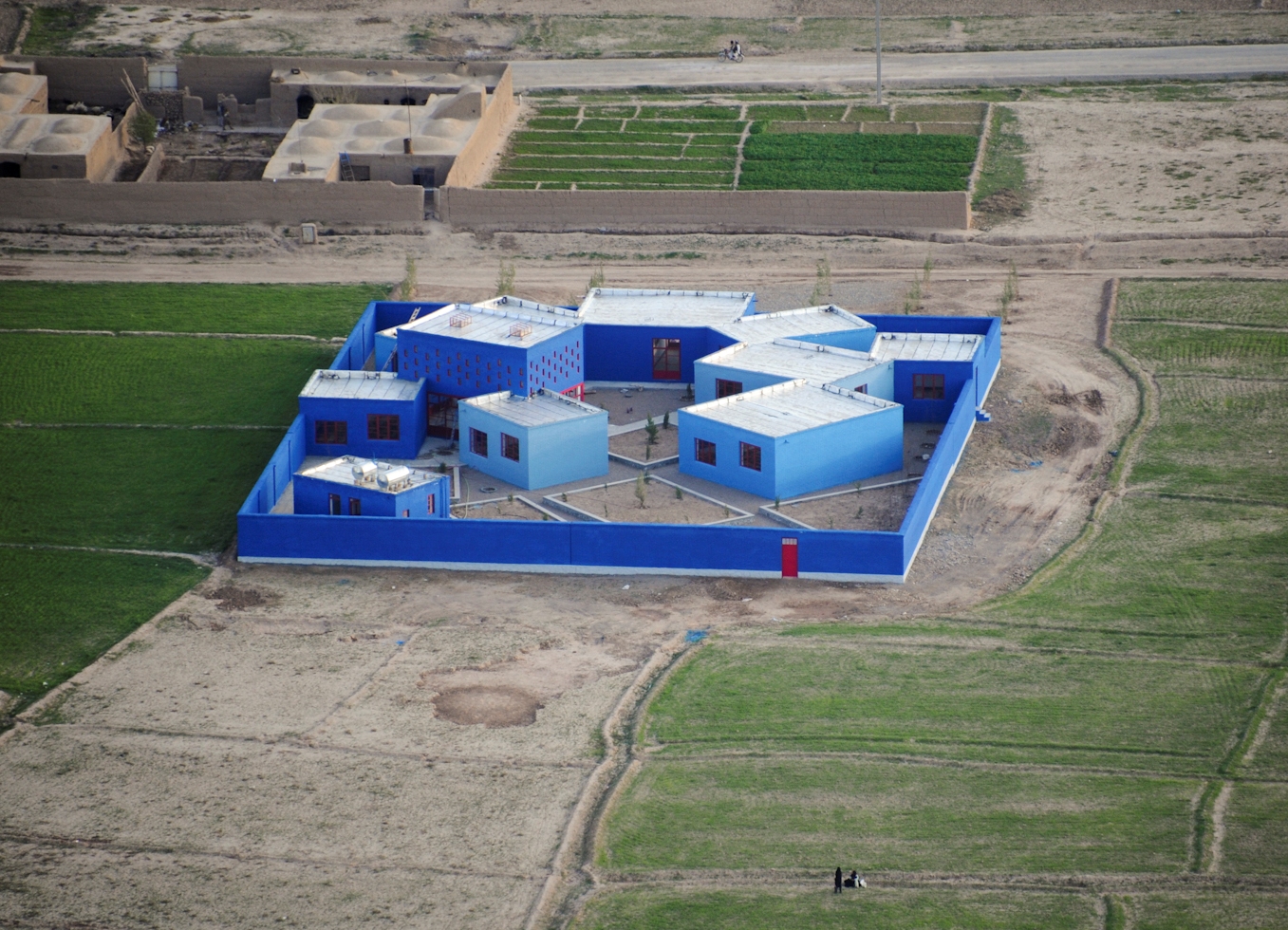
Take, as example, a primary school in Herat, Afghanistan (images above and below). Built in honor of Italian journalist Maria Grazia Cutuli, who was murdered in Afghanistan in 2001, this school represents an alternative approach to school design in areas devastated by war.
 Herat School Aga Khan Nominee

The layout was inspired by the organic form of local villages: an assortment of independent elements enclosed by a boundary wall. It contains 8 classrooms, staff accommodation, a double-height library and a garden which serves as an open-air classroom.

The reinforced concrete structures are clad in local brick, and painted (instead of plastered) to save costs. The walls wear a vibrant range of three blue tones, reflecting traditional Afghan lapis lazuli, the pigment used on local pottery. The soaring library is the only aspect of the compound visible above its perimeter wall, and it’s open to all villagers as both a means of counterbalancing Taliban destruction of Afghan’s larger libraries and inciting local support for the school.

Since the Award began in 1977, over 100 projects have been recognized from a roster of nearly 8,000 contenders.

Projects are undergoing technically review by a select group of architects, urban planners and engineers and a Master Jury will select up to six finalists to be announced at a ceremony in Lisbon next September.

Stay tuned for more coverage of these sensitive and sensational projects. See architecture dismounted from its high horse. This is good stuff.

Image of Maria Grazia Cutuli Primary School  from Aga Khan Development Network

3 COMMENTS
  1. I like this ideia, format diferent in construction.
    And for students Childrens is fantastic.
    Beautifull project blue and white.
    Have my OK.

Comments are closed.

TRENDING

Emergency housing and refugee shelters made from mud

Rather than treating displacement as a temporary emergency, this project is reframed as a human condition requiring stability, community, and dignity. By combining vernacular wisdom with adaptable modular planning, the project offers a model for refugee housing that is scalable, low-carbon, and deeply respectful of local identity. For Somalia’s displaced families, a mud-brick home may be the most modern solution of all.

Sustainable Architect Ronak Roshan on the Politics Behind the Houston Ismaili Center

Roshan’s reflection situates the Houston Ismaili Center within a broader discussion about architecture as diplomacy — where aesthetics, faith, and geopolitics intersect. Her words challenge readers to question whether “green” design and grand symbolism can coexist without transparency and accountability.

Ancient mud buildings in the Muslim world are spectacular and sustainable

Other notable mud structures in the wider Muslim world include the Bob Dioulasso Grand Mosque in Burkina Faso, and the Khiva Wall in Uzbekistan, which is built around a collection of Islamic schools and mosques. The Siwa Oasis in Egypt (which we visited and posted about here) and the Eastern Castle in Syria have also employed mud bricks in their construction, and research shows that the famous walls of Jericho were built using sun-dried mud bricks.

A Sustainable Path to Rebuilding Gaza: Opportunity for Collaboration and Peace

Given the likelihood of a buffer zone along Gaza’s border, an innovative approach could be to transform this space into a greenbelt. Many cities worldwide have successfully implemented green zones that serve as ecological buffers while also benefiting urban populations. A well-planned greenbelt could provide environmental benefits, support agriculture, and even serve as a shared space between Gazans and Israelis—turning a divisive border into an area of mutual sustainability.

Do you have the greenest city? Apply for this global award

Cities around the world are encouraged to enter their greening initiatives to showcase their achievement and commitment to nature-orientated solutions to address major challenges facing urban environments.

Should You Invest in the Private Market?

startustartup Unlike public stock exchanges, which offer daily trading, strict...

How to build a 100-year-company

Kongō Gumi is a Japanese construction company, purportedly founded in 578 A.D., making it the world's oldest documented company. What can we learn about building sustainable businesses from them?

From Pilot Plant to Global Stage: How Aduro Clean Technologies’ 2026 Expansion Signals a Turning Point for Chemical Recycling Investors Like Yazan Al Homsi

The company's Next Generation Process (NGP) Pilot Plant in London, Ontario, has officially moved into initial operating campaigns, generating the kind of structured, repeatable data that separates laboratory promise from commercial viability.

How AI Helps SaaS Companies Reduce Repetitive Customer Support Work

SaaS products are designed for large numbers of users with different levels of experience, and also in renewable energy.

Pulling Water from the Air

Faced with water shortage in Amman, Laurie digs up...

Turning Your Energy Consultancy into an LLC: 4 Legal Steps for Founders in Texas

If you are starting a renewable energy business in Texas, learn how to start an LLC by the books.

Tracking the Impacts of a Hydroelectric Dam Along the Tigris River

For the next two months, I'll be taking a break from my usual Green Prophet posts to report on a transnational environmental issue: the Ilısu Dam currently under construction in Turkey, and the ways it will transform life along the Tigris River.

6 Payment Processors With the Fastest Onboarding for SMBs

Get your SMB up and running fast with these 6 payment processors. Compare the quickest onboarding options to start accepting customer payments without delay.

Related Articles

Popular Categories