

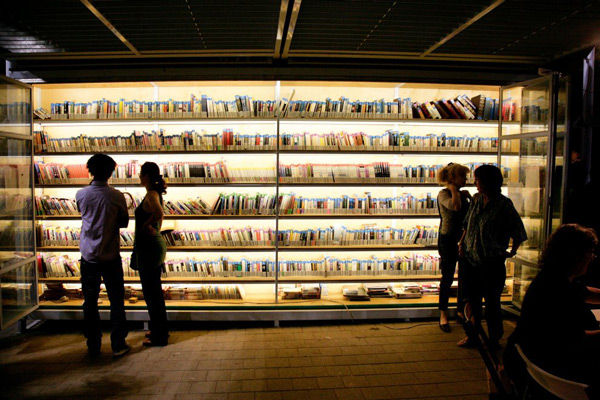
Pity the paper book. Libraries everywhere are closing due to lack of funding and tepid public support, and e-readers are luring people away from bookstores. Big-box bookstores tried, but they couldn’t replicate town libraries: vital public spaces where inter-generational interaction can freely occur between all economic strata.
There are occasional glimmers of change. Last October, in north London, an alliance of retired booksellers, local bloggers and international anti-capitalist activists blocked attempts to close the Friern Barnet library. The vibrant community library was to be closed, part of the global shrinking of local public services, but a volunteer crew of guerrilla librarians rallied to keep it open. Shelves were restocked with over 5,ooo donated books, and utilities were paid for by donations dropped into a biscuit tin.
In Rotterdam, residents took action after the city announced closure of 19 (of 25) local libraries last year. They held community meetings to solicit ideas as to what an ideal public reading space would look like and incite support towards making it happen. Those meetings also started building community momentum that could make the idea real: resulting in conversion of an empty hammam into a wi-fi equipped public space in which to read newspapers, use computers, or tuck into one of its 1500 books over a cup of coffee.
Of course there are the large endowments that allow for fantastic library development such as Alexandria’s gorgeous green facility, but these smaller libraries are the sustainability “bestsellers”.

Reading is fundamental: it’s about the content of the books and not the form of the library.
In the world before e-readers, mass transit users like me ploughed through mountains of hardcovers in our daily commutes. I’ve joined (or started) free libraries in every office I’ve worked in. That “take a book, leave a book” system (as seen in Israel’s bus-stop pop-up libraries) paired me with some stinkers, but more often led to unusual and atypical reading experiences, which, in turn, made for more interesting water cooler chat.
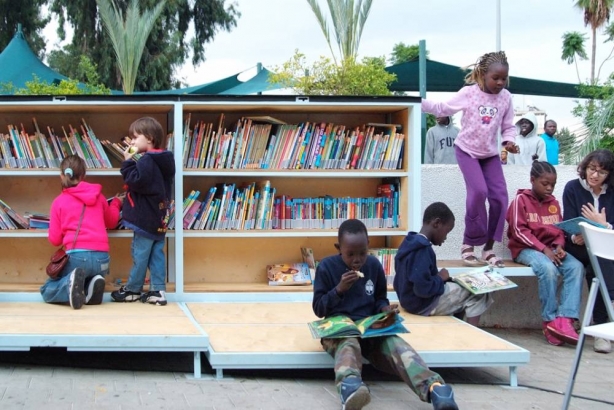
A few years back in Tel Aviv, a more ambitious version of that simple office set-up was built. The Levinsky Garden Library serves not office workers but transitory migrant workers, in a south Tel Aviv neighborhood within a popular city park where immigrants naturally congregate. It’s actually two libraries: one for adults and another for children. A nominal fee gets you into a membership program that allows short-term book loans, but – as with trad libraries – anyone can pluck a book off the shelves and read it on the premises.
The greenest building is the one that’s never built.
The product of Tel Aviv art collective Arteam, it’s a project that could be copied in most Mid East communities where weather allows for near year-round use of public spaces, and simple containerized storage of books can be inexpensively achieved.
This particular project was established to serve Israel’s transitory migrant workers. Its main thrust is to increase community reading, but it’s execution is inherently “green”: this project largely depends on natural daylighting, requires no mechanically treated air, and offers abundant opportunity to repurpose and recycle building materials. That it contributes to enhanced use of existing public space makes it super-sustainable too.
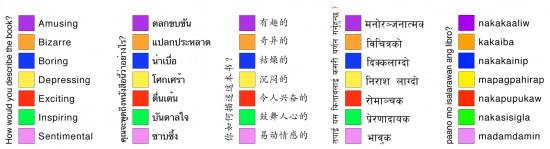
To better communicate with its diverse users, the library developed a brilliant multilingual cataloging system based on reader reviews of emotional content: books are democratically classified as sad, happy, or inspiring. (No room for Oprah recommendations here).
Check out this short clip above that describes the Garden Library’s offshoot activities (theater productions, special readings) – it’s worth the investment of 3 minutes if only to hear the cute voice-over guy repeatedly say “liberry”. Then turn off your computer and go outside and read.



Because I can so much better educate and express myself on the InterNet, I stopped reading books and keep only a few that are land marks in my enlightenment.