

Arab Spring Countries Face Increased Risk of Food Price Shocks in 2013

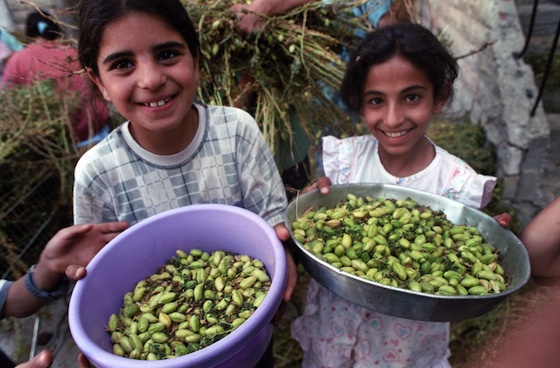
arab girls holding basket of foodAccording to the latest findings by global risk-analyser Maplecroft, Arab Spring countries are at greater risk of rising food prices in the coming year

It’s no secret that the high price of basic food staples were a contributing factor to the revolts which began in Tunisia and Egypt and sparked the ‘Arab Spring’. The protesters took to the streets waving bread and asking for equality and an end to corruption. Today, however, it seems little has changed since those protests in terms of the cost of food. According to the latest food price forecasts for 2013 by global risk-analyser Maplecroft, food prices are actually likely to rise again in the region. What’s more: countries involved in the protests around the Arab world are particularly at risk of rising food price shocks.

“The drivers of the ‘Arab Awakening’ were varied and complex and included long standing public anger at high levels of governmental corruption and oppressive tactics against populations and political opposition,” states Maplecroft CEO Alyson Warhurst. “When these factors combine with food insecurity, sparked by rising global prices, it can create an environment for social unrest and regime change.”

Back in 2007/8, a global food crisis resulted in several food riots across the region including places such as Yemen and Egypt. This year, the tenuous nature of global food security was back on the agenda due to the USA’s worst drought in 50 years and a 10% drop in production across countries from the former Soviet Union. These low crop yields have lead to to a global food price rise of 6% in July 2012. A report by Rabobank, a financial specialist in agro-commodities, estimates that price of food staples could rise by as much as 15% by June 2013, resulting in record high food prices.

“Food price forecasts for 2013 provide a worrying picture,” states Maplecroft’s Head of Maps and Indices Helen Hodge. “Although a food crisis has not emerged yet, there is potential for food related upheaval across the most vulnerable regions, including sub-Saharan Africa.” In the Middle East and North Africa region, the countries at greatest risk include Yemen, Syria and Libya (who along with Iraq are classified as ‘high risk’). Those defined as at ‘medium risk’ of food price hikes include Egypt and Tunisia.

Maplecroft explains that the region remains at elevated risk of food price fluctuations due to its heavy reliance on US and Russians crops. Whilst they are so dependent on cereal imports they wil remain vulnerable to market prices.

The Food Security Risk Index has been developed for governments, NGOs and business to help identify those countries which may be susceptible to famine and societal unrest stemming from food price fluctuations. Maplecroft reaches its results by evaluating the availability, access and stability of food supplies in 197 countries, as well as the nutritional and health status of populations, the organization states.

For more on food prices across MENA see:

Rising Food Prices Behind Riots in Algeria and Tunisia

Arab Protests Affect World Food Prices

How Climate Change Contributed to the Syrian Uprising

Image Arab girls harvesting in Bethlehem via Ryan Rodrick Beiler / Shutterstock.com
Arwa Aburawa
Arwa Aburawahttp://www.greenprophet.com
Arwa is a Muslim freelance writer who is interested in everything climate change related and how Islam can inspire more people to care for their planet and take active steps to save it while we can. She is endlessly suspicious of all politicians and their ceaseless meetings, especially as they make normal people believe that they are not part of the solution when they are the ONLY solution. Her Indian auntie is her model eco-warrier, and when Arwa is not busy helping out in the neighborhood alleyway garden, swap shopping or attempting fusion vegetarian dishes- with mixed success, she’d like to add- she can be found sipping on foraged nettle tea.

TRENDING

How to help Gaza fishermen

The destruction of Gaza's two main aquaculture farms, along with the hatchery facility, has also left the sector unable to produce alternative aquatic foods through aquaculture. 

Morocco loses half its wheat crop this year from drought

A prolonged drought in Morocco is causing serious problems...

Syrian first lady Asma al-Assad has leukemia: her video about it

London born and bred, Asma al-Assad, the first lady to the Syrian dictator Bashar al-Assad, has announced she has acute myeloid leukemia.

Ethiopian Nile dam to destroy about half of Egypt’s agriculture

Ethiopia has been building Africa's largest hydro-electric dam since 2011. $4 billion later and it is about to go online. It could drain Egypt's Nile so that life in Egypt as they know it (at least since the 70s) will never be the same again.

Israelis want to know: Where has all the butter gone?

Butter has been missing from Israeli markets for well over a year. Why isn't supply meeting the demand?

Turning Your Energy Consultancy into an LLC: 4 Legal Steps for Founders in Texas

If you are starting a renewable energy business in Texas, learn how to start an LLC by the books.

Tracking the Impacts of a Hydroelectric Dam Along the Tigris River

For the next two months, I'll be taking a break from my usual Green Prophet posts to report on a transnational environmental issue: the Ilısu Dam currently under construction in Turkey, and the ways it will transform life along the Tigris River.

6 Payment Processors With the Fastest Onboarding for SMBs

Get your SMB up and running fast with these 6 payment processors. Compare the quickest onboarding options to start accepting customer payments without delay.

Qatar’s climate hypocrisy rides the London Underground

Qatar remains a master of doublethink—burning gas by the megaton while selling “sustainability” to a world desperate for clean air. Wake up from your slumber people.

How Quality of Hire Shapes Modern Recruitment

A 2024 survey by Deloitte found that 76% of talent leaders now consider long-term retention and workforce contribution among their most important hiring success metrics—far surpassing time-to-fill or cost-per-hire. As the expectations for new hires deepen, companies must also confront the inherent challenges in redefining and accurately measuring hiring quality.

8 Team-Building Exercises to Start the Week Off 

Team building to change the world! The best renewable energy companies are ones that function.

Thank you, LinkedIn — and what your Jobs on the Rise report means for sustainable careers

While “green jobs” aren’t always labeled as such, many of the fastest-growing roles are directly enabling the energy transition, climate resilience, and lower-carbon systems: Number one on their list is Artificial Intelligence engineers. But what does that mean? Vibe coding Claude? 

Somali pirates steal oil tankers

The pirates often stage their heists out of Somalia, a lawless country, with a weak central government that is grappling with a violent Islamist insurgency. Using speedboats that swarm the targets, the machine-gun-toting pirates take control of merchant ships and then hold the vessels, crew and cargo for ransom.

Related Articles

Popular Categories