
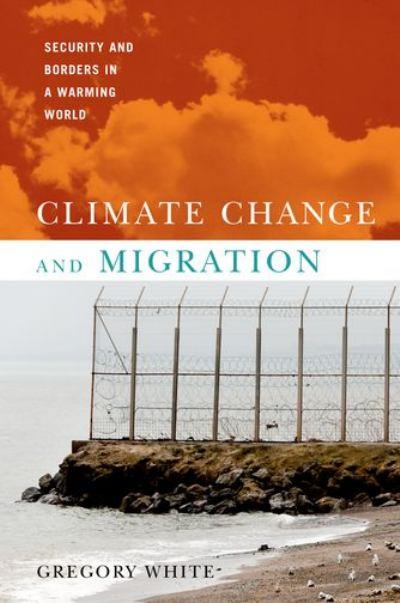

 Framing climate-influenced migration as a threat is dangerous and counterproductive is author Gregory White
Around the time of the Copenhagen Summit in 2009, there was a sense that climate change was finally transitioning from something which only concerned hippy do-gooders to an issue that affected the entire international community. Everywhere you looked people were talking about climate change.
There was campaign after campaign, there were art exhibitions, documentaries, theatre productions and it felt like we may have been on the cusp of change (hindsight sadly tells us that we were not).
Another field where climate change was finally grabbing people’s attention was around security. The notion of water wars as well as climate-related migration was entering the public consciousness. This however, was not strictly ‘A Good Thing’.
As Gregory White states in his book Climate change and migration: security and borders in a warming world, ‘securitizating’ climate-induced migration (CIM) is counter-productive as it helps justify more unnecessary migration controls. It also encourages rich nations to abandon any sense of ethical responsibility to those on the receiving end of their emissions: “As industrialized countries contribute the most to climate change through consumption and emissions, CIM [Climate-induced migration] constitutes an ethical dilemma that will require them to reconsider and revise the existing dialogue concerning migration.”
As well as tackling the ethics around climate-related migration, White explores what climate-induced migration actually is. He states that it is not always going to be people leaving disappeared islands or lands that have become deserts. Slow environmental degradation of areas of the world is a more realistic imagining of the problem. Indeed, he states that slow degradation is already playing some role in existing migration alongside more traditional push and pull factors (economic opportunities, politics etc).
White also explores many of the common misconceptions people have about migration in general and CIM more specifically. For example, many people think that the world is on the move with the poorest threatening to ‘swamp’ our shores. As such migrators are seen as a security threat that must be controlled. This feeds rather dangerously into perception that climate refugees are also a threat to the developed world’s stability and security.
Despite what the media and lots of right-wing pundits like to tell us, most migration is regional and very limited. So African tend to migrate to other African nations. Asians will migrate to other Asian countries and so on. What’s more, although we tend to think that the poorest are the most mobile this isn’t true at all. In fact, one of the issues White raises is that with environmental degradation, migration tends to slow down as the very poorest lose the means to muster even the most basic resources to be able to transplant themselves away from their situation.
The very lucky few, the richest and most influential in a ecologically-struggling society, are those who retain the ability to migrate and to migrate significant distances across continents to the developed world. Most migrators end up in regional transit states such as Morocco, Mexico and Turkey without the ability to move on to more affluent societies.
As such, White states that a “security-minded approach to CIM diverts intellectual energy from more important endeavours.” -Endeavours such as helping the developing world adapt and mitigating the emissions of the developed world. White adds that efforts to encourage adaptation and nurture south-south cooperation on trade and sustainable development practices, would be “far better than sounding an environmental-refugee klaxon and securitizating international borders.” Especially as the securitization of borders would have its own ecological costs inflicted by the military-security industry.
This rather slim book (180 pages) is a great introduction to the complexities of climate migration and the rather unique position transit states find themselves when it comes to CIM. Many of it conclusions about the dangers of securitizing climate-induced migration extend to the dangers of securitizing the broader agenda. That is, it becomes about conflict and securing resources rather than shared responsibility towards each other and cutting our emissions.
Title: Climate Change and Migration: Security and Borders in A Warming World
Author: Gregory White
Year of Publication: 2011
Publisher: Oxford University Press
For more green book reviews see:
The Ethical Tragedy of Climate Change by Stephen Gardiner
Book Review of Edgelands: A Journey Into England’s True Wilderness
I’m With The Bears – Book Review




This is very inspiring article. You can look at recently pujblished books and papers on climate change displacement, see:
Gregory White, Climate Change and Migration: Security and Borders in a Warming World, Oxford University Press, 2011.
Bogumil Terminski, Environmentally Induced Displacement, http://www.cedem.ulg.ac.be/wp-content/uploads/2012/09/Environmentally-Induced-Displacement-Terminski-1.pdf
Jane McAdam, Climate Change, Forced Migration, and International Law, Ofrord University Press, Oxford-New York, 2012, pp. 344. http://ukcatalogue.oup.com/product/9780199587087.do