Canada’s Greensoil Invests in Israel Cleantech

desert crop foot investmentGreensoil, an investment firm from Canada will fund Israeli agritech companies with a reported $12 million.

Cash from Canada will be funding clean technology companies in Israel. A new Canadian fund called Greensoil looks to build Israeli agritech companies with the launch of a $12 million CAN fund. Greensoil investors say they will invest in Israeli companies whose technology innovations help the world feed its population with less water and less arable land. It will uniquely focus on food and agricultural innovation from Israel. The company will invest in agro and food technologies with existing or near-term revenues and plans for international expansion. There are no specific announcements on who the fund will be investing in, but a PR rep told me announcements will come soon.

The focus will be Israeli clean tech, innovation that can help feed our growing world of 7 billion. A focus on Israel is not unusual and it has an enormous clean tech cluster in agritech companies, companies that can save water, enhance output, and use less pesticides or no pesticides during crop cultivation.

Greensoil says it will focus on companies whose technology can help produce unique foodstuffs, additives, seeds, irrigation and agricultural management systems. Investing in new crops, methods and better yields will lower the inputs required for food production, such as reducing fertilizer and water use, they hope.

Investments by the fund will be in early growth stage, Israel-based, companies with revenues or close to first revenues. The fund is organized as a pledge fund, consisting of a number of partnerships, each investing in a limited number of companies.

Greensoil’s co-founders are Alan Greenberg, the fund’s chairman, a successful and well respected Toronto-based real estate developer and managing partner Gideon Soesman, formerly a senior executive at Royal Philips Electronics and a seasoned investor at Philips Corporate Venturing and Philips M&A.

More crop per drop

Asked why Greensoil has chosen to establish its fund, Greenberg said “We are focused on an area where the global problems are pressing – less arable land per capita, less water, more mouths to feed – and where the need for disruptive innovation is great.”

Why Israel? “Israel is unique as a hotbed of food and agro innovation –drip irrigation and many hardy plant varieties were developed here – and these let us grow more food on less land with less water.”

The fund’s investors are made up primarily of Canadian individuals that see the potential of Israeli food and agro innovation. GreenSoil has completed its first closing and expects the final closing of the first partnership of the fund within 6 months.

::Greensoil
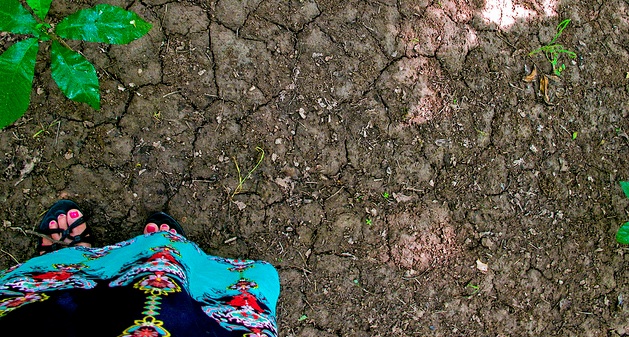
Image via mona_q

Karin Kloosterman
Karin Kloostermanhttp://www.greenprophet.com
Karin Kloosterman is an award-winning journalist, innovation strategist, and founder of Green Prophet, one of the Middle East’s pioneering sustainability platforms. She has ranked in the Top 10 of Verizon innovation competitions, participated in NASA-linked challenges, and spoken worldwide on climate, food security, and future resilience. With an IoT technology patent, features in Canada’s National Post, and leadership inside teams building next-generation agricultural and planetary systems — including Mars-farming concepts — Karin operates at the intersection of storytelling, science, and systems change. She doesn’t report on the future – she helps design it. Reach out directly to [email protected]
2 COMMENTS
  1. Two nice Provinces of Canada are under a decade long attack for production of so called dirty oil. The whole land in Southern Alberta and Saskatchewan now is under attack for extracting of oil from soil! With a sophisticated dangerous polluting process and this is in the same area that a tiny beetle called pine beetle is destroying many million hectares of pine trees. Why a wealthy nation like Canada is doing this now, they were supposed to be guardian of peace, human right and environment that it seems they lost the whole bargain for now. There are so many toxic components in crude oil and they are most toxic to aquatic system and now with those big oil disasters what will happen to our aquatic life that is shared between all nations, we in developing countries and in particular in oil producing countries of the Middle East have to take lesson and be very careful for the situation.

  2. Two nice Provinces of Canada are under a decade long attack for production of so called dirty oil. The whole land in Southern Alberta and Saskatchewan now is under attack for extracting of oil from soil! With a sophisticated dangerous polluting process and this is in the same area that a tiny beetle called pine beetle is destroying many million hectares of pine trees. Why a wealthy nation like Canada is doing
    this now, they were supposed to be guardian of peace, human right and environment that
    it seems they lost the whole bargain for now. There are so many toxic components in crude
    oil and they are most toxic to aquatic system and now with those big oil disasters what will
    happen to our aquatic life that is shared between all nations, we in developing countries
    and in particular in oil producing countries of the Middle East have to take lesson and be
    very careful for the situation.

LEAVE A REPLY

Please enter your comment!
Please enter your name here

TRENDING

Farm To Table Israel Connects People To The Land

Farm To Table Israel is transforming the traditional dining experience into a hands-on journey.

Mandi, Fragrant Yemenite Chicken With Golden Rice

This is a luxurious recipe that requires a taste...

Dark chocolate benefits means slowing aging: make Italian hot chocolate with this recipe

Eating dark chocolate can keep you looking young. Make your own healthy hot chocolate mix

Simple Qatayef recipe makes fabulous nut-filled pancakes

Qatayef - also spelled katayif or qatya’if - is traditionally eaten at Ramadan (get our Ramadan vegetarian ideas here), but it’s a treat anytime. In fact, it’s a treat that’s gone through history. A recipe for qatayif appears in a tenth century Arabic cookbook by the writer Ibn Sayyar al-Warraq, who compiled recipes going back to the eighth and ninth centuries. People have been eating qatayif for a very long time.

What can you do with orange peels in the kitchen

Winter is citrus season, and the markets are full of golden oranges. Don’t even try to resist them. What could be more heavenly than the sweetness of a good orange? As juice, in salads, cooked with chicken or fish, or eaten out of hand, oranges are delicious, and provide a good hit of vitamin C as well.

Qatar’s climate hypocrisy rides the London Underground

Qatar remains a master of doublethink—burning gas by the megaton while selling “sustainability” to a world desperate for clean air. Wake up from your slumber people.

How Quality of Hire Shapes Modern Recruitment

A 2024 survey by Deloitte found that 76% of talent leaders now consider long-term retention and workforce contribution among their most important hiring success metrics—far surpassing time-to-fill or cost-per-hire. As the expectations for new hires deepen, companies must also confront the inherent challenges in redefining and accurately measuring hiring quality.

8 Team-Building Exercises to Start the Week Off 

Team building to change the world! The best renewable energy companies are ones that function.

Thank you, LinkedIn — and what your Jobs on the Rise report means for sustainable careers

While “green jobs” aren’t always labeled as such, many of the fastest-growing roles are directly enabling the energy transition, climate resilience, and lower-carbon systems: Number one on their list is Artificial Intelligence engineers. But what does that mean? Vibe coding Claude? 

Somali pirates steal oil tankers

The pirates often stage their heists out of Somalia, a lawless country, with a weak central government that is grappling with a violent Islamist insurgency. Using speedboats that swarm the targets, the machine-gun-toting pirates take control of merchant ships and then hold the vessels, crew and cargo for ransom.

Leopoldo Alejandro Betancourt López Turned Ocean Plastic Into Profitable Sunglasses

Few fashion accessories carry the environmental burden of sunglasses. Most frames are constructed from petroleum-based plastics and acrylic polymers that linger in landfills for centuries, shedding microplastics into soil and waterways long after they've been discarded. Leopoldo Alejandro Betancourt López, president of the Spanish eyewear brand Hawkers, saw this problem differently than most industry executives.

Why Dr. Tony Jacob Sees Texas Business Egos as Warning Signs

Everything's bigger in Texas. Except business egos.  Dr. Tony Jacob figured...

Israel and America Sign Renewable Energy Cooperation Deal

Other announcements made at the conference include the Timna Renewable Energy Park, which will be a center for R&D, and the AORA Solar Thermal Module at Kibbutz Samar, the world's first commercial hybrid solar gas-turbine power plant that is already nearing completion. Solel Solar Systems announced it was beginning construction of a 50 MW solar field in Lebrija, Spain, and Brightsource Energy made a pre-conference announcement that it had inked the world's largest solar deal to date with Southern California Edison (SCE).

Related Articles

Popular Categories