New Superpower Rice MAS-26 Could Save the Middle East

agriculture, food and health, Middle East, water shortages, rice

Water shortages don’t bode well for agriculture in the Middle East, but a new rice variety developed in India could change all that!

Lack of water is a serious problem in the Middle East. It is felt in Egypt, where even the fertile valley of old can no longer feed a growing nation, in Gulf countries, where desalination floats entire populations, and in the Levant, where behind the scenes negotiations between Jordan, Israel, and Palestine trump politics in order to find water-sharing solutions.

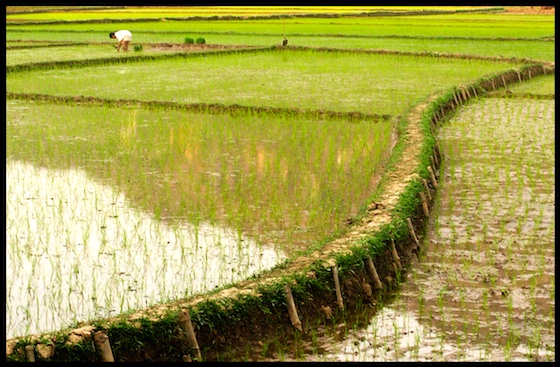
Food grows where water flows, so these shortages don’t bode well for agriculture. Because of this, many countries in the region are gulping up land in other parts of the world, Africa especially, in order to secure food for decades to come. But a new variety of rice developed in India that requires 60% less water to grow and has nearly double the protein of conventional crops has us cautiously optimistic about our future.

The new hybrid rice called MAS-26 or aerobic rice may have a rather unappetizing name, but its potential as a new super crop is quite delicious. Unlike conventional varieties, it is able to go without water for up to 15 days, an excellent prospect for arid regions.

It is also more nutritious. Most of the rice currently available on the market only has 8% protein, whereas the aerobic rice has up to 15%. This means that it will take longer to digest and provide more energy. In addition to being a healthier option for children who require a lot of energy to get through the day, diabetics will benefit from eating fewer carbohydrates as well.

It can be harvested more quickly, and yields are comparable to existing rice crops.

There’s more. Rice fields are a major contributor to greenhouse gas emissions, which in turn are responsible for global warming and unsettling climate change. Given that it is the staple for several populations throughout the world, there’s no chance that we’ll stop producing rice any time soon. But aerobic rice emits less methane, so if planted at scale, it could have a resounding impact on overall GHG emissions.

But there’s a catch.

This crop has to go through trials before it will be available on the global market.

According to DNA India, researchers from the University of Agricultural Sciences (UAS) in Bangalore will put MAS-26 through farm trials within the next six months. If all goes well, this superpower rice could be served within the next two years!


Tafline Laylin
Tafline Laylinhttp://www.greenprophet.com
As a tour leader who led “eco-friendly” camping trips throughout North America, Tafline soon realized that she was instead leaving behind a trail of gas fumes, plastic bottles and Pringles. In fact, wherever she traveled – whether it was Viet Nam or South Africa or England – it became clear how inefficiently the mandate to re-think our consumer culture is reaching the general public. Born in Iran, raised in South Africa and the United States, she currently splits her time between Africa and the Middle East. Tafline can be reached at tafline (at) greenprophet (dot) com.
1 COMMENT

LEAVE A REPLY

Please enter your comment!
Please enter your name here

TRENDING

Farm To Table Israel Connects People To The Land

Farm To Table Israel is transforming the traditional dining experience into a hands-on journey.

Iran’s holiest city about to run dry as terror chosen over water management

Iran’s second-largest city, Mashhad, is facing an acute water emergency after dam reservoirs feeding the city fell below three percent capacity, according to Iranian state and local media. Officials warn that without rainfall or improved inflows from neighboring Afghanistan, the city’s supply could soon collapse.

1,600-Year-Old Samaritan Farm Estate Found in Kafr Qasim Shows How Ancient Communities Lived Sustainably

Archaeologists in Kafr Qasim have uncovered a 1,600-year-old Samaritan agricultural estate with colorful mosaics, an olive oil press, and a ritual bath. This rare discovery reveals how ancient communities lived sustainably—growing food locally, reusing materials, and balancing faith with farming—offering lessons for modern climate resilience in the Middle East.

Iran’s water mafia and thirst for war leaves the country on brink of being dry

Iran’s Lake Urmia, once the Middle East’s largest saltwater lake, has shrunk by 90 percent due to mismanagement, dams, and drought. As Tehran pours billions into foreign conflicts, water activists face repression at home. The crisis mirrors Syria’s drought-driven unrest, showing how water scarcity can destabilize entire regions.

Arab agricultural land is on the brink

Across the Arab world, croplands face a perfect storm of stressors. Excessive fertilizers and pesticides erode soil ecology. Poor drainage and over-irrigation drive salinization, leaving fields crusted with salt. Rising temperatures, dwindling groundwater, and more frequent sand-and-dust storms—all amplified by climate change—compound the crisis.

Qatar’s climate hypocrisy rides the London Underground

Qatar remains a master of doublethink—burning gas by the megaton while selling “sustainability” to a world desperate for clean air. Wake up from your slumber people.

How Quality of Hire Shapes Modern Recruitment

A 2024 survey by Deloitte found that 76% of talent leaders now consider long-term retention and workforce contribution among their most important hiring success metrics—far surpassing time-to-fill or cost-per-hire. As the expectations for new hires deepen, companies must also confront the inherent challenges in redefining and accurately measuring hiring quality.

8 Team-Building Exercises to Start the Week Off 

Team building to change the world! The best renewable energy companies are ones that function.

Thank you, LinkedIn — and what your Jobs on the Rise report means for sustainable careers

While “green jobs” aren’t always labeled as such, many of the fastest-growing roles are directly enabling the energy transition, climate resilience, and lower-carbon systems: Number one on their list is Artificial Intelligence engineers. But what does that mean? Vibe coding Claude? 

Somali pirates steal oil tankers

The pirates often stage their heists out of Somalia, a lawless country, with a weak central government that is grappling with a violent Islamist insurgency. Using speedboats that swarm the targets, the machine-gun-toting pirates take control of merchant ships and then hold the vessels, crew and cargo for ransom.

Leopoldo Alejandro Betancourt López Turned Ocean Plastic Into Profitable Sunglasses

Few fashion accessories carry the environmental burden of sunglasses. Most frames are constructed from petroleum-based plastics and acrylic polymers that linger in landfills for centuries, shedding microplastics into soil and waterways long after they've been discarded. Leopoldo Alejandro Betancourt López, president of the Spanish eyewear brand Hawkers, saw this problem differently than most industry executives.

Why Dr. Tony Jacob Sees Texas Business Egos as Warning Signs

Everything's bigger in Texas. Except business egos.  Dr. Tony Jacob figured...

Israel and America Sign Renewable Energy Cooperation Deal

Other announcements made at the conference include the Timna Renewable Energy Park, which will be a center for R&D, and the AORA Solar Thermal Module at Kibbutz Samar, the world's first commercial hybrid solar gas-turbine power plant that is already nearing completion. Solel Solar Systems announced it was beginning construction of a 50 MW solar field in Lebrija, Spain, and Brightsource Energy made a pre-conference announcement that it had inked the world's largest solar deal to date with Southern California Edison (SCE).

Related Articles

Popular Categories