
Solar Plant In Hebron To Be Demolished

A solar plant, which is the sole source of electricity for a village in Hebron, has received demolition orders from the Israeli Civil Administration

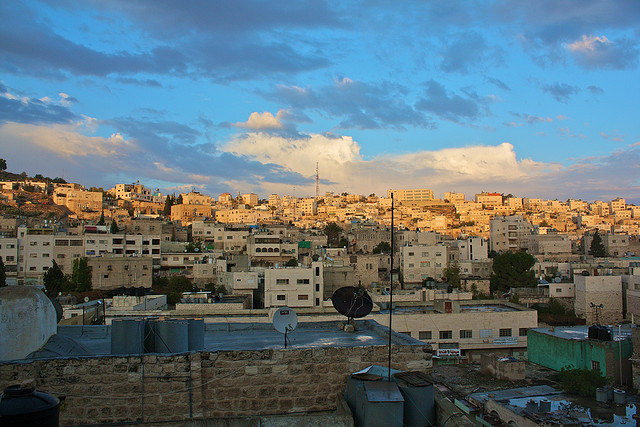
Mneizel is a Palestinian village located in Hebron in the West Bank. In 2009, the 400 residents living there were lucky enough to be the recipients of a project funded by the Spanish government to install a solar energy plant. The solar energy project cost 300,000 Euros and is now their sole source of electricity- without it the village; its school and clinic would be plunged into darkness. On the 11th of October, the Israeli authorities issued a demolition order for the solar plant stating that it doesn’t have a permit.

Hebron has been experimenting with the use of solar power for a while now. They launched their own solar car in the summer of 2010 and have been working in Israeli partnerships with Comet-ME to link up to solar power. Indeed, the use of solar power makes huge sense for the sunny city and is a great alternative source of electricity for  villages in remote locations. With this in mind, you can see why Al Najah University working with the Spanish government decided to set up a solar plant for the villagers of Mneizel.

“Solar Provides Essential Support”

“The plant provides essential support to the entire village. Families are starting businesses, children can study at night, and for the first time in the village’s history, there is a clinic which can conduct ultrasound examinations twice a week,” Ignacio, a Spanish aid worker operating the solar planet told The Palestine Monitor.

However, Mneizel is located in Area C of the West Bank which is under the control of Israel. As such, every building requires a permit from the Israeli Civil Authority, which it almost never grants and so lots of buildings (like this solar plant) end up in a legal limbo.

Demolition Should Be Last Resort Not ‘Option A’

Demolition orders were due to be carried out on the 18th of October and were only avoided as lawyers from Rabbis for Human Rights presented a complaint to the Israeli courts. Last Thursday was the final deadline for Rabbis for Human Rights to collect all relevant claims and so now the villagers must await a decision from the Israeli Civil Administration.

Personally, I can’t see why the Israeli authorities resort to demolition- if the lack of permit is the real and only issue then surely, the two sides could sit together to sort it out and a fine paid if necessary. Going straight to demolition is such a wasteful, unfair and unproductive solution. Especially when the solar plant is a public building providing energy to the village and not some private enterprise.

: Image via Kyle Taylor/flickr.

For more on Hebron and Sustainability see:

Palestinian Engineers Get Sustainable Energy Course In Hebron

Comet-ME Continue To Bring Power To Villagers In South Hebron
Solar Power Electric Car Takes To The Streets Of Hebron

Arwa Aburawa
Arwa Aburawahttp://www.greenprophet.com
Arwa is a Muslim freelance writer who is interested in everything climate change related and how Islam can inspire more people to care for their planet and take active steps to save it while we can. She is endlessly suspicious of all politicians and their ceaseless meetings, especially as they make normal people believe that they are not part of the solution when they are the ONLY solution. Her Indian auntie is her model eco-warrier, and when Arwa is not busy helping out in the neighborhood alleyway garden, swap shopping or attempting fusion vegetarian dishes- with mixed success, she’d like to add- she can be found sipping on foraged nettle tea.

Hot this week

How Renewable Energy is Revolutionizing the Way We Power Our World

Solar has become the star of the transition thanks to modular hardware and straightforward installation. It fits dense cities and remote towns alike. Many companies are turning to rooftop arrays and carport systems - and exploring commercial solar installation as a practical way to lock in future savings.

How does one start prepping?

Faced with an extreme winter storm this year, Americans wonder how to be prepared for catastrophe. Miriam has lived through wars in the Middle East - so she's prepared on giving you a guide to prepping.

Fishermen sue tire manufacturers on behalf of the salmon

A federal trial in San Francisco has brought US tire manufacturers, fishing groups, and environmental scientists into court over a chemical most drivers have never heard of — but which scientists say may be silently reshaping aquatic ecosystems.

Listening to Water: Tarek Atoui’s Next Work for Tate Modern

Born in Beirut, Lebanon in 1980 and now living in Paris, Atoui has spent years building instruments that don’t sit comfortably in concert halls. Many of them involve water, glass, and ceramics — materials that react to sound instead of simply producing it.

Leading Through a Dual-Energy Transition: Balancing Decarbonisation with Energy Security

Experience in one area of the energy industry isn't enough to guarantee readiness across all the others. That's where a structured program like an MBA in energy can come in. Today's advanced curricula explore energy economics, finance, policy, and strategic management alongside the technical subjects. And when pursuing an energy MBA online, professionals can skill up and retrain without having to step out of the labor market -- an important perk at a time when skilled professionals are already in short supply.

Topics

How Renewable Energy is Revolutionizing the Way We Power Our World

Solar has become the star of the transition thanks to modular hardware and straightforward installation. It fits dense cities and remote towns alike. Many companies are turning to rooftop arrays and carport systems - and exploring commercial solar installation as a practical way to lock in future savings.

How does one start prepping?

Faced with an extreme winter storm this year, Americans wonder how to be prepared for catastrophe. Miriam has lived through wars in the Middle East - so she's prepared on giving you a guide to prepping.

Fishermen sue tire manufacturers on behalf of the salmon

A federal trial in San Francisco has brought US tire manufacturers, fishing groups, and environmental scientists into court over a chemical most drivers have never heard of — but which scientists say may be silently reshaping aquatic ecosystems.

Listening to Water: Tarek Atoui’s Next Work for Tate Modern

Born in Beirut, Lebanon in 1980 and now living in Paris, Atoui has spent years building instruments that don’t sit comfortably in concert halls. Many of them involve water, glass, and ceramics — materials that react to sound instead of simply producing it.

Leading Through a Dual-Energy Transition: Balancing Decarbonisation with Energy Security

Experience in one area of the energy industry isn't enough to guarantee readiness across all the others. That's where a structured program like an MBA in energy can come in. Today's advanced curricula explore energy economics, finance, policy, and strategic management alongside the technical subjects. And when pursuing an energy MBA online, professionals can skill up and retrain without having to step out of the labor market -- an important perk at a time when skilled professionals are already in short supply.

From Green Energy to Healthy Societies: Why old systems thinking is becoming relevant again

Across the Middle East and North Africa, large investments are being made in green hydrogen, renewable energy, water infrastructure and sustainability. Most of these efforts are discussed in the context of climate change, decarbonization and economic diversification. That framing is important, but it may not capture their full value.

We saw peace – an interreligious encounter deep in our eyes

They came from Israel, Palestine, Jordan, Iraq, Yemen, Morocco, Tunisia, Lebanon, Egypt… There are Sunni Muslims, Shiite Muslims, Jews (Orthodox and Reform), Orthodox Christians, Coptic Christians, Protestant Christians, Druze, Baha'is, a Scientologist.

Can biochar reduce ‘Forever Chemicals’ in food if it’s used in farms?

Biochar is produced by heating organic material in a low-oxygen environment so it does not burn. This process, known as pyrolysis, transforms plant matter into a stable, carbon-rich material.

Related Articles

Popular Categories