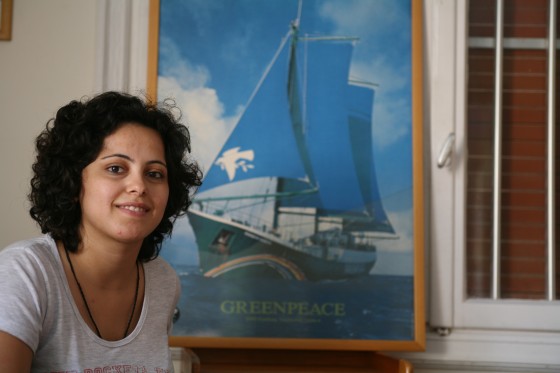
Q&A With Greenpeace Campaigner Raefah Makki

greenpeace-middle-east-lebanon-makkiWe speak to Greenpeace campaigner Raefah Makki about nuclear power, the Arab Spring and what she would do if she were president for the day

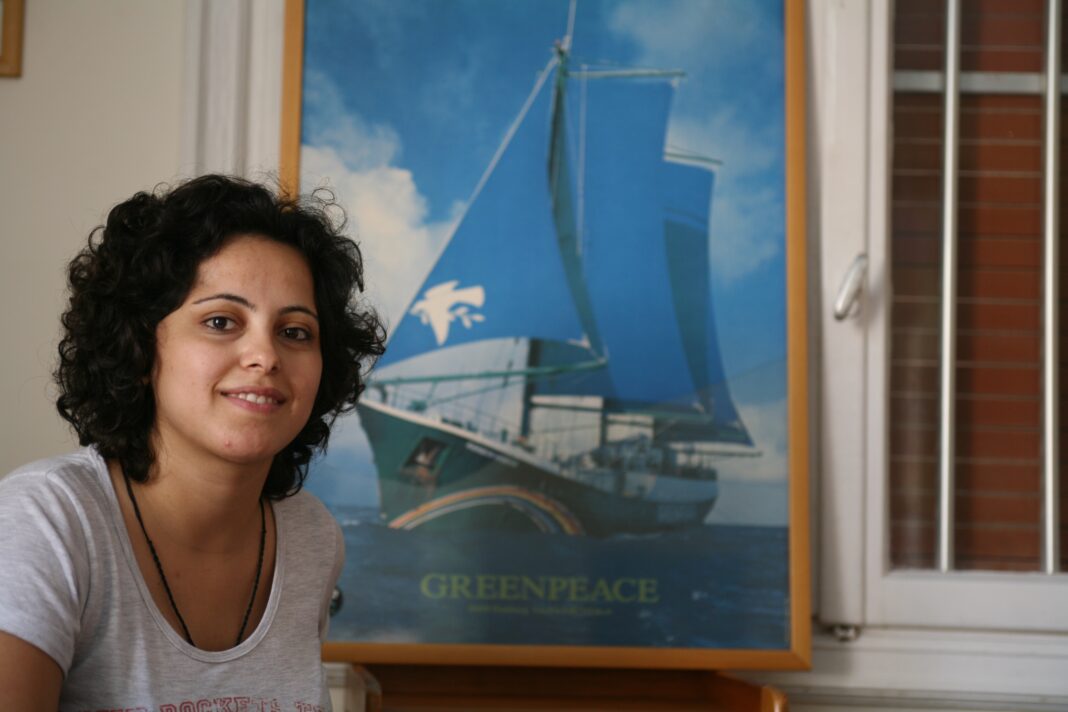
Greenpeace is one of the most recognizable green organisations in the world and the fact that it has branches scattered across the globe is part of the reason why. Greenpeace first came to the Middle East in 1986 with a wider agenda aimed at the Mediterranean and has since become an influential figure in the environmental movement in the region. As well as a presence in Turkey, Israel and Lebanon, Greenpeace campaigners have also sprung up in Jordan to fight the country’s nuclear plans. I caught up with Raefah Makki, Greenpeace’s Arab world communications officer to talk about the organisation, its anti-nuclear stance and the impact politics has on the environmental agenda.

Aburawa: Tell us a little bit about yourself and why you started working with Greenpeace?

Makki: I started working with Greenpeace at the end of 2006 as a face-to-face fundraiser where my mission was to recruit financial donors to our campaigns. I moved into several positions within fundraising then the communications department and now I’m responsible for the communications in the Arab world.

How and when did Greenpeace first come to the Middle East?

Back in 1984, Greenpeace International set up a research programme to help define what their ‘Mediterranean Campaign’ should highlight. Campaigners decided on 4 issues: toxic pollution, destructive fisheries, the threat to wildlife habitats and the potentially catastrophic presence of nuclear installations, weapons and waste.

In 1986, when the first tour by a Greenpeace ship took place in the western Mediterranean, its message was very simple: Mediterranean governments were doing very little to implement their own agreements under the United Nations` Mediterranean Action Plan, which had been launched in 1975. Now, Greenpeace Mediterranean head office is based in Istanbul and runs oceans and climate campaigns in the region.

I understand you are based in Lebanon, what is the state of the environmental movement there?

The environmental movement in Lebanon has been struggling for the last two decades to achieve change. I have no doubts that environmental awareness is increasing in the public and media but political will is still missing.

What are the major barriers you face in the region?

The instability of the political infrastructure creates many barriers for environmentalists, especially as a major part of our work is to lobby decision makers and change policies. In addition, the absence of proper monitoring over environmental regulations makes violations easy to happen.
What are the major campaigns and successes you have worked on?

I have worked on an oceans campaign with the Lebanese team and we were able to raise the demand of establishing a network of marine reserves in Lebanon on both the political and media agendas. We also submitted the proposal of establishing the first marine reserve in Lebanon to the ministry of environment.

Activist in Jordan have been busy working on an anti-nuclear campaign. Could you tell us a little about why this campaign is important to Greenpeace?

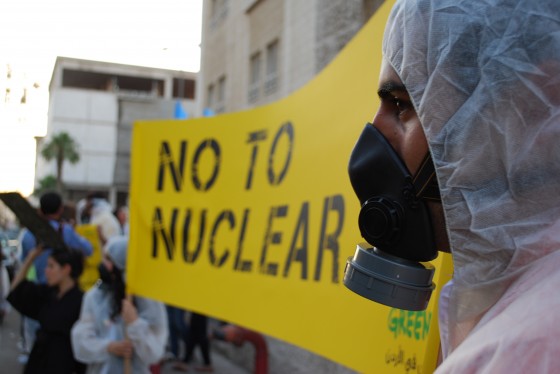
The Greenpeace volunteer group in Jordan was formed as part of a wider GP Mediterranean project to consider the prospects for future campaign work in the Arab world. The volunteers are passionate about their environment and very aware of the dangers and risks of the nuclear power plant on their country. So far, they have successfully carried out four peaceful protests in Jordan in partnership with other local groups and communities to make the government reconsider this decision.

How do you think the Arab Spring will affect the way environmental issues are perceived in the region?

The Arab Spring provides a very promising chance for environmental changes. People who went on the streets to demand change in a peaceful way are aware of their fundamental rights, which include environmental issues… The region is witnessing a reformation process now, and there is a chance for environmental organizations to take part in this process and help shape the new regulations.

If you were president for the day, what one thing would you change to improve the environment in the region?

I would ask all Arab countries to stop using fossil fuels right now, to forgo their nuclear plans and make them adopt renewable energy resources.

:: Second image via Hamza Omari.

For more on Greenpeace see:

Greenpeace Raises More Questions Over Jordan’s Nuclear Plans

Greenpeace Lebanon’s ‘Generation C’: Young, Connected and Making A Difference
Greenpeace Responds To Israel Carmel Fire

Arwa Aburawa
Arwa Aburawahttp://www.greenprophet.com
Arwa is a Muslim freelance writer who is interested in everything climate change related and how Islam can inspire more people to care for their planet and take active steps to save it while we can. She is endlessly suspicious of all politicians and their ceaseless meetings, especially as they make normal people believe that they are not part of the solution when they are the ONLY solution. Her Indian auntie is her model eco-warrier, and when Arwa is not busy helping out in the neighborhood alleyway garden, swap shopping or attempting fusion vegetarian dishes- with mixed success, she’d like to add- she can be found sipping on foraged nettle tea.

LEAVE A REPLY

Please enter your comment!
Please enter your name here

TRENDING

Lebanon reporting fellowship for truth-tellers

Lebanon’s environmental crisis is not abstract. It is shaped by war, neglect, corruption, and silence. Rivers carry untreated sewage and industrial waste into the Mediterranean. Dynamite fishing shatters fragile marine ecosystems along the coast. In many areas, Hezbollah’s military presence and decades of instability have made environmental accountability nearly impossible. What flows into the sea is not only pollution — it is politics, poverty, and unresolved war. And yet, these stories are rarely told with depth, care, or courage. Silat Wassel’s Environmental Justice Journalism Fellowship is opening space for exactly that. They are looking for a few brave souls. 

Slow food market Souk el Tayeb in Lebanon celebrates food and Eid El Barbara

What makes Souk El Tayeb in Lebanon remarkable is not only its insistence on local, seasonal produce, but its belief that dignity and sustainability must go hand in hand. Farmers are paid fairly. Villages are uplifted. Traditional recipes are kept alive not as nostalgia but as knowledge systems: real food is carbon-light, waste-free, and is adapted to the land.

The Pope visits Lebanon and the site of the deadly Beirut blast

“Lebanon, stand up,” he added. “Be a home of justice and fraternity! Be a prophetic sign of peace for the whole of the Levant!”

Dead shark on beach injured by fishing nets

  A dead shark that washed ashore this week at...

Lebanon ski resorts and when to escape climate change

Lebanon’s mountain resorts — from Mzaar Ski Resort Faraya to the Cedars of God in Bsharri — offer rare snow in the Middle East, where you can ski by day and swim in the sea by night. But climate change is shrinking snow seasons fast. Resorts like Zaarour, Laqlouq, Faqra, and the Cedars are adapting, turning toward year-round eco-tourism and mountain conservation.

6 Payment Processors With the Fastest Onboarding for SMBs

Get your SMB up and running fast with these 6 payment processors. Compare the quickest onboarding options to start accepting customer payments without delay.

Qatar’s climate hypocrisy rides the London Underground

Qatar remains a master of doublethink—burning gas by the megaton while selling “sustainability” to a world desperate for clean air. Wake up from your slumber people.

How Quality of Hire Shapes Modern Recruitment

A 2024 survey by Deloitte found that 76% of talent leaders now consider long-term retention and workforce contribution among their most important hiring success metrics—far surpassing time-to-fill or cost-per-hire. As the expectations for new hires deepen, companies must also confront the inherent challenges in redefining and accurately measuring hiring quality.

8 Team-Building Exercises to Start the Week Off 

Team building to change the world! The best renewable energy companies are ones that function.

Thank you, LinkedIn — and what your Jobs on the Rise report means for sustainable careers

While “green jobs” aren’t always labeled as such, many of the fastest-growing roles are directly enabling the energy transition, climate resilience, and lower-carbon systems: Number one on their list is Artificial Intelligence engineers. But what does that mean? Vibe coding Claude? 

Somali pirates steal oil tankers

The pirates often stage their heists out of Somalia, a lawless country, with a weak central government that is grappling with a violent Islamist insurgency. Using speedboats that swarm the targets, the machine-gun-toting pirates take control of merchant ships and then hold the vessels, crew and cargo for ransom.

Leopoldo Alejandro Betancourt López Turned Ocean Plastic Into Profitable Sunglasses

Few fashion accessories carry the environmental burden of sunglasses. Most frames are constructed from petroleum-based plastics and acrylic polymers that linger in landfills for centuries, shedding microplastics into soil and waterways long after they've been discarded. Leopoldo Alejandro Betancourt López, president of the Spanish eyewear brand Hawkers, saw this problem differently than most industry executives.

Why Dr. Tony Jacob Sees Texas Business Egos as Warning Signs

Everything's bigger in Texas. Except business egos.  Dr. Tony Jacob figured...

Related Articles

Popular Categories