Interview With The Leading Green Islamic Organisation

ifees-fazlun-khalid-green-islamWe speak to Fazlun Khalid who set up The Islamic Foundation For Ecology And Environmental Sciences about the highs and lows of over two decades of work

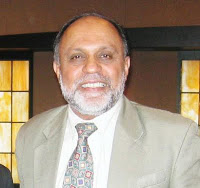
The link between Islam and the environment is slowly gaining recognition amongst the wider public and The Islamic Foundation For Ecology And Environmental Sciences (IFEES) may have something to do with that. Over the last two decades, the UK-based organization has been reaching out to Muslims and non-Muslims alike about the role that faith can play in environmental protection. IFEES has worked particularly hard to highlight the Islamic teachings on nature and have set up their EcoIslam newsletter and published various green guides with that aim in mind. The organization has also campaigned to end dynamite fishing in Zanzibar and encourage tree planting in Indonesia through Islamic teachings. I caught up Fazlun Khalid who established the charity to talk more.

Arwa: I know that IFEES has been around for a while and is based in the UK but could you tell us a little more about the organisation?

Fazlun: Well, this work started more than 25 years ago and IFEES has been around since 1994. What we do is project the specifically Islamic teachings about the environment– this isn’t to say that we don’t work with secular groups or other denominations; we do, because ultimately what we are facing is a common problem. Since the eighties we have been researching Islamic texts, the Qur’an and Shariah on environmental issues and we have put that together to train people… amongst the international community IFEES is used for Islamic training on the environment in Nigeria, Tanzania, Kenya, Indonesia, Madagascar and Malaysia. We are also trying to educate the Islamic leaders and ulamas about the environment and the direct link to the Qur’an and Shariah and how they can implement projects based on these teachings. So it’s quite real and practical work.
Arwa: Was there a particular event that catalyzed your focus on Islam and the environment?

Fazlun: I remember I went to a conference in the 1980’s where I was asked what are Muslims doing about the environment and I said not a great deal. I was asked what does Islam say about the environment and I replied that I didn’t know. So what I did was leave work and go back to university to study the Koran and its links to the earth – in fact, my dissertation was on creation.

During this research and the work you have done since, what emerged as the single most important link between Islam and the environment?

I would say that it is the principle of Khalifah, which says that we have a profound responsibility as creations of Allah to keep the environment in good order. There is a verse in the Quran which says that we will corrupt the land but god will show us the error of our ways and give us a second chance. So we must accept our mistakes and seize the second chance that god has given us.

You have been working on this issue for a long time, have you noticed a change in the way the Muslim community is dealing with environmental problems?

I’m sorry to say that I haven’t noticed a real change. I mean there are environmental agencies being set up in the Muslim world but the problem is this – they are being run as secular organisations and are ignoring the Islamic perspective. I feel that Islam has the best teachings on the environment, the whole framework is there and sadly, we are so besotted wealth, money and position and wanting to copy the West and everything that the West does that we don’t realise that we have a diamond in our hand.
Whilst it’s great to educate people about the problems and the need for change- ultimately what we need to see is more action. What kind of action would like to Muslim doing more of?

I think one thing that Muslim can do is learn what Islam has to say about the environment and work with organisations such as Greenpeace, Friends of the Earth and other local organisations. Muslims also need to be approaching their Imams and chairmans at their local mosques and telling them about environmental problems and asking them what Islam has to say about it. Challenge them, we need to challenge them and ask them why they aren’t doing Friday khutbahs on these issues.

Are you optimistic or pessimistic about the future?

(laughs) You know, Arwa, you have to be optimistic in this world. You have to trust in Allah and you have to know that what you’re doing is what god has asked of us and that’s enough.

::Images via IFEES.

For more green faith news see:

Interview With Green Hajj Expert Dr. Husna Ahmed

Faith Network Promotes Green Religious Pilgrimages

If It’s Not Organic, It’s Not Halal (4 Ethical Zabiha Principles)
Arwa Aburawa
Arwa Aburawahttp://www.greenprophet.com
Arwa is a Muslim freelance writer who is interested in everything climate change related and how Islam can inspire more people to care for their planet and take active steps to save it while we can. She is endlessly suspicious of all politicians and their ceaseless meetings, especially as they make normal people believe that they are not part of the solution when they are the ONLY solution. Her Indian auntie is her model eco-warrier, and when Arwa is not busy helping out in the neighborhood alleyway garden, swap shopping or attempting fusion vegetarian dishes- with mixed success, she’d like to add- she can be found sipping on foraged nettle tea.

LEAVE A REPLY

Please enter your comment!
Please enter your name here

TRENDING

The Christ’s thorn (sidr tree) is also a well-known folk medicine

Christ’s thorn jujube (Ziziphus spina-christi) also known as the sidr tree is a real, identifiable tree native to the Middle East, and it appears—directly or indirectly—in Islam, Judaism, and later Christian tradition. The connections between the three faiths are not theological agreements but overlapping uses, names, and symbolic associations rooted in the same landscape.

The Lote Tree of the Utmost Boundary, explained

Knowing about the concept of the Lote Tree of the Utmost Boundary helps explain a core idea in Islam.

Female Genital Mutilation still happens — quietly, at home, and across borders in Canada

A service provider explains that women may choose midwives from within their community to keep their status private. Another line cuts to the core: “There’s a lack of understanding… especially psychologically.”

Sustainable Architect Ronak Roshan on the Politics Behind the Houston Ismaili Center

Roshan’s reflection situates the Houston Ismaili Center within a broader discussion about architecture as diplomacy — where aesthetics, faith, and geopolitics intersect. Her words challenge readers to question whether “green” design and grand symbolism can coexist without transparency and accountability.

Houston eco mosque opens amid Texas faith and climate tensions

On November 6, 2025, Houston welcomed its newest civic landmark: the Ismaili Center, Houston, a luminous Shia Muslim complex overlooking Buffalo Bayou Park that merges Islamic art, architecture, and landscape design.

Qatar’s climate hypocrisy rides the London Underground

Qatar remains a master of doublethink—burning gas by the megaton while selling “sustainability” to a world desperate for clean air. Wake up from your slumber people.

How Quality of Hire Shapes Modern Recruitment

A 2024 survey by Deloitte found that 76% of talent leaders now consider long-term retention and workforce contribution among their most important hiring success metrics—far surpassing time-to-fill or cost-per-hire. As the expectations for new hires deepen, companies must also confront the inherent challenges in redefining and accurately measuring hiring quality.

8 Team-Building Exercises to Start the Week Off 

Team building to change the world! The best renewable energy companies are ones that function.

Thank you, LinkedIn — and what your Jobs on the Rise report means for sustainable careers

While “green jobs” aren’t always labeled as such, many of the fastest-growing roles are directly enabling the energy transition, climate resilience, and lower-carbon systems: Number one on their list is Artificial Intelligence engineers. But what does that mean? Vibe coding Claude? 

Somali pirates steal oil tankers

The pirates often stage their heists out of Somalia, a lawless country, with a weak central government that is grappling with a violent Islamist insurgency. Using speedboats that swarm the targets, the machine-gun-toting pirates take control of merchant ships and then hold the vessels, crew and cargo for ransom.

Leopoldo Alejandro Betancourt López Turned Ocean Plastic Into Profitable Sunglasses

Few fashion accessories carry the environmental burden of sunglasses. Most frames are constructed from petroleum-based plastics and acrylic polymers that linger in landfills for centuries, shedding microplastics into soil and waterways long after they've been discarded. Leopoldo Alejandro Betancourt López, president of the Spanish eyewear brand Hawkers, saw this problem differently than most industry executives.

Why Dr. Tony Jacob Sees Texas Business Egos as Warning Signs

Everything's bigger in Texas. Except business egos.  Dr. Tony Jacob figured...

Israel and America Sign Renewable Energy Cooperation Deal

Other announcements made at the conference include the Timna Renewable Energy Park, which will be a center for R&D, and the AORA Solar Thermal Module at Kibbutz Samar, the world's first commercial hybrid solar gas-turbine power plant that is already nearing completion. Solel Solar Systems announced it was beginning construction of a 50 MW solar field in Lebrija, Spain, and Brightsource Energy made a pre-conference announcement that it had inked the world's largest solar deal to date with Southern California Edison (SCE).

Related Articles

Popular Categories