
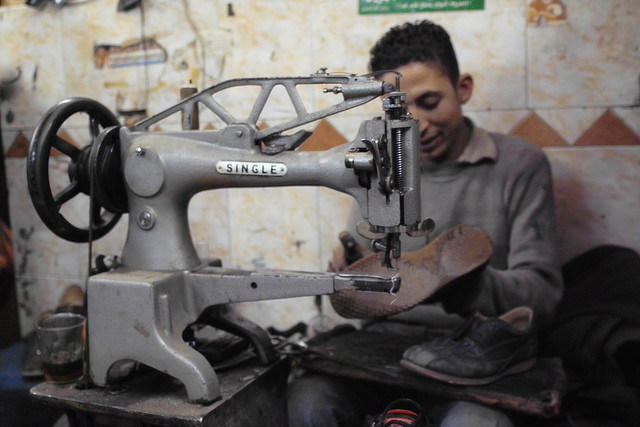

 Superior repair skills in developing nations mean that broken electronics can be mended and reused – a much greener alternative to recycling
A couple of months ago, I wrote about the death of my laptop and my predicament over what to do with it. I had become wary of sending broken electronics to developing countries after news emerged that they were being pulled apart by poor children in unsafe conditions. As such, recycling appeared to be my only option.
However, one reader got in touch to point out that poorer nations tend to have superior skills in mending electronics so rather than just recycling them, they would be able to repair them which is the more eco thing to do. He also noted that the image of poor children working with toxic electronics was unrepresentative of many professional and skilled repair workers in the developing world who are helping divert electronics away from landfills.
For example, Cairo has a thriving repair industry that is helping fix electronics and provide cheaper computers for the locals. Kyle Weins, the CEO of iFixit which provides free online repair manuals and guides, is currently touring Africa and Asia speaking to those repairing broken hardware as part of a documentary on fixers. He was recently filming in Cairo where he encountered some highly skilled mobile phone repairers and mechanics.
 Indeed what Wiens found went beyond the stereotype of young African children stripped electronics to their core (and toxic) materials: “I’ve definitely seen children mining e-waste for raw metals…but the repair industry isn’t like that at all. Fixing things is a skill, and it takes time to get good. Conditions are quite safe because people need a predictable, safe working environment to do repairs.”
Yet over the last couple of years, shock reports looking into the dangers of toxic electronics shipped to developing nations has encouraged nations to embrace a total ban on e-waste exports. Weins however, is critical of whether this would actually help. “Mechanics in Cairo are some of the most imaginative people in the world. They need raw material to work with, and attempts to cut them off from their supply chain will harm the Egyptian economy in the long run.”
Weins also explained that laws banning the trade of electronics across international borders haven’t been particularly effective in stemming the tide. He insists that the root of the problem is the West’s throwaway culture and that must be tackled as part of the solution. “The crux of the issue is that we’re manufacturing devices that we only use for a few years. What we need to do is reduce consumption and extend the lifespan of devices. It’s a critical and often overlooked component of environmental sustainability.”
: For more information on Weins’ short documentary, ‘Fixers- A Film About Repair’ go to their website ifixit.org.
: Top image via Swamibu/flickr.
For more on e-waste issues in the Middle East see:
Mountains of Toxi E-Waste In Pakistan Are A Goldmine
The (Imminent) Death of My Laptop: E-Waste and The Middle East



Great coverage. This is how Japan, Singapore, and South Korea emerged from poorer-than-Africa to rich with no oil, gold, or natural resources… based on the tinkerers and repair culture. I am immensely optimistic about Egypt based on my trips to visit our import for repair partners there.
@Karin: Cool, I guess kinda like a modern rag and bone man
@Taf: A set of criteria or things to consider would def be a good idea… I think the first step is getting us to realise that not all e-waste is bad, it just depends on how its treated..
There is also some hyprocrasy going on in the attempts to ban e-waste exports as they don’t say anything about importing new computers, tv etcs which I am assuming eventually break beyond repair and become … e-waste.
This is great Arwa, thanks so much. I guess we need to judge on a case-by-case basis, right? I wonder if we could figure out a rubric that helps us gauge whether these kinds of repair/recycling projects are helpful or harmful?
Cool idea. Thanks for bringing the issues to light! My dad is a recycler. He gets up every morning and goes on his runs. He goes through garbage bins around our town, pulling out electronics, bicycles, you name it. He has a range of contacts and it gets distributed out for a song, which pays his gas and a bit more. Some of the bikes go to Africa, and the electronics stay in Canada to be sold again. Metals get melted down and repurposed.