 The battle for the Samar sand dunes may be lost to concrete trucks and bulldozers. An evironmental attorney Joshua Basofin makes a case to save the sand.
After a protracted battle over the Samar sand dunes, in the Arava Valley in Israel, the bulldozers may be revving their engines. Last year the Israel Lands Administration issued a tender for a mining operation there. The development company securing that contract plans to make concrete from the sand. Environmentalists cried foul shortly after the deal, citing the dunes’ unique features, rare wildlife and recreation opportunities. In January, an impassioned campaign to protect the dunes peaked when the Supreme Court green lighted the project.
With its superfine sands and almost surreal stillness, it is easy to see how locals fell in love with the Samar dunes, located in the Arava Valley just north of Eilat.
The site is home to many “endemic” species – plants and animals that are found only on the dunes like the leggy spiders. University of Haifa professor Uri Shanas discovered a new species of spider there less than two years ago. Measuring 14 centimeters, it is the largest arachnid of its kind known to dwell in the Middle East.
The spider saves the day?
Its discovery exemplifies the mantra of Israeli ecologists – we don’t know everything living in our backyard. The Samar dunes have become a haven not just for wildlife, but also nature enthusiasts. With their wide open spaces and ample opportunity for wildlife viewing, the dunes are quite popular.
Unfortunately, the same qualities that attract wildlife and visitors have piqued the interest of developers – superfine sands that make for high quality concrete.
Read Also: Can you believe the earth is running out of sand?
Environmentalists began a protest campaign in earnest upon learning of the mining plan. It quickly picked up steam, garnering the support of environmental groups Megama Yeruka, Adam Teva v’Din and local NGO Sababa. A study looked at potential alternatives to the project.
It concluded that using sand from quarries in Dimona or mine waste from Timna Park would result in only modest price increases (about $8 USD per ton). But the developers, having received the blessing of the courts, aren’t biting.
The case itself was decided on a technicality – environmentalists filed too late. As a result, the court could not consider the government’s alleged failure to complete a comprehensive environmental impact statement.
Lost in the rancor between environmentalists and developers is a rational conversation about land use planning in the Arava region. Certainly the dunes are worth protecting.
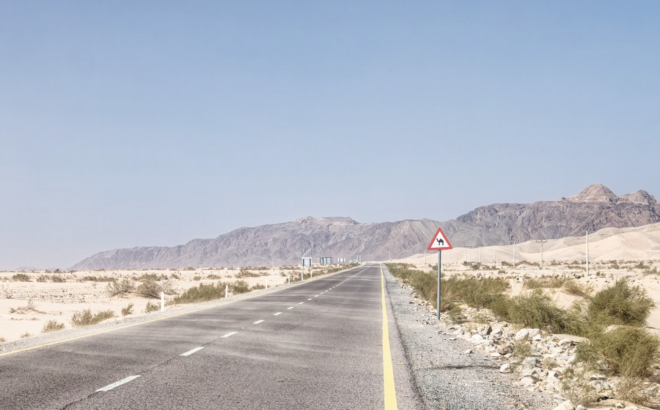
When the 1994 armistice lines were drawn between Israel and Jordan, most of the dunes ended up in the latter’s territory. The new political border made these features rare in Israel.
The remaining dunes were developed or mined – except Samar. The dilemma over its future is a prime example of Israel’s obligation to steward rare and dwindling natural areas.
Development versus conservation
Beyond that simple concept, however, and perhaps more importantly, Israel must appreciate the “ecosystem services” provided by places like the Samar dunes. The value of wildlife, tourism, shade, and minerals, for example, can be measured. And it can be measured in dollars.
Undoubtedly, however, Israel’s bulging center will need the relief of additional housing. The vast expanse of southern desert is a natural choice. In addition to the Samar mining, a proposed hotel within the boundaries of the beloved Timna Park has locals bristling but others citing economic development in the area.

Add to that the prospect of utility-scale solar fields and suddenly the Arava Valley seems quite small indeed. It appears a traffic jam is forming. The rush to build hotels, mines, and solar fields militates for a clear and concise land use plan. Interested parties should develop the plan, fully considering the inherent value and ecosystem services of the area.
The Jewish theologian Abraham Joshua Heschel said “there are three ways in which we may relate ourselves to the world – we may exploit it, we may enjoy it, we may accept it in awe.”
How will we relate ourselves to the Arava Valley? In truth, we must invoke all three perspectives to balance the competing interests of conservation and development. They are not mutually exclusive, but they do require careful thought. The rise and fall of civilizations throughout history has taught us that stewardship is necessary for human survival. Many people have called Israel “the promised land.”
But there is a deeper covenant here, formed before our time and etched in sand. Perhaps we can only know that promise when we walk below the steep, orange cliffs of the Arava Valley. But we must keep it all the same.
 Joshua is an environmental attorney and writer living in Tel Aviv. He has worked for several conservation groups in his native United States, including The Nature Conservancy and Defenders of Wildlife. Joshua specializes in laws and policies aimed at protecting natural areas. He has a particular interest in freshwater and marine habitats.
Growing up in the suburbs of Middle America, Joshua learned to escape into nature and leave the strip malls and parking lots behind. He has hiked and explored around the world, from South America to Australia to Thailand. Joshua is fascinated by the often polarizing worlds of tradition and modernity. He thrives on studying the intersection of environmental conservation, religion, and human culture. And he may have found his greatest challenge yet in Israel.
Read more about the Arava Desert here:
Will Solar Fields Cover Israel’s Last Open Spaces?
Arava Power to Electrify the Desert
A Leggy Spider in the Sands of Samar