
Jordan’s Ambitious Bus Plans Get Shelved

jordan-amman-bus-rapid-transit-public-transportAnnounced with much fanfare, the plans to build an new bus transit in Jordan have been quietly shelved pending further review

Back in early 2011, the Jordanian government announced that it would be building a new impressive bus transit aimed at reducing congestion along Amman’s busiest routes. The Bus Rapid Transit (BRT) plans entailed operating high-capacity buses on segregated lanes that could carry more than 120 passengers and run on a three-minute frequency during peak hours. It was seen as a huge leap towards better public transport in the city but the recent suspension of these plans – without much explanation and one year before their planned inauguration – hasn’t been well received.

Protesters Take To Street Against Suspension of Bus Plans

Around a month ago, around 50 young Jordanians staged a protest against the decision to suspend the bus transit plans. They brought along an ‘express donkey’ to their demonstration at a lane established in the early stages of the bus project. Speaking to the Jordan Times, one protester said, “I was really glad when GAM [Greater Amman Municipality] announced the idea. Insufficient public transport is one of the main problems we face and we thought this issue would be resolved with the BRT.”

The bus plans have been suspended by the Jordanian cabinet until a government committee entrusted with reviewing the project completes feasibility plans. The committee however has already agreed that Amman would benefit from a specialised public transport system and some have suggested that corruption has played a role in the delay. The project has been financed by the French Development Agency to the tune of JD166 million.

Poor Economy or Corruption Behind Delay?

The state of the economy also appears to be hindering the project. Writing for Ammon News, Yusuf Mansur said, “Major economic decisions have been swinging back and forth, and there is fear and paranoia in the public sector. Instead of continuing the work of previous cabinets, important projects such as the BRT (Bus Rapid Transport) was first canned, days later placed under scrutiny, and then went into hiatus or limbo. Now we don’t know if it is coming or going.”

Amman has been criticised in the past due to its poor public transport and lack of pedestrian facilities. It was hoped that these bus plans along with recent success of expanding the sidewalks would encourage further action. Following recent protest in the Middle East demanding better public transport, let’s hope that governments start paying more attention and taking the demands of their citizens more seriously.

:: Jordan Times

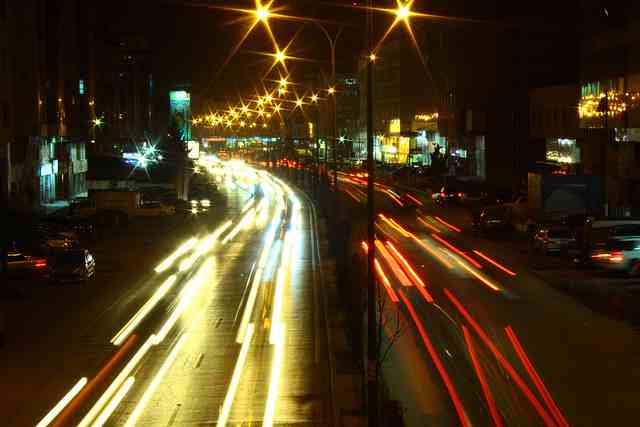
: Image via Noura Salem/Flickr.

For more on public transport in Jordan see:

Middle East Joins Worldwide Campaign For Greener Transport (Photo)

How Benches and Sidewalks Could Transform The Middle East

Jordan’s Bus Rapid Transit (BRT) Set For 2012 Inauguration
A Miserable Walk Through Amman

Keeping Public Trains On Track

Arwa Aburawa
Arwa Aburawahttp://www.greenprophet.com
Arwa is a Muslim freelance writer who is interested in everything climate change related and how Islam can inspire more people to care for their planet and take active steps to save it while we can. She is endlessly suspicious of all politicians and their ceaseless meetings, especially as they make normal people believe that they are not part of the solution when they are the ONLY solution. Her Indian auntie is her model eco-warrier, and when Arwa is not busy helping out in the neighborhood alleyway garden, swap shopping or attempting fusion vegetarian dishes- with mixed success, she’d like to add- she can be found sipping on foraged nettle tea.
3 COMMENTS
  1. I totally agree with you @Toronto. I think at this stage, the real problem seems to be the lack of clarity. Nobody knows why the project was stalled and no-one knows when or IF the project will restart. V. worrying.

    @Bubbly. You make a great point and I follow your logic about car lobbying (see below). However, why aren’t those who rely on public transport doing their own lobbying?!

    No-Nonsense Guide to Climate Change by Danny Chivers: Back in the early 1900′s companies like General Motors and Firestone aggressively bought out public transport systems in the US and then shut them down. Over a hundred commuter rail systems were closed and thousands of kilometres of rail tracks were pulled up.

  2. This project is stalled through lobby groups such as car owners, traditional bus owners, and others. They have been applying pressure through various media outlets by claiming that it will not work, that there is corrption, etc ; even though an investigative committee gave it a clean bill of health.

    We have to remeber that in the US, car companies were instrumental in buying out and then cancelling all the Trams in the United States at the beggining of the century. But hopefully it will not happen here as social media and other groups are exposing these propogandists with personal agendas…

  3. It’s just sad that the good plan will probably go into waste. It will also gonna be a huge boost in the transportation of Jordan but I think that will not be happening in the next couple of years. Let’s just hope that someday it will push through.

Comments are closed.

Hot this week

How Renewable Energy is Revolutionizing the Way We Power Our World

Solar has become the star of the transition thanks to modular hardware and straightforward installation. It fits dense cities and remote towns alike. Many companies are turning to rooftop arrays and carport systems - and exploring commercial solar installation as a practical way to lock in future savings.

How does one start prepping?

Faced with an extreme winter storm this year, Americans wonder how to be prepared for catastrophe. Miriam has lived through wars in the Middle East - so she's prepared on giving you a guide to prepping.

Fishermen sue tire manufacturers on behalf of the salmon

A federal trial in San Francisco has brought US tire manufacturers, fishing groups, and environmental scientists into court over a chemical most drivers have never heard of — but which scientists say may be silently reshaping aquatic ecosystems.

Listening to Water: Tarek Atoui’s Next Work for Tate Modern

Born in Beirut, Lebanon in 1980 and now living in Paris, Atoui has spent years building instruments that don’t sit comfortably in concert halls. Many of them involve water, glass, and ceramics — materials that react to sound instead of simply producing it.

Leading Through a Dual-Energy Transition: Balancing Decarbonisation with Energy Security

Experience in one area of the energy industry isn't enough to guarantee readiness across all the others. That's where a structured program like an MBA in energy can come in. Today's advanced curricula explore energy economics, finance, policy, and strategic management alongside the technical subjects. And when pursuing an energy MBA online, professionals can skill up and retrain without having to step out of the labor market -- an important perk at a time when skilled professionals are already in short supply.

Topics

How Renewable Energy is Revolutionizing the Way We Power Our World

Solar has become the star of the transition thanks to modular hardware and straightforward installation. It fits dense cities and remote towns alike. Many companies are turning to rooftop arrays and carport systems - and exploring commercial solar installation as a practical way to lock in future savings.

How does one start prepping?

Faced with an extreme winter storm this year, Americans wonder how to be prepared for catastrophe. Miriam has lived through wars in the Middle East - so she's prepared on giving you a guide to prepping.

Fishermen sue tire manufacturers on behalf of the salmon

A federal trial in San Francisco has brought US tire manufacturers, fishing groups, and environmental scientists into court over a chemical most drivers have never heard of — but which scientists say may be silently reshaping aquatic ecosystems.

Listening to Water: Tarek Atoui’s Next Work for Tate Modern

Born in Beirut, Lebanon in 1980 and now living in Paris, Atoui has spent years building instruments that don’t sit comfortably in concert halls. Many of them involve water, glass, and ceramics — materials that react to sound instead of simply producing it.

Leading Through a Dual-Energy Transition: Balancing Decarbonisation with Energy Security

Experience in one area of the energy industry isn't enough to guarantee readiness across all the others. That's where a structured program like an MBA in energy can come in. Today's advanced curricula explore energy economics, finance, policy, and strategic management alongside the technical subjects. And when pursuing an energy MBA online, professionals can skill up and retrain without having to step out of the labor market -- an important perk at a time when skilled professionals are already in short supply.

From Green Energy to Healthy Societies: Why old systems thinking is becoming relevant again

Across the Middle East and North Africa, large investments are being made in green hydrogen, renewable energy, water infrastructure and sustainability. Most of these efforts are discussed in the context of climate change, decarbonization and economic diversification. That framing is important, but it may not capture their full value.

We saw peace – an interreligious encounter deep in our eyes

They came from Israel, Palestine, Jordan, Iraq, Yemen, Morocco, Tunisia, Lebanon, Egypt… There are Sunni Muslims, Shiite Muslims, Jews (Orthodox and Reform), Orthodox Christians, Coptic Christians, Protestant Christians, Druze, Baha'is, a Scientologist.

Can biochar reduce ‘Forever Chemicals’ in food if it’s used in farms?

Biochar is produced by heating organic material in a low-oxygen environment so it does not burn. This process, known as pyrolysis, transforms plant matter into a stable, carbon-rich material.

Related Articles

Popular Categories