

 A new scientific breakthrough at Tel Aviv University is changing the conversation about what it means to be a “natural human being.”
With 7 billion people consuming the earth’s dwindling natural resources, a rising number that is rapidly reaching proportions that could collapse the planet, the question of artificially prolonging human life with technology remains a sticky one. If given the choice between letting a loved-one die in the face of a devastating accident or illness, or saving them with some kind of technological intervention, most sentient people would choose the latter. That’s human.
But where do we draw the line? Tel Aviv University researchers have created a technology that allows two-way brain to computer interaction – when previously only one-way communication was possible – taking the conversation to a whole new level. Matti Mintz successfully got a rat’s damaged brain to communicate with an artificial cerebellum, restoring the rodent’s disabled motor function and ushering in the possibility that a similar gadget could restore brain function to stroke victims or people with other brain injuries. This makes us wonder: in what way is technology changing what is means to be a “natural human being.”
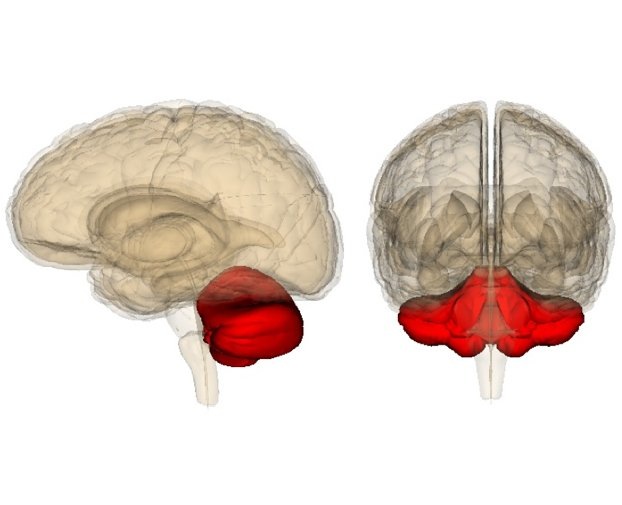
The cerebellum is a cue ball-sized part at the back of the brain that controls motor function. When it is damaged, people lose their ability to send accurate or timely messages from the brain to the body and vice versa, which frequently results in loss of balance and other motoring problems.
A Professor of Psychobiology, Mintz and his team built a computerized cerebellum that recreates how real rat brains send signals from the brain to the body and back. This was then attached to the disabled rat brain.
New Scientist reports:
To test the chip, [the scientists] anaesthetised a rat and disabled its cerebellum before hooking up their synthetic version. They then tried to teach the anaesthetised animal a conditioned motor reflex – a blink – by combining an auditory tone with a puff of air on the eye, until the animal blinked on hearing the tone alone. They first tried this without the chip connected, and found the rat was unable to learn the motor reflex. But once the artificial cerebellum was connected, the rat behaved as a normal animal would, learning to connect the sound with the need to blink.
This is a revolutionary breakthrough that has far-reaching consequences. Although much still needs to be learned about how the cerebellum sends signals in human brains, and all kinds of ethical obstacles will have to be overcome in order to apply this technology to brain-damaged human beings, it has the potential to change what it means to be human.
In order to tease out what it means to be natural, philosophers separate “nature” from “culture.” Human beings have developed a high-tech culture that changes their relationship to nature, a culture that fauna, flora, and ecosystems do not possess. But they caution that regardless of how advanced our technology or culture becomes, we still have to rely on natural systems to survive.
Read this excerpt from the University of Aberdeen’s Philosophy Department:
No matter what kind of exodus humans make from nature, they are going to remain male or female, with hearts and livers, and blood in their veins, walking on two feet, and eating energies that were originally captured in photosynthesis by chlorophyll. Culture remains tethered to the biosystem and the options within built environments, however expanded, provide no release from nature, which remains as a life-support system. Humans depend on air flow, water cycles, sunshine, nitrogen-fixation, decomposition bacteria, fungi, the ozone layer, food chains, insect pollination, soils, earthworms, climates, oceans, and genetic materials. An ecology always lies in the background of culture, natural givens that underlie everything else. Some sort of inclusive environmental fitness is required of even the most advanced, high-tech culture.
So, if we develop technologies like synthetic brain parts that allow animals (and eventually humans) to have two-way communication with computer parts, which challenges the notion – by the way – that we will always have hearts and livers, we ensure even longer survival rates of privileged members of our species. But we still have to survive on the earth’s finite resources.
Worldwatch Institute founder Lester Brown is famous for pointing out that if the whole planet eats like people in India, who consume on average 200 kilograms of grain per year (1/4 what the average American consumes), the planet can support 10 billion people a population we are expected to reach at least as soon as the end of this century. On the other hand, if everyone strives to achieve the American lifestyle – the goal of many in the developing world – the planet can only support 2.5 billion people.
Surely a moratorium on certain scientific developments – like overextending the life of a brain that has reached the end of its “natural” life – should be combined with family planning measures in order to ensure the long-term survival of our species?
More on population control in the Middle East:
The Latest Most Urgent Reason to Breed and Consume Less
How do Treehumpers Prevent Pregnancy?
MENA and Muslim Women: Can Having Less Babies Really Save the World?
Image: Life Science Databases (Wikimedia Commons)


Sam, if you knew me, you would eat your words! I work with the elderly, and have nothing but incredible respect for them. I think that this new development could possibly help Alzheimer victims, my mother in law lived with Alzheimer for about ten years. I am simply aware of limited resources, and that this technology will probably be available to the rich and few, and I have a vision of a more just health system that would help those who have no chance for a quality life, and have not yet begun to live.
Instead of finding ways to limit the population because of the resources, why not find ways to enhances production of resources efficiently to take care of the needs. People can take care of themselves if given proper skills and opportunities. The earth is capable of producing way more then currently produced. Like one can grown much veggies in pots on a deck or small backyard. There is so much waste taking place in our American society it makes me sick. I reuse and recycle all that I can and donate unused items to Thrift stores which support family services to all kinds of people. Israel is such a for runner of innovations, this kind of development would be a samll thing to develop and implement. Even the Africans could benefit. It amazes me with all of the technologies and advancements that people are still refugees in camps in the desert. These people are very capable of having and developing successful lives without the current suffering and starvation taking place. Some had successful farms and lives and they were run off their land and most have been killed. Now their farms are either run by others or just going to waste. What a shame! But things can change if we want them to.
I think it should be available to all people except those named Aviva. In all seriousness, why a cut off age? Elderly people have tremendous experience and wisdom to help keep humanity from repeating past mistakes.
I think that this is amazing, but should be applied to saving young human beings, and have a cut off age when people aren’t considered for brain chip operations, no matter how smart they are.
Why so age-ist?