

 Turkey is ahead of most European countries in its commitment to biodegradable plastics, says the CEO of Cereplast, an international biobased and compostable plastic manufacturer.
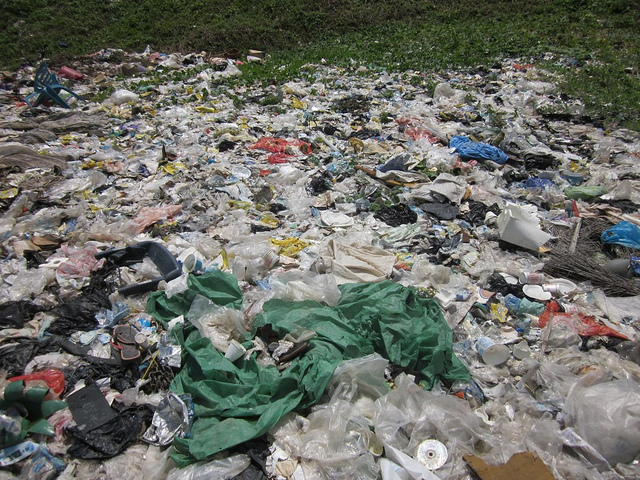
With over one thousand kilometers of coastline along the Mediterranean Sea, Turkey sees plenty of evidence of the environmental harm wreaked by plastic bags. The amount of plastic discarded into the sea is reportedly creating huge floating plastic islands in the Mediterranean, similar to the “Giant Plastic Patch” in the Pacific Ocean. Efforts by the Turkish government to limit Turks’ use of plastic products have been half-hearted and only partly successful.
But a new commercial agreement between a major Turkish plastic processor and an international plastic manufacturer suggest that, in the private sector at least, Turkey is taking measures to use more environmentally friendly plastics.
Under the agreement, Turkish company Polimernet Plastik will buy a set amount of bioplastic resin from Cereplast, Inc. and supply it to plastic product manufacturers throughout Turkey. For the remainder of 2011, Cereplast will sell Polimernet Plastik 100 tons of bidoegradable resin per month: enough to produce approximately 13 million grocery-size plastic bags.
It’s a small contribution to the estimated 400 million plastic bags that Turks use each month, but the amount of resin Polimernet Plastik takes from Cereplast will likely increase in 2012.
Cereplast Compostables (R) resins are made from corn, tapioca and potato starches sourced in the American Midwest. They will be issued to Polimernet Plastik in the form of pellets, which can then be turned into any form of single-use, disposable plastic. In an industrial composting facility, the products break down within 180 days.
Previous efforts have produced lackluster results
The Turkish government has been trying to limit the use of plastic bags in Turkey for some years now. Last year, the Ministry of Environment and Forestry created an entire commission tasked with reducing plastic bag usage. An entire Istanbul neighborhood, Kadıköy, was declared “plastic bag free”.
But Turks are apparently very attached to their plastic bags. Plastic bags are still given out by most shops in Kadıköy. And the new government commission hasn’t yet proposed any effective way of truly cutting back the usage numbers.
Turkey isn’t the only country with this problem. In Syria, for example, unlicensed plastic factories have complicated the government’s effort to reduce plastic usage, and have also induced the government to begin looking into plastic alternatives rather than trying to ban it altogether.
Indeed, most countries seem to be acknowledging that plastic bags are now a way of life for their citizens, and have shifted the focus from eliminating plastic to creating more environmentally friendly forms of it. The bioplastics industry in Europe is estimated to be growing at around 20% annually, according to European Plastics.
Bioplastics: not a clean-cut solution
Bioplastics are still an emerging technology, however, and must be carefully monitored.
In the United Arab Emirates, for example, the government wants to ban conventional plastic bags by 2013 by switching to “oxo-biodegradable” bags, which are still petroleum-based but incorporate additives that speed up the degradation process. As Green Prophet’s Tafline Laylin pointed out in May, however, these bags require a lot of oxygen to actually degrade — meaning that if they end up smothered under other solid waste in landfills, they’ll be just as long-lasting as their conventional counterparts.
Turkish supermarket chain Migros introduced oxo-biodegradable plastic bags of its own in 2009, touting them as evidence of its environmentally responsible outlook. Hopefully, other Turkish retailers will choose truly biodegradable plastic alternatives instead. The new Cereplast-Polimernet Plastik deal should make that much easier for them.
:: Market Watch
Read more about the environmental impact of plastic in the Middle East:
The UAE’s Plastic Bag Story Isn’t Eco-Happy Yet
Is the Mediterranean Sea Harboring A Giant Plastic Patch?
Syria Campaigns to Curb Country’s Voracious Plastic Bag Appetite
Image via dbutt


@ Oman: I think you’re absolutely right that most packaged products use far more plastic than is necessary at the moment. But without actual regulations on the amount of plastic used in packaging, I think it will be easier to convince plastic manufacturers to change the chemistry of the product they make rather than lower production altogether. Baby steps…
@ Tafline: I sure hope so! I know a lot of people who do this in the States. Unfortunately not so many here in Istanbul, where all-around awareness of the environment is lower.
This is a great article, as always. Seems to me that it would be so much easier to go back to the “good old days,” when everyone carried their own packaging. Is this realistic?
Putting more additives into plastic to make them Biodegrade if they are in air (rather than in a methane filled dump-site or sunk to the bottom of the ocean) seems rather pointless; are the additives safe would be an immediate question.
However a more fundamental one should be why is there a need for so much plastic?
excessively packaged products, thick plastic bottle to give the impression of the water inside being special, vast quantities of plastic carrier bags, consider not using any carrier bag for individual items, replacing plastic with an alternative etc etc
are the plastic product manufacturers driving this agenda? or blindfolding people to the alternatives?