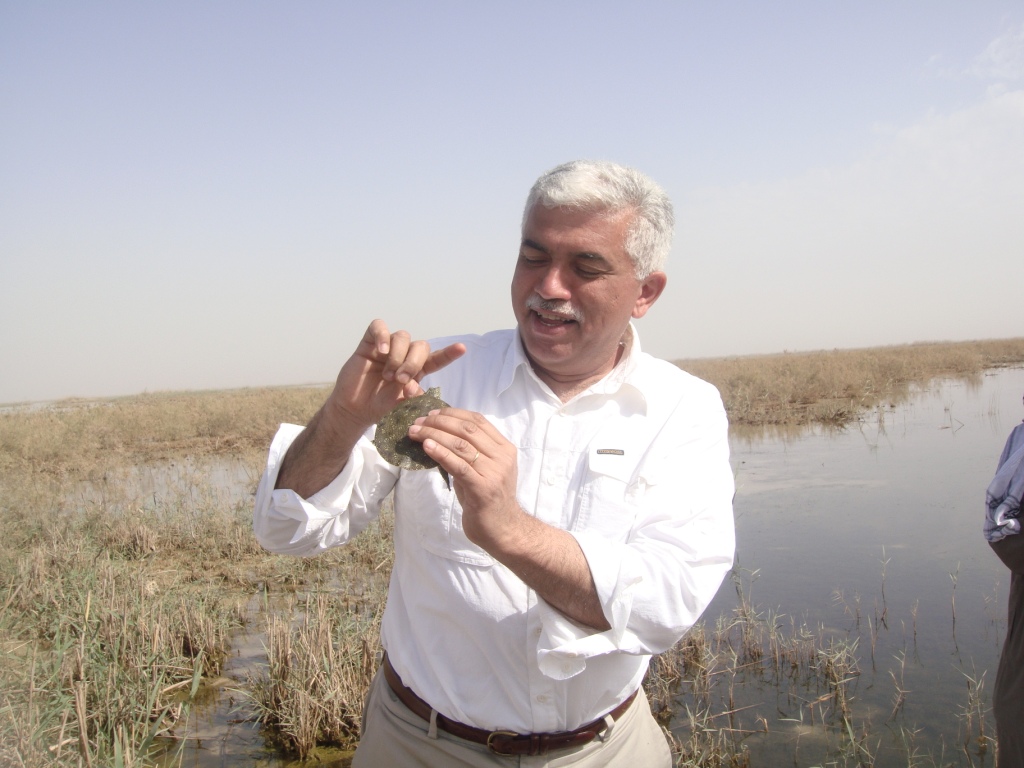

 In this two-part feature, Azzam Alwash tells us how he achieved the impossible and helped restore the Marshlands of south Iraq after its destruction under the Saddam regime
Travelling through the Mesopotamian Marshlands of Iraq on a boat with his father, Azzam Alwash felt he had glimpsed a garden of Eden- a land of abundance, peace and natural beauty. “In my childs’ mind eyes, the reeds were like forests with ‘trees’ extending to the sky and pathways made of small canals in which our boat floated. Every now and then we came to an open space through which air blew, cooling us down,” he recalls. “The sounds of frogs were all around us and the water was so clean you could see the fish scramming away from our boat. Birds would fill the sky when we disturbed them.”
Whilst Alwash’s memories of the time he spent as a young boy with his father in the marshes stayed with him, the marshes faced a rather brutal fate. In reprisal to the Marsh Arabs support of an uprising against the Saddam regime, in the 1980s the marshlands were drained of their water and life withered away.
Alwash was lucky enough to escape the turmoil of Iraq under Saddam to America where he trained as a hydraulic engineer, yet those early memories of the Marshlands never left him and when he returned 25 years later, he vowed to help restore that Garden of Eden. In 2004, he setup Nature Iraq, the country’s first and only environmental organisation with the aim of restoring the Marshlands- a task many believed would be impossible.
A Rich Ecosystem of Rare wildlife and Plants
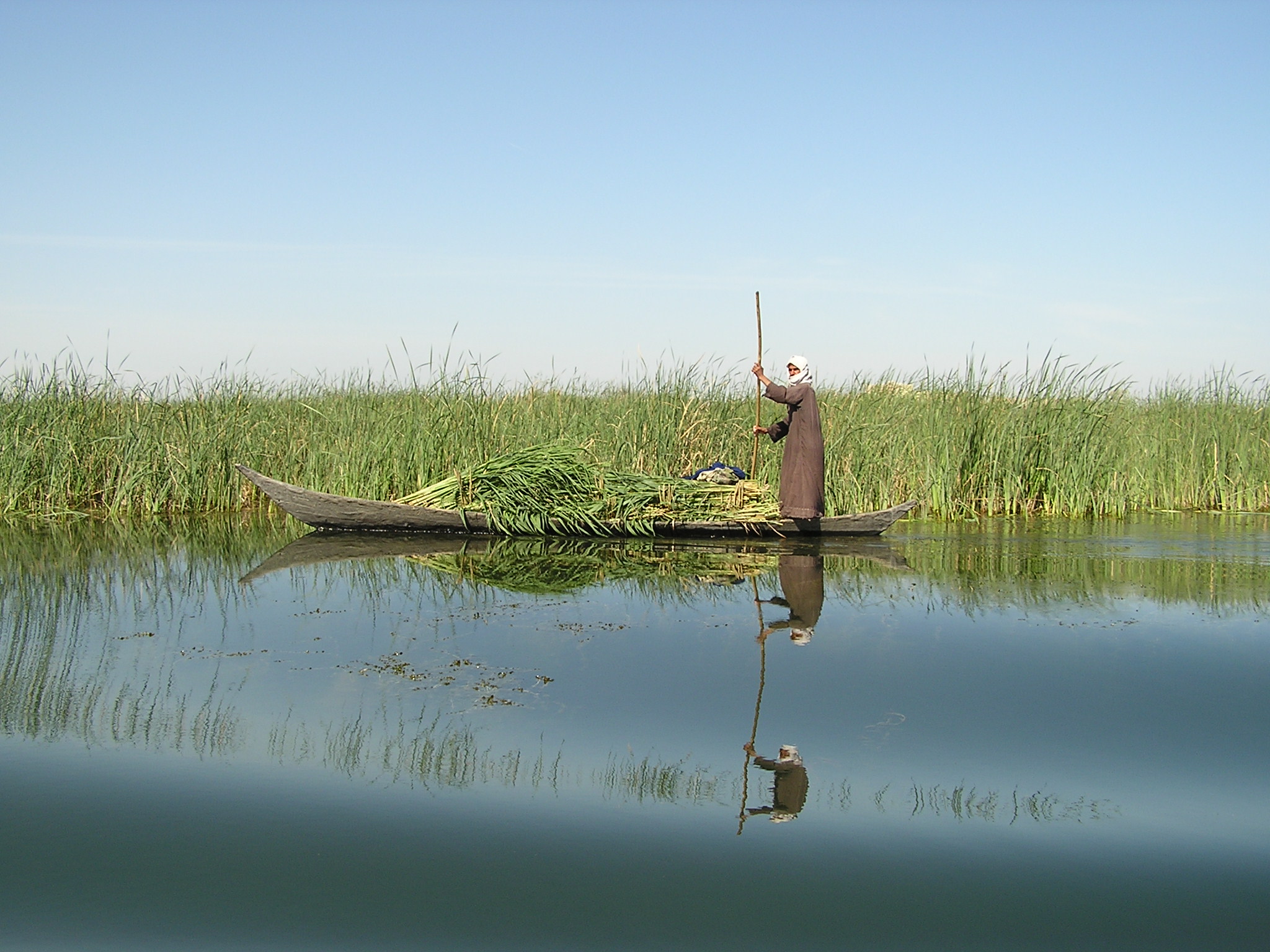
Stretching over 6,000 square miles, the Iraqi Marshland have played an important role in global ecosystems by supporting rare wildlife and rich biodiversity for over 7,000 years. The marshlands were home to birds such as the night heron, pied kingfisher, little grebes and marbled ducks as well animals such as wild boars, water buffaloes, foxes, otters and water snakes. It was a veritable verdant paradise of water and life in the middle of desert in which Marsh Arabs lived in reed huts and hunted in wooden boats.
Yet in the 1980s, the marshlands were drained by Saddam’s forces in retaliation of the Marsh Arabs support for an uprising against him. “The destruction of the marshes was sold by the regime of Saddam under the auspices of making more land available for agriculture (as if Iraq suddenly ran out of land) when in fact he was trying to deprive his opposition of a base of operations,” explains Alwash.
“The worst engineered environmental disaster of the last century”- UNEP
The United Nations environmental program described Saddam’s destruction of the Mesopotamian Marshlands as the worst engineered environmental disaster of the last century. Thousands of Marsh Arabs were killed, their reed huts were burnt down and water sources were poisoned to drive them out until half a million of Marsh Arabs were displaced either into Iran or North Iraq. Once considered to be the largest wetland ecosystem in the Middle East, the Marshlands shrunk to just 10 percent of their original size.
After a 25-year absence, Alwash decided to travel to Iraq in the summer of 2003 to visit the marshes. Although he was aware of the destruction wreaked on the marshlands under Saddam’s regime since 1994, he admits that he was still deeply shocked by what he saw. “The site of destroyed marsh areas were like a physical blow to me, the Garden of Eden that I had in mind was replaced by arid, dry, dead lands that extended to the horizon. The islands that once supported families now contained nothing but destroyed homes. The Garden of Eden had been turned into the ashes of hell.”
War And Water Shortages- The Marshes Begin To Recover
Even so, there were already signs of recovery when Alwash arrived. “Even before Baghdad fell, the people had started breaching dykes and disabling pumping stations that were used to prevent water from going into the marshes and to drain water, respectively. Nature is amazing. By March 2004, areas of the marshes had begun recovering to the point where they resembled the conditions of the past. Yet it was haphazard and not uniform. The natural flow pattern had been disrupted and the hydro pulse that was driven by the natural floods had stopped as a result of the dams built upstream in Turkey and Iran.”
The recovery of the Marshlands took another hit in the drought years of 2008 and 2010 when the restored marshes shrunk from 65% of their original size to around 35%. Now, however, the marshes are back on the right track and Azzam Alwash states that they are now at the half way point to full recovery. Water scarcity, however, remains a huge problem especially as the Mesopotamian Marshlands are part of the Tigris-Euphrates river basin shared by Iran, Iraq, Syria, and Turkey.
“The limited amount of fresh water available now is expected to be even less in the future as development upstream occurs and the population increases. The problem is both political in a sense as the sharing of water requires policies that make sure that the marshes get their fair share of the fresh water.”
Alwash points out that an agreement between Iraq, Turkey and Syria is the solution alongside efforts to improve agricultural irrigation techniques in Iraq to stop water resources being wasted. Furthermore, efforts need to be made to prevent waste and drainage water being dumped into the Tigris-Euphrates which the marshlands depend on. Without these changes any efforts to restore the marshlands would be futile as without water and clean rivers, they would simply dry up and wildlife would be unable to flourish.
Continue here with part-two of this feature where Azzam Alwash talks about the emergence of a new generation of Iraqi environmentalists, the real dangers of working under conflict and the role the Marsh Arabs have played in the restoration of the Marshlands.
Images via Nature Iraq.
For more on nature in Iraq see:
Restoring Iraq’s ‘Garden of Eden’- The Mesopotamian Marshlands
Iraqi Sheikh Threatens To Demonstrate If Kurds Don’t Share Water
A Profile of Iraq’s Environmental Woes