
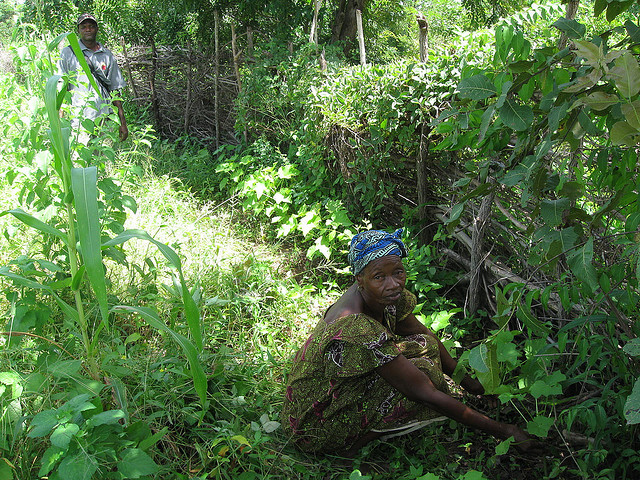

 The Jatropha plant may produce bio-diesel for cars but, like other biofuels, it also leads to a rise in food prices due to competition for land space
From solid gold biofuel Mercedes in Abu Dhabi to biofuel-producing algae lakes in Iran, it seems that biofuels are destined to play a part in the region’s future development. Now, Jordan has announced that it will be experimenting with planting Jatropha, a tree which produces high-quality biodiesel to be used in standard diesel cars. But are biofuels really the solution to the Mideast’s dependency on gas and oil?
The recent announcement from the Jordanian government that it will be cultivating an oil-producing plant no doubt received a mixed reception. On the one hand, anything which challenges the country’s heavy dependency on petroleum is surely a good thing. On the other hand is the whole issue of whether biofuels are actually sustainable or ‘green’ fuels that should be encouraged.
Food vs. Fuel
The Jatropha plant in question is a small tree or bush whose seed produces oil which can processed into bio-diesel and used directly in cars. According to the Jordan Times, by-products can also be used as biomass to power electricity or as fertilizer. This apparent win-win situation does however ignore the fact that plants cultivated for fuels are jostling for space with plants cultivated for food.
Forestland is already coming under pressure due to the growing demand for space to grow crops used for biofuels (or agrofuels as they are also known). As Danny Chivers points out in his no-nonsense guide to climate change, there are two major problems with biofuels: the land-grab causes an increase in the price of food and the demand for land also causes poorer farmers to cut down rainforests to create farmlands which contributes to climate change.
Biofuel Contribute to Rising Food Prices
We have already reported on the political implications of rising food prices in the region- a rush for biofuels which puts more pressure on food supplies would only aggravate the situation. Although biofuels do seem to provide a rather convenient quick-fix, which avoids dealing with our deadly dependence on oil or the need to sort out public transport to reduce people’s attraction to gas-guzzling cars, the reality is that it comes at the price of more expensive food.
Now, I can probably live without a car but I definitely can’t live without food so to my mind biofuels are simply a risk not worth taking.
: Image via treesftf on flickr.
For More Bio-Fuels in the Middle East:
Abu Dhabi’s Solid Gold Biofuel Mercedes Another Dubious ‘Green’ Development
With So Much Oil and Natural Gas, is Biofuel a Viable Mideast Fuel Option?
Israel Cleantech Intelligence: Clean Air and 6 More Headline



There are standards and certifications now for sustainable biofuels. I expect the E.U. and the U.S. to require only certified sustainable biofuels in the not too distant future. Also, much research is being done to find better plants for fuel use as well as genetically engineering plants to produce better results with less strain on resources. For example, in the U.S. much research is being done to produce Sweet Sorguhm in a sustainable manner since it is more productive than corn over the course of a year, is less water intensive, is able to use waste water, and requires less fertilizer.
I personally believe that FT fuels using wastes currently rotting in a landfill somewhere are a better answer, at least initially in most modern countries. FT fuels are drop-in fuels that are completely indistinguishable from current fossil fuels with the exception of being cleaner.
Wastes from the FT process will be mostly metals and glass which can either be recycled or used in civil applications such as roads and buildings. So, if a FT plant was built in the U.S. or the E.U. it would be a total winning situation since it would reduce the number and size of required landfills, produce diesel and gasoline, and reduce the costs involved in paving roads, as well as creating local jobs. Also, governments could write long-term contracts with the plant owner which would provide profit for the plant owner as well as reducing fuel costs for the government.
It seems folks are fretting over food/fuel. You CAN NOT EAT JATROPHA! It IS NOT CORN! It is a perennial that grows FUEL. How about planting jatropha in areas that DO NOT GROW FOOD. Good grief, there are millions of acres that have weeds and bushes that are of no use to humans or cattle. You can grow jatropha on lands that have weeds! What, are we eating weeds and bushes now? This stupidity would lead one to believe that all the land on Earth is covered with crops. GROW UP! We need a solution to this energy crisis, planting millions of jatropha trees will help the earth, help our gas tanks and keep our stomachs full. Where is common sense? It is not so common, I guess!
@ E Peacock: you bring interesting points to discussion. I’d hardly thought that “the food companies manipulated the markets and used biofuel as justification to raise prices”, but now that I think about it it seems like a worthy and likely claim.
In my wish to learn more about Jatropha as a potential biofuel I did more research and came to the opinion that Jatropha might be overblown as a potentially viable biofuel. Research apparently still being done at Yale seems to suggest that while Jatropha can grow in poor and impoverished soil, yields from Jatropha would consequently be small, and in order to increase yields you would need better soil, which Jatropha could also grow in. See http://e360.yale.edu/content/feature.msp?id=2147 for more info (excerpt below):
‘“If you grow jatropha in marginal conditions, you can expect marginal yields,” says Vincent Volckaert, the Africa regional director for D1.
And there’s the rub, says Bailis. “If you grow it in better agricultural conditions, all the alarm bells go off as you get into the same food-versus-fuel debate we’ve seen with [biofuel from] corn.”’
The article goes into various other problems with Jatropha production (mostly political rather than technological). So while I think Jatropha could theoretically end up being a viable alternative to other forms of biofuel, I think it’s rife with many of the same problems.
Re. “This apparent win-win situation does however ignore the fact that plants cultivated for fuels are jostling for space with plants cultivated for food” Jatropha is chosen because it can grow on impoverished soil unsuitable for food crops! Hence it is not a “fact” and need not compete for food.
Re “the reality is that it comes at the price of more expensive food”
The biofuel market has experienced a huge cut back in production due to removal of subsidies and in the US some estimates are that over 85% of biodiesel plants are moth-balled. However, this has had no impact on food prices. If the link you state was true why haven’t food prices fallen again? The fact is that the food companies manipulated the markets and used biofuel as justification to raise prices but there was little if any substance to the argument. However, fossil fuels cause food prices to rise as they are used to make fertilizers, for harvesting and transport.
Less than 7% of ALL vegetable oils were used for biodiesel. i.e. 93% were used for the food, cosmetic and chemical industry and the increase in demand is largely because of changing cultural trends in India and China who want more westernised products. I’m not suggesting that none of the oil demand is driven by biofuel (and the bioethanol/corn market certainly has a separate set of considerations), but Jatropha oil is mostly intended for biodiesel in a way that does not compete for food and it is important to realise what the main market forces driving more vegetable oil production are.
Many biodiesel plants operate(d) using animal fats, poultry fats, trap grease and used restaurant fats because food oil was/is too expensive and made the business non-profitable. There are limits to the supply of these materials though hence people looked to other non-food oils such as jatropha.
Jatropha plantations in non-agricultural land can lead to the conversion of poor soil into higher quality soil that allows interplanting with other crops. It also leads to job creation and fuel/power independence.
A lot of work is currently being done to convert non-food wastes into biofuel in addition to the longer term plans to produce fuels from algae which have the potential to give large yields of oil and other useful products per unit area. see http://www.oilgae.com for more information.
It is a mistake to describe biofuels as “disastrous”. When managed responsibly in an environmentally friendly manner they create real benefits over fossil fuels – reduced CO2 emissions, lower carcinogens, no engine conversion required, no expensive changes to infrastructure and a route to independence from fossil fuels for power generation. They are an important part of our renewable energy options. Like the wood industry, we need liquid biofuels but they need to be farmed and managed in environmentally friendly ways. Wood isnt inherently a bad material and neither are biofuels, they need proper management but are worth supporting.