Earthquake Damage to Japanese Nuclear Power Plants Should be Warning to Mideast Planners

Another Chernobyl in the making? Does the Middle East need this risk?

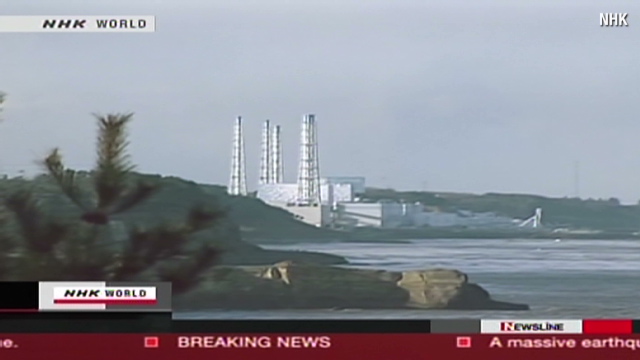
Friday’s devastating earthquake and tsunami waves in Japan have left that entire country in a state of shock, and power outages – even in the country’s capital, Tokyo. The 8.9 magnitude quake, the most massive Japan has ever experienced and the 7th largest in world recorded history, has not only caused a disastrous amount of property damage as well as well as loss of life, it has also resulted in some damage to a few of the country’s 52 nuclear power plants. The most serious effected are those nearer to the epicenter of the quake, especially the power plant at Fukushima I, located by the city of Okuma, 260 km from Tokyo. When the quake struck on Friday afternoon, March 11, the Japanese government ordered an immediate shutdown of this plant, and several others, including the newer Fukushima II plant located only about 11.5 km to the south.

Areal view of Fukushima I Plant

Due to fears of radioactive leakage, an immediate evacuation was ordered from an area within 20 km of the first plant, due to the plant’s not being able to cool down the plant’s nuclear fuel rods, as a result of damage caused by the earthquake and tsunami. The damage to the Fukushama plant has now resulted in an explosion occurring there which has “blown the roof” off of one of the reactors, causing significant radiation leakage.

Japan has had a “love-hate” relationship with nuclear energy, resulting from being the only country where nuclear bombs were exploded on its population at the end of WWII. Although the Japanese government has forbidden the development of nuclear energy for use in warfare, the country has been one of the world’s most prominent to use nuclear energy for producing electric power. This in itself seems a bit of a paradox, judging from its historical “connection” to the horrors of nuclear war; which are commemorated annually in the two cities where the bombs were dropped, Hiroshima and Nagasaki.

Hiroshima and Nagasaki nuclear blasts

Japan now depends on a third of its total power supplies from these nuclear power plants, which are scattered over the entire country, many in coastal areas to have the use of sea water for cooling nuclear fuel rods. Up till now, there haven’t been any major problems with these plants, despite the many earthquakes Japan experiences. As a result of damage caused by the March 11 earthquake, the government is currently in the process of make a “major assessment” to determine what needs to be done to make these plants more stable in the event of future earth quakes. That major assessment has now turned into a national emergency as at least 2 nuclear plants approach nuclear core meltdown.

Japan is not the only country that has embraced the use of nuclear energy for driving turbines to create electricity. Many other countries, including France, the U.K., Russia, and the USA have nuclear power plants as well.

Bushehr Nuclear Plant (under construction)

Enter the “nuclear age” in the Middle East. Iran now has a nuclear power plant at Bushehr, and other countries in the region, including Jordan, Qatar, and Saudi Arabia have plans to build them as well. Many areas of the Middle East are also in or near earthquake fault zones, including Iran, which is on the Mokran fault line, and where several major earthquakes have occurred.  Jordan is planning a nuclear power plant to be built near Aqaba, and is on the Syria –African Rift fault line. Nuclear plants in these areas could face radioactive particle leakage situations similar to what  is now occurring in Japan.

These possible dangers make many wonder why the use of nuclear energy for producing electricity is still so popular. This is especially so in Japan, with it’s nuclear past, and in the Middle East, where other fuels, such as natural gas and solar energy can be used instead. Iran’s desire for nuclear energy is said to stem from “other reasons” even though the Iranian government still insists it is developing nuclear energy for “peaceful purposes”. The same goes for other countries in the region, whose regimes are now worried about repercussions from popular uprisings in countries like Egypt, Tunisia, and Libya.

Bearing all of this in mind, countries in the Middle East might well reconsider the use of nuclear energy in this region.

Photo: NHK World/CNN:

Read more on nuclear energy and earthquake risks in the Middle East:

Qatar and Russia Co-op on Nuclear Energy

Nuclear Power Continues World Dependence on Middle East Oil

Is Iran Ready for the Next Tsunami?

Jordan Explores the Nuclear Option, despite Alternative Plans for “Clean” Fuel

Maurice Picow
Maurice Picowhttps://www.greenprophet.com/
Maurice Picow grew up in Oklahoma City, U.S.A., where he received a B.S. Degree in Business Administration. Following graduation, Maurice embarked on a career as a real estate broker before making the decision to move to Israel. After arriving in Israel, he came involved in the insurance agency business and later in the moving and international relocation fields. Maurice became interested in writing news and commentary articles in the late 1990’s, and now writes feature articles for the The Jerusalem Post as well as being a regular contributor to Green Prophet. He has also written a non-fiction study on Islam, a two volume adventure novel, and is completing a romance novel about a forbidden love affair. Writing topics of particular interest for Green Prophet are those dealing with global warming and climate change, as well as clean technology - particularly electric cars.

LEAVE A REPLY

Please enter your comment!
Please enter your name here

TRENDING

Play spogomi the garbage picking sport and win a World Cup

If the future of environmental action looks less like a lecture and more like a pickup game, that might not be a bad thing at all.

Ski Japan and skip the cherry blossoms

apan’s winters reveal a quieter magic far from the cherry blossoms — a landscape of deep snow, mountain silence, and steaming hot springs. From Niseko’s legendary powder in Hokkaido to the Olympic slopes of Hakuba and the ancient baths of Nozawa Onsen, Japan offers some of the world’s most sustainable and culturally rich ski experiences. With efficient bullet-train access, renewable-powered resorts, and geothermal onsens under falling snow, this is how to ski Japan responsibly — where tradition, technology, and climate awareness meet on the same mountain.

Iran’s water mafia and thirst for war leaves the country on brink of being dry

Iran’s Lake Urmia, once the Middle East’s largest saltwater lake, has shrunk by 90 percent due to mismanagement, dams, and drought. As Tehran pours billions into foreign conflicts, water activists face repression at home. The crisis mirrors Syria’s drought-driven unrest, showing how water scarcity can destabilize entire regions.

Octopus falls for the rubber arm trick – time to take them off the menu?

From a sustainability standpoint, this study feeds into a growing conversation around how we value marine life and intelligence in environmental policy. If octopuses exhibit this level of sentient processing, how should that affect the way we fish, farm, or conserve them?

Five Innovative Architecture Firms Building with Bamboo

Bamboo, often referred to as the "green steel" of the future, is quickly gaining popularity as a sustainable alternative to traditional building materials. With its fast growth cycle, minimal environmental footprint, and impressive strength, bamboo is emerging as a game-changing material for the construction industry. Not only is it an eco-friendly choice, but its versatility allows it to be used in everything from flooring to scaffolding, and even entire buildings.

6 Payment Processors With the Fastest Onboarding for SMBs

Get your SMB up and running fast with these 6 payment processors. Compare the quickest onboarding options to start accepting customer payments without delay.

Qatar’s climate hypocrisy rides the London Underground

Qatar remains a master of doublethink—burning gas by the megaton while selling “sustainability” to a world desperate for clean air. Wake up from your slumber people.

How Quality of Hire Shapes Modern Recruitment

A 2024 survey by Deloitte found that 76% of talent leaders now consider long-term retention and workforce contribution among their most important hiring success metrics—far surpassing time-to-fill or cost-per-hire. As the expectations for new hires deepen, companies must also confront the inherent challenges in redefining and accurately measuring hiring quality.

8 Team-Building Exercises to Start the Week Off 

Team building to change the world! The best renewable energy companies are ones that function.

Thank you, LinkedIn — and what your Jobs on the Rise report means for sustainable careers

While “green jobs” aren’t always labeled as such, many of the fastest-growing roles are directly enabling the energy transition, climate resilience, and lower-carbon systems: Number one on their list is Artificial Intelligence engineers. But what does that mean? Vibe coding Claude? 

Somali pirates steal oil tankers

The pirates often stage their heists out of Somalia, a lawless country, with a weak central government that is grappling with a violent Islamist insurgency. Using speedboats that swarm the targets, the machine-gun-toting pirates take control of merchant ships and then hold the vessels, crew and cargo for ransom.

Leopoldo Alejandro Betancourt López Turned Ocean Plastic Into Profitable Sunglasses

Few fashion accessories carry the environmental burden of sunglasses. Most frames are constructed from petroleum-based plastics and acrylic polymers that linger in landfills for centuries, shedding microplastics into soil and waterways long after they've been discarded. Leopoldo Alejandro Betancourt López, president of the Spanish eyewear brand Hawkers, saw this problem differently than most industry executives.

Why Dr. Tony Jacob Sees Texas Business Egos as Warning Signs

Everything's bigger in Texas. Except business egos.  Dr. Tony Jacob figured...

Related Articles

Popular Categories