

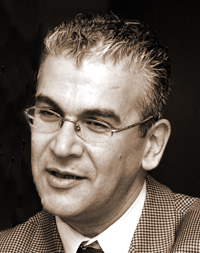
 Renowned photographer Camille Zakharia talked to us from Bahrain about his upcoming exhibit at Art Sawa in Dubai.
Camille Zakharia has photographed “the mundane” for as long as he can remember, but he is anything but. After fleeing Lebanon’s civil war in 1985, he has lived in the United States, Greece, Turkey, and Canada. But Bahrain is the place he now considers home, having lived there the past 12 years.
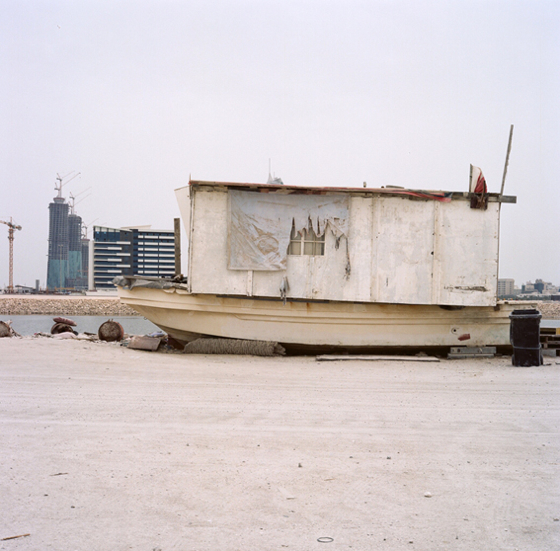
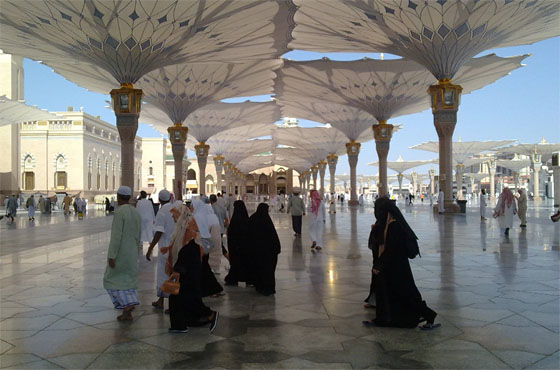
Typically he addresses issues related to sense of self, belonging and home, unsurprising for someone whose definition of home is necessarily fluid. But his recent exhibit called “Coastal Promenade,” which will be on show at Dubai’s Art Sawa beginning next week and was commissioned by Bahrain’s Ministry of Culture documents how Bahrain’s coastal culture and architecture has changed as a result of growth and land reclamation. While the country mourned its martyrs, Camille spoke gently about his role as documentarian of change.
 Thank you so much for agreeing to speak with us today, Camille.
Thank you.
Since you left Lebanon in the 1980s, your photography has been an exploration mostly of self-identity and place. Is Coastal Promenade a departure from these subjects?
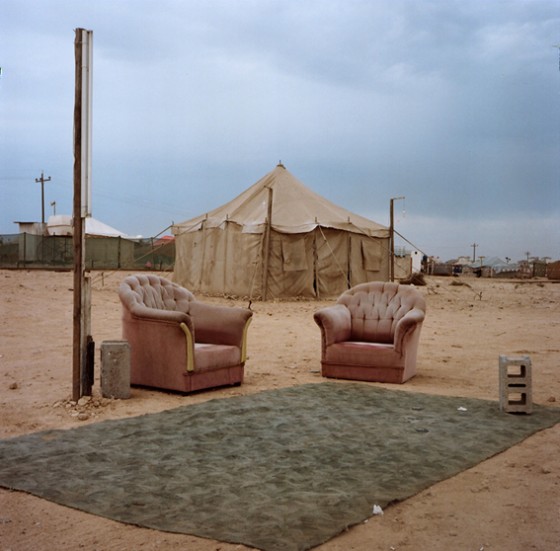
I’ve been photographing the mundane every day of my life. When the Ministry of Culture commissioned an exhibit with a focus on the coast itself, about coastal life, it became an extension of what I normal do. The nature of the images are similar to those I’ve done on my own projects… an element of documentation is always there.
 Can you say how the people you met along the coast have responded to the changes to their architecture and culture?
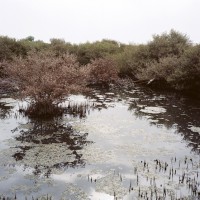
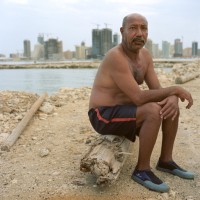
Everyone is very cautious about the changes that are happening all around, aware of what’s happening. For me it was important to document those changes so that the viewers look at the images in a very stark way. It makes them look at the images and say “what are we doing?”
In what way can you as a photographer depict environmental destruction differently than, say, a journalist?
I’m an observer of changes – all over the Gulf. I’m a witness to these changes, without judgment. I think it is important to document the changes for future generations, this visual data, so that they will have an understanding of what was happening here. In general, I am neither for or against what is happening along Bahrain’s coast.
Of course, you might ask: why point the camera in that direction and not in another? Of course, there is a preferred way of looking. But I am always attempting to be neutral in order to allow the viewer to examine the importance of the works – either positive or negative.
 I understand your professional attitude, but what was your personal response to what you witnessed?
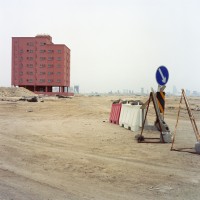
To be honest, I felt the time was too little to properly portray Bahrain’s coastal life. But it was the kind of project you can’t say no to, and I thought it was a beautiful challenge. I didn’t know where to start: at the fishermen’s huts? At inaccessibility because of development? I didn’t have a clue except to focus on the coastline in the most truthful way, to capture the true color of the place. After a few months we all started seeing a unique characteristic through the fishermen’s hearts.
Did I have any misconceptions? I don’t think so. I learned – maybe not about the environment – but about keeping a documentary. We are travelers in time, we observe the world around us, we are examining the world from our own perspective. I thought I knew the coastal line but thinks have changed so much. Perhaps I learned never to underestimate the ongoing changes.
 As cultural minister Sheikha Mai has done a lot to restore Bahrain’s cultural heritage through a series of initiatives, including the Reclaim project of which your exhibition was originally a part. Can you comment on this?
Yes, Sheikha Mai has made many changes on the cultural and heritage level. Her contribution has really been tremendous, maybe immeasurable. I don’t know if it will affect the fishermen, I doubt it, but I hope her work will pay off and get the attention that it deserves.
 It would be impossible to ignore the question of Bahrain’s protests. Is there a way that the country’s discontent can be linked to the causes of the coastal changes?
That is a difficult question. I can say that I feel tremendously sad for what is happening. This is a beautiful island, and for me a small haven. It is extremely terrible.
Okay, I understand it’s a difficult question. Can you tell us what else you are working on at present?
I am preparing right now for the coming Venice Biennale for the Lebanon Pavilion with a personal project titled “Field of Remembrance.” In the last 3 months, I have been documenting the desert, and how it gets transformed during the winter time when people go camping. The project is ongoing and titled Al Bar. This is an extension of the Coastal Promenade, except in the desert.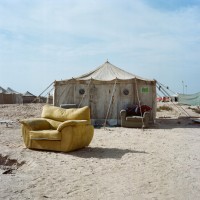
I will also be working on a project titled “Belonging,” asking expatriates in Bahrain about their concept of the same. 34 people took part. It is composed of a straight photograph of the participant and an audio piece. 5 minutes recording will be broadcast during Art Dubai in March with Island Arts.
In terms of touring exhibitions, my work is currently touring the Middle East with the Jameel Prize 2009, which opened at the Victoria and Albert Museum in July 2009 and is currently on display at La Villa des Arts in Casablanca, Morocco. It will move to Bahrain in March 2011, during the Spring of Culture.
Thank you Camille, it was such a pleasure to talk to you and we wish you the best of luck and safety.
Thank you Tafline, it was a pleasure talking to you.
More on Bahrain, Art, and the Environment:
Sheikha Mai Saves Bahrain’s Architectural Heritage
Reclaiming Bahrain’s Coastal Heritage in Venice
Camille Zakharia Coastal Promenade Photo Exhibition Opens Soon in Dubai
all images copyright Camille Zacharia
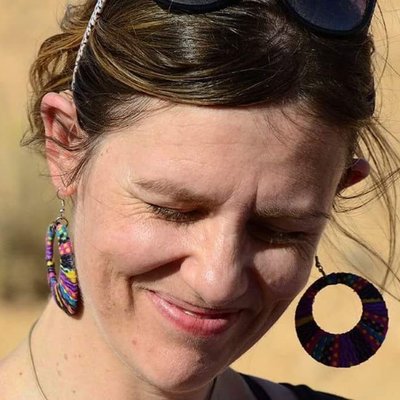

Did you know Camille also teaches how to use photography for documentary purposes.