Islam’s Environmentally-Friendly Architecture – Where Did It Go?

green architecture islam

From luxury architecture in Mecca to the blinged-out buildings of Dubai, it seems that Islamic architecture is all about opulence and grandeur. The bigger and the more lavish- the better but it hasn’t always been like this. In the past, Islamic architecture relied on natural materials and some of the most iconic Islamic buildings were ones of simplicity and modesty– think the Kaaba in Mecca. Mud was something that was heartily used and architecture sought to reflect the environment rather than to outshine it. Today, the renowned architect Ibrahim Mohammed Jaidah states that the fading green credentials of Islamic architecture are in need of revival.

The Qatar Green Buildings Council (QGBC)- which promotes green architecture for the health of the environment, people and economic security- hosted a lecture to explore environmentally friendly Islamic architecture in the region over the weekend. Although the QGBC is a growing green building council with more than 90 companies and individuals as members, the lack of environmentally-friendly Islamic architecture was hard to ignore.

Losing Touch With Islamic Principles of Moderation

Ibrahim Mohammed Jaidah, a renowned Qatari architect, told the Peninsula Qatar that “the new developments in Islamic cities don’t reflect the Islamic art of architecture as it was in the past.” He explained that ancient Islamic cities were built on principles of simplicity, they were economical and environmentally friendly in line with Islamic teachings: “Kaaba, the first building chosen by Ibrahim was reflecting the simplicity of Islamic architecture.”

Today things are very different. Many Gulf states seem in race to build the ‘most lavish’, ‘the tallest’, ‘the most expensive’ building with ecological credentials and Islamic principles of moderation taking a back seat. Even in Mecca, the centre of the Islamic faith which Muslims face when they pray, criticism were made of the latest architectural addition which came in the shape of the ‘Royal Mecca Clock Tower’. A massive building towering over the Kaaba, it appears to be nothing but a Big Ben rip-off with a massive shopping mall, a 800-room hotel as well as large prayer halls for the pilgrims. A slapdash effort has been made to incorporate Islamic architecture which amounts to nothing more than a crescent on top of a spire and Arabic numerals.

What Would The Prophet Do?

It’s time that the quest for gimmicky world records came to an end, replaced by a renewed recognition of the more sustainable tradition of Islamic architecture. I have previously written about the epic mud structures of the Muslim world such as the Great Mosque of Djenne in Mali, the ‘Manhattan of the Desert’ in Yemen and the Bam citadel of Iran. These mud structures,which are incredibly durable and environmentally friendly, show that Muslim architecture can be kind to the planet. In fact, the Prophet Muhammed (pbuh) was said to have prayed in a mosque made out mud bricks and palm trunks which would have incurred minimal waste and harm to the environment. So if mud and palm trunks are good enough for the prophet, why aren’t they good enough for us?

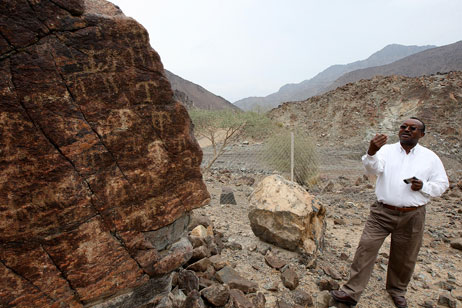
:: Image via Wolfgang Staudt on Flickr.

For more on Islamic green architecture:
Luxury Architecture In Mecca: Has Hajj Lost Its Egalitarian Spirit?
Mud Structures In The Muslim World: Spectacular & Sustainable
Cambridge To Build Europe’s First Eco-Mosque
Arwa Aburawa
Arwa Aburawahttp://www.greenprophet.com
Arwa is a Muslim freelance writer who is interested in everything climate change related and how Islam can inspire more people to care for their planet and take active steps to save it while we can. She is endlessly suspicious of all politicians and their ceaseless meetings, especially as they make normal people believe that they are not part of the solution when they are the ONLY solution. Her Indian auntie is her model eco-warrier, and when Arwa is not busy helping out in the neighborhood alleyway garden, swap shopping or attempting fusion vegetarian dishes- with mixed success, she’d like to add- she can be found sipping on foraged nettle tea.
4 COMMENTS
  1. iam so pleased to read this article.Being an architect myself,and having a great passion for green architecture,i totally agree with you.
    yes,moving forward into the future realistically we see that our natural resourses are exhausting at a very rapid pace and its time we give back to our planet by having sustainable architecture.
    I really loved the last question……if we truly are creative ,we can have clean beautiful architecture even with simple available local materials.”Innovation” is the word!!
    (PS:the clock tower is horrendous.)

  2. Re: “So if mud and palm trunks are good enough for the prophet, why aren’t they good enough for us?” – amen! It seems by going all bling we’re not behaving as if Prophet PBUH is our EXAMPLE … to FOLLOW, but like some kind of extremist football fans almost which treats its main players like celebrities (in a not truly Islamic sense)… sorry not able to get my words right tonight… trying to say we should move forward (not ‘back’ as that may be perceived as ‘retrograde’) by reinterpreting the ESSENCE of what Prophet PBUH stood for, not just pious-looking facade. My 2p (and God knows best). In peace, Rianne

  3. Good questions! And not just for the Muslim world. I’m pleased to read that McMansions are also no longer so appealing in the US.

LEAVE A REPLY

Please enter your comment!
Please enter your name here

TRENDING

We saw peace – an interreligious encounter deep in our eyes

They came from Israel, Palestine, Jordan, Iraq, Yemen, Morocco, Tunisia, Lebanon, Egypt… There are Sunni Muslims, Shiite Muslims, Jews (Orthodox and Reform), Orthodox Christians, Coptic Christians, Protestant Christians, Druze, Baha'is, a Scientologist.

An Army of Healers Wins the 2025 IIE Goldberg Prize for Peace in the Middle East

In a region more accustomed to headlines of loss than of listening, the Institute of International Education (IIE) has chosen to honor something quietly radical: healing. The 2025 Victor J. Goldberg Prize for Peace in the Middle East has been awarded to Nitsan Joy Gordon and Jawdat Lajon Kasab, the co-founders of the Army of Healers, for building spaces where Israelis and Palestinians — Jews, Muslims, Christians, Druze, and Bedouins — can grieve, speak, and rebuild trust together.

Saudi Arabia’s grand mufti Sheikh Abdulaziz bin Abdullah al-Sheikh dies at 84

As Saudi Arabia accelerates its transformation, the passing of its top cleric who memorized the Qu'ran at age 10 underscores the changing face of religious authority and perhaps tolerance in a kingdom increasingly defined by megaprojects, oil wealth, and the House of Saud’s push to rebrand itself for a post-oil world. 

Inside the Kaaba: Islam’s Hidden Heart

We've all heard about Mecca, but what does it look like inside the black cube that Muslim pilgrims walk around? We take a peek inside.

A guide to rewilding your cities

Tel Aviv has started giving away free fruit trees in a bid to re-wild its city and make it greener. They are calling it an urban food forest. Researchers from Berlin come up with a blueprint on how to green and re-wild your city. You could use this with new greening AI research from MIT to make your city remarkably green.

Qatar’s climate hypocrisy rides the London Underground

Qatar remains a master of doublethink—burning gas by the megaton while selling “sustainability” to a world desperate for clean air. Wake up from your slumber people.

How Quality of Hire Shapes Modern Recruitment

A 2024 survey by Deloitte found that 76% of talent leaders now consider long-term retention and workforce contribution among their most important hiring success metrics—far surpassing time-to-fill or cost-per-hire. As the expectations for new hires deepen, companies must also confront the inherent challenges in redefining and accurately measuring hiring quality.

8 Team-Building Exercises to Start the Week Off 

Team building to change the world! The best renewable energy companies are ones that function.

Thank you, LinkedIn — and what your Jobs on the Rise report means for sustainable careers

While “green jobs” aren’t always labeled as such, many of the fastest-growing roles are directly enabling the energy transition, climate resilience, and lower-carbon systems: Number one on their list is Artificial Intelligence engineers. But what does that mean? Vibe coding Claude? 

Somali pirates steal oil tankers

The pirates often stage their heists out of Somalia, a lawless country, with a weak central government that is grappling with a violent Islamist insurgency. Using speedboats that swarm the targets, the machine-gun-toting pirates take control of merchant ships and then hold the vessels, crew and cargo for ransom.

Leopoldo Alejandro Betancourt López Turned Ocean Plastic Into Profitable Sunglasses

Few fashion accessories carry the environmental burden of sunglasses. Most frames are constructed from petroleum-based plastics and acrylic polymers that linger in landfills for centuries, shedding microplastics into soil and waterways long after they've been discarded. Leopoldo Alejandro Betancourt López, president of the Spanish eyewear brand Hawkers, saw this problem differently than most industry executives.

Why Dr. Tony Jacob Sees Texas Business Egos as Warning Signs

Everything's bigger in Texas. Except business egos.  Dr. Tony Jacob figured...

Israel and America Sign Renewable Energy Cooperation Deal

Other announcements made at the conference include the Timna Renewable Energy Park, which will be a center for R&D, and the AORA Solar Thermal Module at Kibbutz Samar, the world's first commercial hybrid solar gas-turbine power plant that is already nearing completion. Solel Solar Systems announced it was beginning construction of a 50 MW solar field in Lebrija, Spain, and Brightsource Energy made a pre-conference announcement that it had inked the world's largest solar deal to date with Southern California Edison (SCE).

Related Articles

Popular Categories