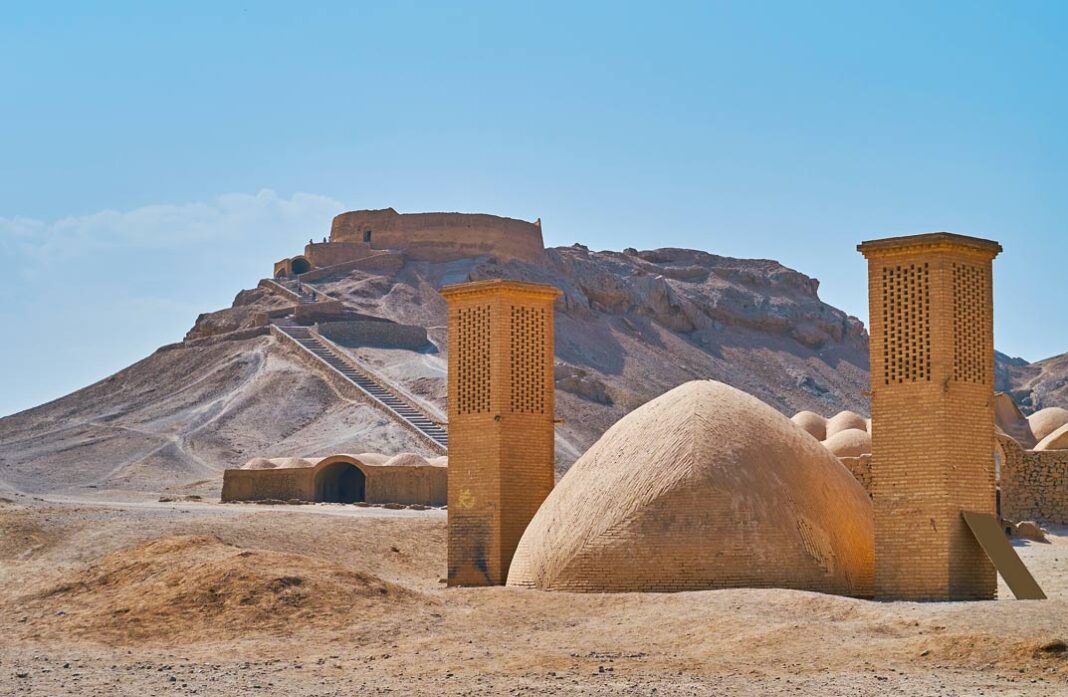


The Tower of Silence, a “green” and ancient burial site in the West of Yazd, Iran. This ancient sky burial site of the Zoroastrians is where corpses were placed atop a tower to be consumed by vultures, last done in the 70s. A culture similar to Tibetan Buddhism.

Until 40 years ago, corpses could still be found on top of the Towers of Silence in Yazd, Iran, slowly disintegrating or being picked apart by desert vultures. The west – eager to learn about green burial and holiday traditions – doesn’t need to invent the wheel. Head over to Iran and see the religious ceremonies and traditions in the Zoroastrian religion and culture that are linked to nature –– like the well-known and popular Zoroastrian spring festival Nowruz.
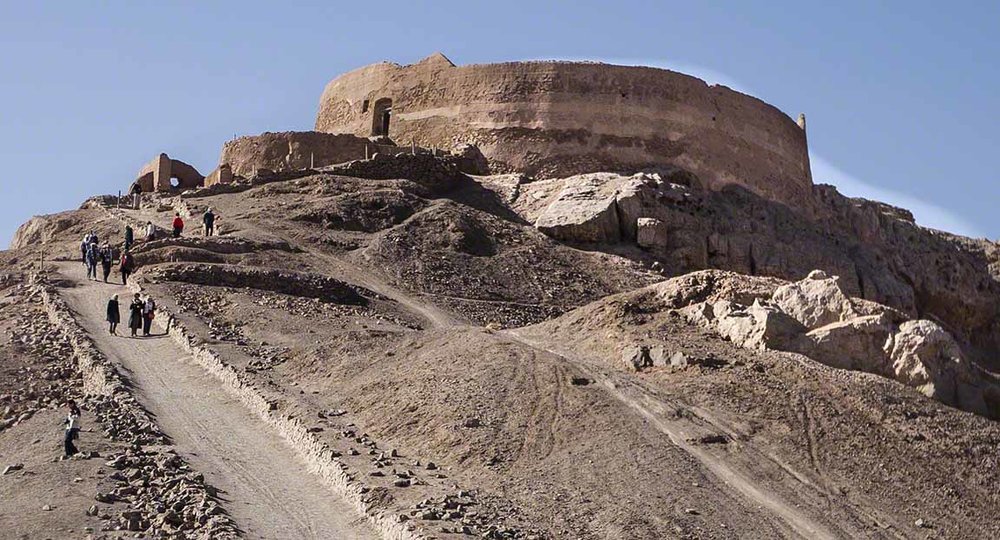
Iranians and have always respected these old traditions. Other ceremonies like Mehregan festival are drawing the attention of Iranians more during the recent years. However, there are points in the old religious culture ancient Persia, which today many Iranians even not too knowledgeable about. One of these traditions is the Zoroastrianism funeral ceremony. And we love it because it’s green.
The religion that Zarathustra introduced does not recommend burying the corpse of the dead. Instead the corpse is washed and put in a special tower to be exposed to the sun and birds of prey. Zoroastrianism believes that the unclean corpse pollutes the soil, so the whole ceremony is done up high, so that the dead corpse is decomposed and is sent back to the nature.
The Zoroastrian Funeral is linked to Nature

The Zoroastrian funeral is based on the belief that the dead corpse is unclean and preservation of the environment. So the dead are not buried. First they are washed with special ceremony and then the corpse is set on a high construction or tower called Dakhmeh in Persian. In some sites this Dakhmeh translates to the “Tower of Silence”.
After being cleaned, the corpse is set in front of the sun and the birds eventually come in.
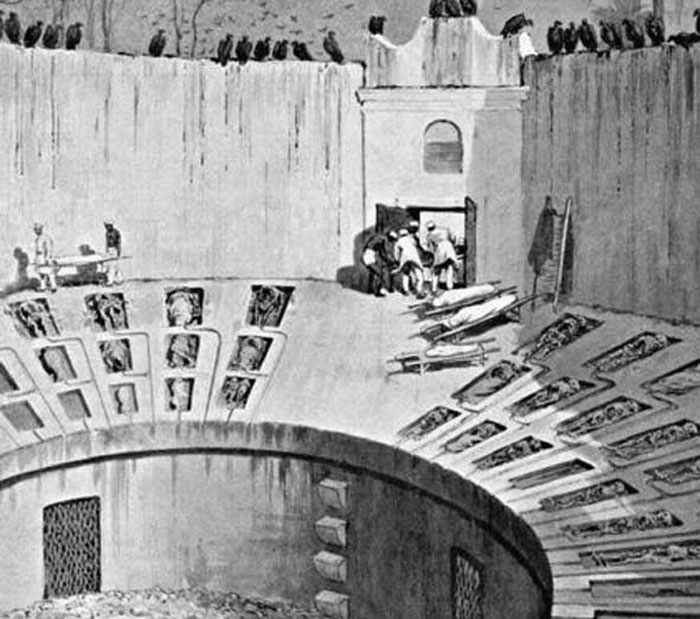
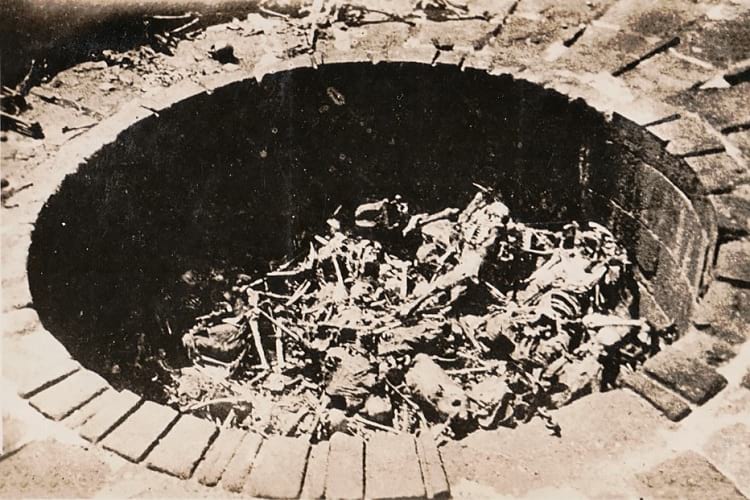
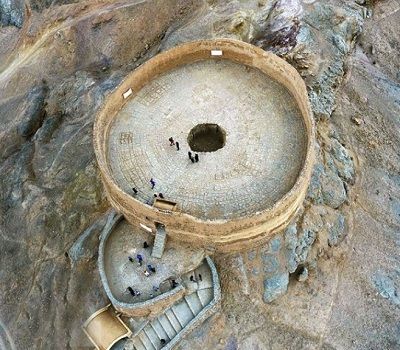
The towers of silence are round, stone constructions with a flat top. The bones of the dead were put in a well-like depth in center of the tower, which was called a stoudan. Men, women, and children were put in separately in different places of the stoudan.
One of the most famous towers is the one near Yazd in center of Iran, which has an approximate height of 200 meters. The construction has a diameter of more than 50 meters.

The traditional way of Zoroastrian funeral was almost forgotten in the twentieth century and burying the corpse was used instead. The Zoroastrians buried the dead in Tehran starting about 1930, in Kerman in 1940 and in Yazd (famous for their amazing wind catcher invention) in 1960.
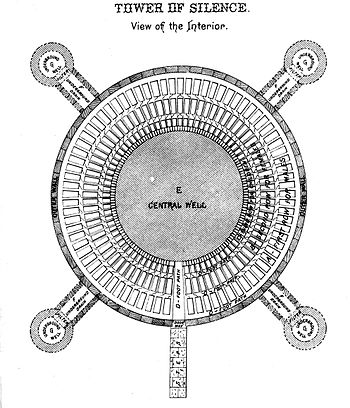
The Parsi community of India has an importance share of preserving the religious traditions. There are towers of silence in India too. In some parts, the traditional religious funeral is still practiced.
The Philosophy of the Zoroastrian Burial Rite
There are two main points in the funeral philosophy. The first is that nature should not be polluted and the corpse is a pollutant of the nature, which we’ve talked about already. There are four elements in Zoroastrianism, which are air, water, soil, and fire. These elements are to be respected and man should try to preserve them. That is why the Towers of Silence were built up high.
The place where the dead body is washed, placed on the tower and its remains are kept on a higher level on the ground to be away from the soil. A special example of such places is the Tomb of Cyrus the Great in Pasargad near Shiraz, which is some steps higher than the ground.
The second aspect of this philosophy is that human is composed of body and spirit. The body of human beings is to be respected, but it’s mortal. After death it goes back to the four main elements of the world. But the spirit joins god and reaches ever lasting peace.
Of course in the modern world, it is our option to choose both our life “styles” and death “styles”. The main criteria against which the styles are guarded are dignity and happiness. Ancient cultures and religions do it with regards to nature. Other green burial traditions in tune with nature is seen in other environmental religions like Indian religions. (both links go to PDF).
Are the Towers of Silence still used?
No, they are no longer used for burial—Zoroastrians have adopted alternative “clean death” methods, such as burying bodies in cement-lined coffins to prevent contamination of the earth. Though Yazd’s Towers of Silence are now relics, Zoroastrians elsewhere maintain the same dakhma tradition.
Zoroastrians are the oldest remaining religious community in Iran. Prior to the Muslim conquest of Iran, Zoroastrianism was the primary religion of Sassanid Iran.
According to the country’s official census, there were 25,271 Zoroastrians in the country as of 2011, but some unofficial accounts suggest higher figures. Zoroastrians, are persecuted in Iran, and a history of forced conversions to Islam over the centuries have prevented them from practicing their religion freely.
It was particularly tough for Zoroastrians during the the 1979 Islamic Revolution and remaining numbers of them were reduced even more. Just after the revolution, during Bazargan’s premiership, Muslim revolutionaries “walked into the main Zoroastrian fire temple in Tehran and removed the portrait of the Prophet Zoroaster and replaced it with one of [Ayatollah] Khomeini“.
More readings on green religion:
Prince Charles on Islam and the Environment
Saudis Listen to Call for Green Hajj
Eco-Activist Yeshiva Offers Summer Session That Brings Torah Down to Earth