
 Israel’s main wine event showed a welcome growing trend towards more natural wines.
“Natural wines” are taking off in Israel. At the Sommelier wine event, held in Tel Aviv last night November 8th and continuing through today, we found that some wineries already have organic vineyards, while others are greening their production facilities through recycling and water conservation. Innovations like wind- and solar-powered wine production are happening in Israel already. At our last visit to a major wine exhibit, there were far fewer signs of green winemaking. It’s encouraging to see the change.
We were also happy to note that throughout the exhibit, snack trays and forks used for cheese platters and crackers were paper-based and biodegradable.
 The manager of the Or HaGanuz winery told us they are reducing the use of bi-sulfates in the wine and hope to have a completely sulfite-free wine by the end of 2010. Sulfite is a natural by-product of the winemaking process which helps preserve the wine, but the natural quantity isn’t enough to completely protect it from souring. Winemakers usually add some to their wines. Some people are allergic to sulfite and get headaches after drinking sulfited wine.
Reuven Rubin of the Golan Heights winery explained that their Odem vineyard has been organic for 12 years already. When we asked what the winery does to expand their organic line, he said,
“It’s a huge effort, but we’re open to innovations. For example, right now we’re working with the University of Tel Aviv to breed a moth whose odor repels other, harmful, insects. We’re hoping that this moth will help us eliminate the use of pesticides. Our worn plastic bags get recycled. Some of our energy comes from windmills. We don’t irrigate our vineyards and depend only on rainfall. The pomace (squeezed-out grape skins left over from fermenting) doesn’t get thrown out – we spread it out on the vineyard soil as mulch. Our aim is to make the whole winery organic, but it will take at least 15 years.”
Oren Sela of the Tabor winery was proud to tell us of Tabor’s green efforts.
“Our white wines now have screw tops, not corks. All the water used in production is returned to agriculture. We feed the vine trimmings to the cows, who really like them. All our used plastic bags and cardboard boxes get recycled.”
The boutique Sassy winery uses traditional farmer’s ways in their vineyard, weeding by hand and without using pesticides. They do add sulfite to their wine.
Likewise, the small Gush Etzion winery has an organic vineyard and also makes a blackberry liqueur from unsprayed berries. Sulfites are present in their wine.
Let it be said that we don’t regard sulfites in wine as obnoxious. Wine is delicate and can go sour on the turn of a dime if not protected. The quantities allowed in commercially-produced wines is regulated by law; we heard “We add sulfites according to the legally safe standard” over and over again last night. In our view, pesticide-free wine grapes and clean soil are much more crucial.
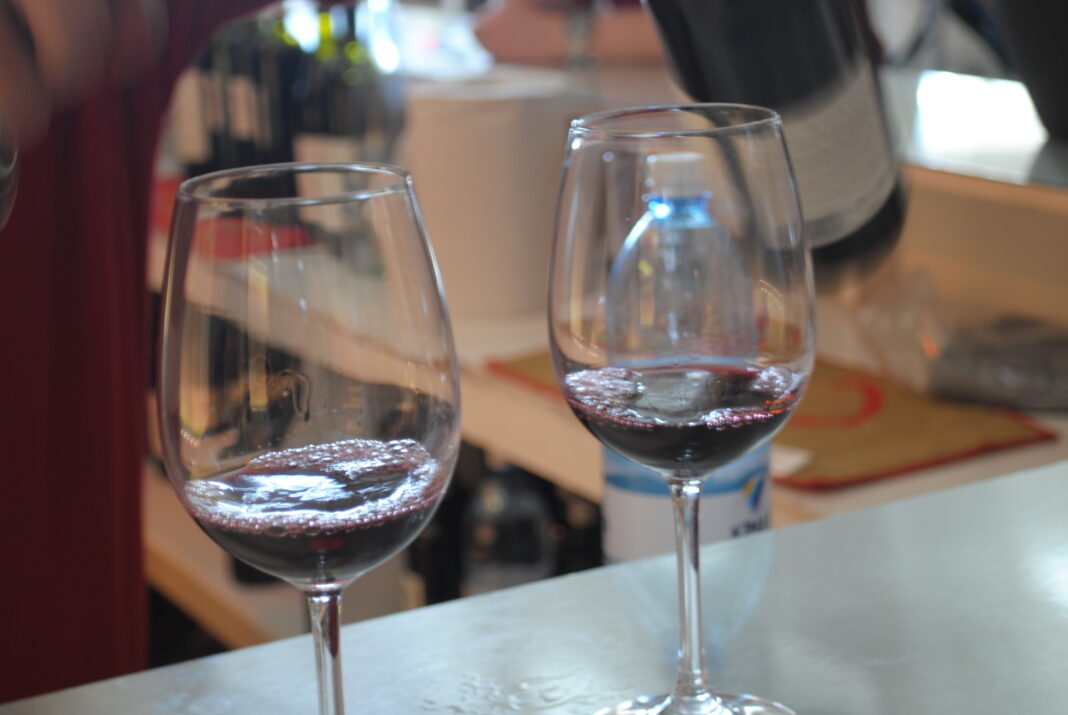
We tasted the Golan Heights’ Odem Merlot 2004. It was a treat, rich and fruity with notes of light fruit like strawberries and cherries. A sign of more good things to come.
The Sommelier wine exhibit is open to food and wine professionals only. It continues through today, November 9th, from 12:00 to 9:30 PM, closing its doors at 7:30 PM. The location: Heichal HaTarbut, Tel Aviv.
More on green wine:
Photos by Miriam Kresh.
Miriam Kresh also writes a food blog.