


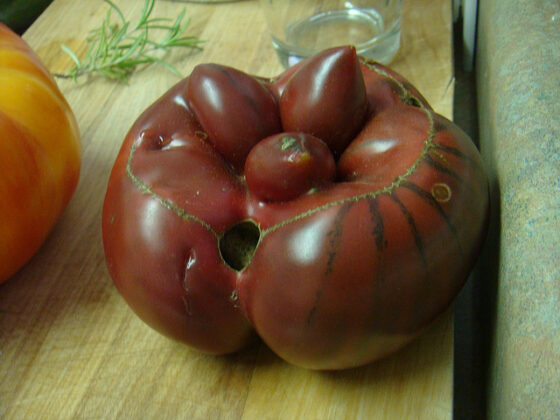
 Though hunger is a compelling reason to consider GMOs, we are introducing too many genetic unknowns and defying nature’s superior wisdom.
Turkey’s organic industry is picking up speed despite the continued use of chemicals for some farms, and various other Middle Eastern countries have demonstrated that local, natural farming practices can be sustainable. Even Dubai’s desert environment can produce delicious fruits and vegetables if given sufficient care. But projected population increases and fears of subsequent food shortages, as well as recent spikes in food prices, is bolstering the argument to perpetuate Genetically Modified Organisms (GMOs) in the agricultural sector.
In the developing world, this is an especially contentious debate since it is considered inhumane to refuse food – regardless of how it has been tampered with – when people are starving. However, GMOs pose considerable risks, some that science can’t even begin to predict, and many countries have banned their growth and use.
Turkey on a pedestal
At the Global Economic Symposium in Instanbul, the Executive Director of the Syngenta Foundation for Sustainable Agriculture (SFSA) Marco Ferroni put Turkey on a food production pedestal.
“Turkey could well be the main food provider of its neighbors. It has the potential to do so,” Ferroni told the Hürriyet Daily News & Economic Review. “If science and sensible policies prevail, if strategic investments are made and the markets function properly, food demand could be met in a sustainable way.”
Statistics show that by 2050, with another 2.3 billion people seeking out food, the demand could double. This puts particular impetus on the agricultural industry to bolster their production capabilities.
Mr. Ferroni suggests that improving harvest technology and food processing would go a long way to reducing waste, and that countries should reduce biodiversity loss and forest destruction, but that GMOs are another solution.
The GMO wagon
“[GMOs] are certainly not the only way, but they are an option that some countries could apply for the sake of meeting increasing demand to fight hunger,” he told the paper.
“Acknowledging that developed countries also have doubts on GMOs, he said: “I can understand Turkey’s concern, but in the end, the technology used for this process has been practiced for nearly a decade now. Brazil today is the biggest soybean and oil producer in the world through GMOs.”
Syngenta is the biggest maker of agricultural chemicals and a leading producer of GMOs, according to Hürriyet Daily News & Economic Review.
Potential threats
According to the Food and Drug Administration, the following are the main concerns related to GMOs:
- Gene Escape: for example, herbicide resistant weeds could get into weeds; once released, it would be difficult to retract a GMO;
- Genes could mutate and artificial genetic infusion could destabilize the organism;
- Sleeper genes could be accidentally activated; it would be hard to predict how the organism would react to perceived attack;
- GMOs could compete with or breed with existing populations that could then be lost; however, this possibility already exists with natural breeding techniques;
- It is unknown how GMOs will interfere with birds, insects, and soil;
- There is a risk that allergens will be transferred to humans;
- Unless proper controls are put in place, there is a chance that genetically engineered foods not meant for humans will enter the food chain. This happened with the maize called Starlink;
- Humans could develop a resistance to antibiotics;
- Powerful conglomerates (such as Monsanto) could dominate the business and marginalize smaller farmers ;
- And finally, there is concern that intellectual property rights on GMOs could slow research.
Don’t be clever
Different countries have taken different stances on the growth and distribution of GMOs. Some like France and Japan have banned them outright, while others will allow certain GMOs and not others.
Hunger is a powerful incentive to tamper with food genes to make them more resistant to disease and drought, but the potential results are too uncertain and set a dangerous precedent. Nor is the argument that they have already been circulated for ten years sufficient. That I have been poisoning my brother every day for the last ten years is not a good enough reason to continue doing so. Not to mention Syngenta’s got a particular financial interest in this agenda.
Instead, we should focus on improving soil quality and existing agricultural methods that follow nature’s inherent wisdom. We thought it would be a fantastic idea to extract oil and gas as a revolutionary solution to all of our energy needs, never anticipating the resulting melting ice caps, rising water levels, or altered weather patterns. Do we really want to risk similarly unforeseen consequences with our food?
:: Hürriyet Daily News & Economic Review
Happier food and health news:
5 Fast and Delicious Sandwich Ideas
Nightshades: Vegetables To Be Careful With
RECIPE: Fresh-Corn Corn Muffins
image via Debs (ò‿ó)♪


One reason that GMOs won’t reduce hunger is that they are not designed to increase yields. The GMOs currently being grown are modified to be herbicide tolerant or to contain the Bt insecticide – nothing to do with increased yields – and in many places have failed to deliver. eg Bt cotton farmers in China have increased pesticide use in the long-run, not to mention being financially crippled by high seed costs.
Also, most GM currently being grown are either corn or soya – largely used for animal feed or processed food.
In contrast, in many developing world modern organic farming has been proven to significantly increase yields compared to traditional farming methods – without using expensive imported inputs or polluting the land without agrochemicals. There is a huge, growing market for organic produce. However, no retail market exists for fresh GM produce – and many supermarket chains refuse to sell it.
Some countries do have concerns, but, whether right or wrong — it seems like more are moving towards them rather than away. Even Europe has shown signs of wavering. Do you think that trend will continue, Tafline?
Thanks Steve.
If there are no concerns, then why are certain governments continuing to refuse them?
You are more than a decade too late with your list of worries. People have been thinking through all these issues since the mid 1980s and you raise no new issues I didn’t hear discussed at length and carefully considered in safety protocols since that time. GMO crops have been commercial on a huge scale since 1996 – billions of acres have been cultivated all around the world. At some point, the logic and the history of GMO crop safety have to become convincing to even the biggest skeptic.
If Turkey wishes to remain in the last century or to go back another one, that is their choice. For the sake of the poorer people of the world, just hope that someone else does what is necessary to keep the world fed.
Steve Savage, Ph.D. (have been tracking GMOs since 1977)