
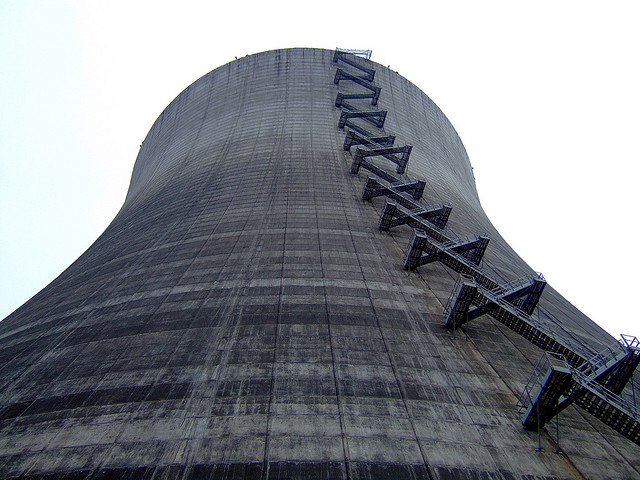
Egypt’s Long Path to Nuclear Power

egypt-nuclear-powerUS President Nixon offered to build eight nuclear power plants for Egypt during the Cold War; Matt questions whether the first such plant will finally be built by 2019?

How long is its worth waiting on your country to build its first nuclear power plant? If you are Egyptian, the answer is 45 years. That is if everything goes according to plan. According to The National, the Egyptian energy authorities have announced that by the end of year they will issue an international tender for the construction of a nuclear power plant in the Al-Dabaa region to be completed in 2019.

The final decision on the location was reportedly taken by Egyptian President Hosni Mubarak. The Al-Dabaa region along the Mediterranean coast is known for its beaches, and the local tourism industry was concerned how tourists would feel about sharing the beaches with a nuclear power plant.

A long and winding road

If the new plant is completed on time then it will have taken Egypt 45 years to capitalise on an offer made in 1974 by then U.S. President Richard Nixon, who offered to help build eight nuclear power plants to sway the most populous Arab nation to abandon the Soviet Union and join the West during the Cold War.

The idea of nuclear power was however not an imported idea since Egyptian President Gamal Abdel Nasser had already established the Egyptian Atomic Energy Commission in 1955.

But the shell shock that Egypt suffered following the defeat by Israel in the 1967 war and the Chernobyl nuclear disaster in 1986 put the plans on hold until now when the need to provide electricity to an ever growing population has forced the government’s hand.

A strive to diversify

The discovery of natural gas in the 1990s, which provides 80 to 90% of today’s energy needs, also delayed the nuclear decision.

However, the Egyptian government does not plan to rely solely on nuclear power as it has set a 2020 deadline for diversifying its energy production so that 20% comes from renewable sources.

“I personally consider burning oil in the 21st century a crime. We are now mature enough to maximise our energy mix,” Ibrahim al Oseiry, a former IAEA official and an energy and nuclear affairs consultant in Egypt’s ministry of energy and electricity told The National.

“Before, for example, we used wood to get energy. Now no one is using wood. Then they started to use coal and then they started to use oil. Now, in the 21st century, it is a crime to burn oil when we have other energy resources.”

Photo by the HeyRocker and story by The National

More on Egypt on the Green Prophet

Gone Seabass Fishing…In Egypt’s Desert

Egyptian Energy Crisis Sends Protesters to the Streets

World Bank Grants Egypt 1.2 Billion Egyptian Pounds For Wind Energy

Matt Khoury
Matt Khouryhttps://www.greenprophet.com/
Matt grew up with a love for nature; be it as a boy scout or working in his dad’s garden. After finishing University and traveling the Middle East, by cheer luck Matt got a change to try out journalism and has remained in the field ever since focusing on new cleanteach and the money behind it. In addition to news, Matt has also written several research papers on cleantech for international corporation.

Hot this week

How Renewable Energy is Revolutionizing the Way We Power Our World

Solar has become the star of the transition thanks to modular hardware and straightforward installation. It fits dense cities and remote towns alike. Many companies are turning to rooftop arrays and carport systems - and exploring commercial solar installation as a practical way to lock in future savings.

How does one start prepping?

Faced with an extreme winter storm this year, Americans wonder how to be prepared for catastrophe. Miriam has lived through wars in the Middle East - so she's prepared on giving you a guide to prepping.

Fishermen sue tire manufacturers on behalf of the salmon

A federal trial in San Francisco has brought US tire manufacturers, fishing groups, and environmental scientists into court over a chemical most drivers have never heard of — but which scientists say may be silently reshaping aquatic ecosystems.

Listening to Water: Tarek Atoui’s Next Work for Tate Modern

Born in Beirut, Lebanon in 1980 and now living in Paris, Atoui has spent years building instruments that don’t sit comfortably in concert halls. Many of them involve water, glass, and ceramics — materials that react to sound instead of simply producing it.

Leading Through a Dual-Energy Transition: Balancing Decarbonisation with Energy Security

Experience in one area of the energy industry isn't enough to guarantee readiness across all the others. That's where a structured program like an MBA in energy can come in. Today's advanced curricula explore energy economics, finance, policy, and strategic management alongside the technical subjects. And when pursuing an energy MBA online, professionals can skill up and retrain without having to step out of the labor market -- an important perk at a time when skilled professionals are already in short supply.

Topics

How Renewable Energy is Revolutionizing the Way We Power Our World

Solar has become the star of the transition thanks to modular hardware and straightforward installation. It fits dense cities and remote towns alike. Many companies are turning to rooftop arrays and carport systems - and exploring commercial solar installation as a practical way to lock in future savings.

How does one start prepping?

Faced with an extreme winter storm this year, Americans wonder how to be prepared for catastrophe. Miriam has lived through wars in the Middle East - so she's prepared on giving you a guide to prepping.

Fishermen sue tire manufacturers on behalf of the salmon

A federal trial in San Francisco has brought US tire manufacturers, fishing groups, and environmental scientists into court over a chemical most drivers have never heard of — but which scientists say may be silently reshaping aquatic ecosystems.

Listening to Water: Tarek Atoui’s Next Work for Tate Modern

Born in Beirut, Lebanon in 1980 and now living in Paris, Atoui has spent years building instruments that don’t sit comfortably in concert halls. Many of them involve water, glass, and ceramics — materials that react to sound instead of simply producing it.

Leading Through a Dual-Energy Transition: Balancing Decarbonisation with Energy Security

Experience in one area of the energy industry isn't enough to guarantee readiness across all the others. That's where a structured program like an MBA in energy can come in. Today's advanced curricula explore energy economics, finance, policy, and strategic management alongside the technical subjects. And when pursuing an energy MBA online, professionals can skill up and retrain without having to step out of the labor market -- an important perk at a time when skilled professionals are already in short supply.

From Green Energy to Healthy Societies: Why old systems thinking is becoming relevant again

Across the Middle East and North Africa, large investments are being made in green hydrogen, renewable energy, water infrastructure and sustainability. Most of these efforts are discussed in the context of climate change, decarbonization and economic diversification. That framing is important, but it may not capture their full value.

We saw peace – an interreligious encounter deep in our eyes

They came from Israel, Palestine, Jordan, Iraq, Yemen, Morocco, Tunisia, Lebanon, Egypt… There are Sunni Muslims, Shiite Muslims, Jews (Orthodox and Reform), Orthodox Christians, Coptic Christians, Protestant Christians, Druze, Baha'is, a Scientologist.

Can biochar reduce ‘Forever Chemicals’ in food if it’s used in farms?

Biochar is produced by heating organic material in a low-oxygen environment so it does not burn. This process, known as pyrolysis, transforms plant matter into a stable, carbon-rich material.

Related Articles

Popular Categories