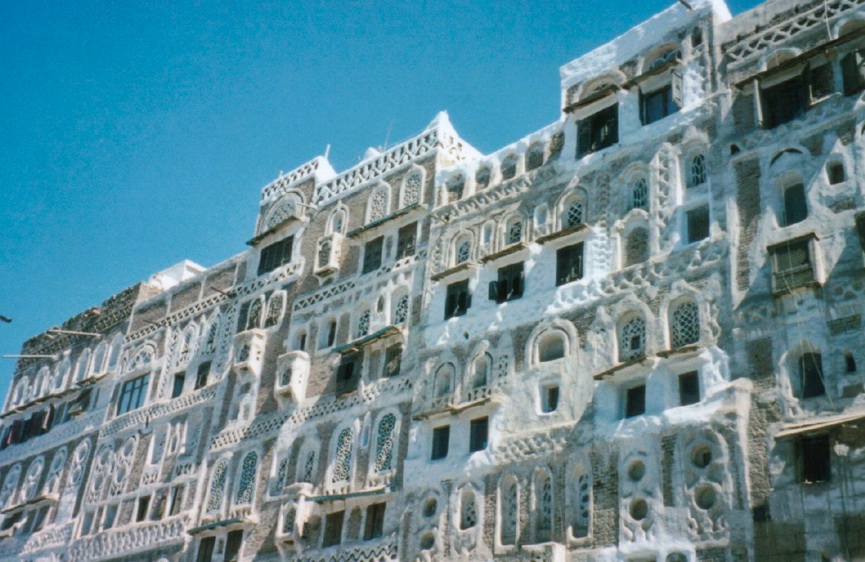

 Yemen’s capital city is expected to be the world’s first waterless one by 2017. A skyrocketing population, lack of government planning, and the bad-habit of gat, are to blame.
Despite record rainfall in the Yemeni capital Sanaa and other areas this summer, very little is being done to harvest this water to mitigate water shortages, experts say. In May at least seven people were killed in what officials described as the worst flooding to hit Sanaa in a decade. Flooding has brought large parts of the city to a standstill on a number of occasions.
Attempts by the government to harvest rainwater are very limited, according to Ramon Scoble, a consultant for Germany’s Technical Cooperation Committee (GTZ). “The government is doing very little,” he said. “Very little funding is dedicated to rainwater harvesting for water supply and groundwater recharge. There are a number of ineffective dams in Yemen and none are supplying significant water to cities, agriculture or groundwater recharge.”
Sanaa is predicted to be the first capital in the world to run out of economically viable water supplies by 2017. Experts say this is due to a rapid increase in Sanaa’s population in recent years because of rural-urban migration, and the widespread planting; and inefficient irrigation of `qat’, a water-thirsty plant believed to consume 40 percent of all irrigated water.
Local authorities say this increased demand for water is causing Sanaa’s water table to fall 4-6m a year.
According to Salem bin Shueb, head of the Water Resources Department in Sanaa Municipality, a study carried out with the Ministry of Agriculture and Irrigation concluded that dams needed to be built to harvest rainwater to prevent water shortages.
Roadmap to nowhere
A 2008 plan entitled A Road Map to Harvesting Rainwater in Yemen was designed to ensure that 70 percent of city rainwater was harvested by 2012, and 100 percent by 2020. The plan envisaged harvesting through the building of water barriers, small dams, concrete tanks in valleys, and water harvesting systems in or on houses.
Shueb explained that the government is encouraging people in areas with higher rainfall, such as Sanaa and Taiz, a city 256km south of Sanaa, to erect water collection devices on the roofs of their houses, schools and government buildings to harvest rainwater.
Recently a committee issued a decree that rainwater roof harvesting should be compulsory, said Shueb, adding: “These plans are moving ahead slowly because of the limited technical capacity, expertise and poor information.”
Shueb said water shortages had been exacerbated by the widespread use of private wells and water pumps for domestic and agricultural use.
“Something has to give”
However, Shueb said rainwater harvesting was not the ultimate solution: What was required was the more efficient treatment of waste water and the reduction of water consumption, especially for irrigation, he said.
But even these measures might not be enough.
A 2007 study by the Japanese International Cooperation Agency (JICA), the National Water Resources Authority (NWRA) and the Ministry of Water and Environment (MWE) suggested that even the most aggressive measures to improve efficiency, conservation and recharge, would at best delay water depletion in Sanaa by a couple of years, perhaps until 2020 at the latest.
Calling for more funding for rainwater harvesting, GTZ’s Scoble said that in the 1940s only 60,000 people lived in Sanaa whereas today there are close to two million. “Rainfall has probably varied from year to year, but the population has increased. Something has to give, and it will probably be the donors – not the clouds, or the crowds of Yemenis.”
More environment news from Yemen:
Yemen’s Environmental Problems Based On Chewing Gat
Yemen Funnels Seawater to Drinking Water With Low-tech Watercone
Eco-tourism Hot Spots in Yemen
::IRIN