Art and Spirituality: The Antidote to Bigger, Better, More

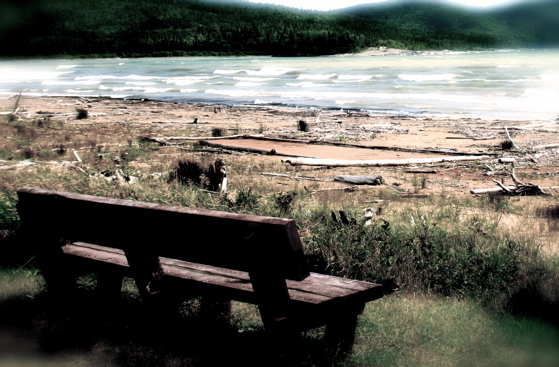
peaceful-waterside-benchGentle artists and prophets inspired by nature offer a cure against environmental destruction

This post takes its inspiration from two different stories. One by Mike Shanahan, an environmental journalist whose work we admire, and another published in Al MasryAlyoum. The first proposes that incorporating religious principles into our daily lives will heal our relationship with the earth. Our own Arwa has suggested, for example, that Islam promotes eating meat in moderation, and the MTV Muslimah discusses how Islam kindles her eco-soul.

The second profiles an artist who captures the magical colors of a Nubian village before its harmony is destroyed. In both cases the message is clear: we no longer walk in step with nature. Somehow, we have built a global empire that values excess over simplicity, ambition and individuality over the love of our fellows. Can art and spirituality bring us back down to earth?

Spiritual pollution

Although currently taking a break from his position at the International Institute for Environment and Development, Mr. Shanahan is using this month to work with the Convention on Biological Diversity. He also posts brief commentary to his new blog.

Summarizing an interview with Zen Buddhist master Thich Nhat Hahn in The Guardian, Mr. Shanahan writes, “…the root cause of our environmental problems — from overfishing to climate change, from deforestation to the loss of biodiversity — is that societies worldwide have become spiritually polluted.”mushroom-close-up

Our viral fear of discomfort, and our lack of faith in nature’s ability to provide for us, has led us instead to take comfort in behaviors that nature can’t sustain.

Referring to the Thich Nhat Hahn’s recent book ‘The World We Have – A Buddhist approach to peace and ecology‘, Mr. Shanahan quotes:

“The situation the Earth is in today has been created by unmindful production and unmindful consumption. We consume to forget our worries and our anxieties. Tranquilising ourselves with over-consumption is not the way.”

The solution, according to both the environmental master and the Zen master, is to take comfort in simplicity, to enjoy kindness and benevolence, to love nature. Because when you love a thing, a soft puppy, a particular lake, or another person, the humanity in you seeks to protect that thing.

Gharb Soheil

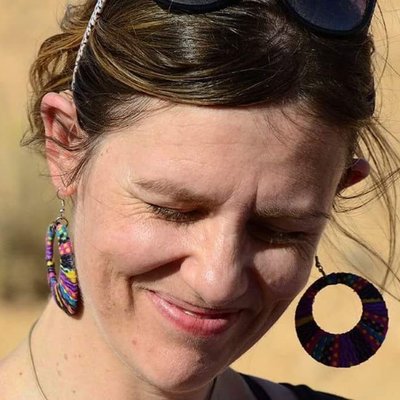
It is because Hoda Baraka loves Gharb Soheil that she has picked up her camera to protect it. What draws thousands of visitors each year to this village in northern Egypt – the colors, the Nubian men whose simple lives are etched on to their skin, the stark environment – is also in jeopardy of being destroyed.

Tourists are economically valuable, but tourist expectations and fantasies often overrun a place and ruin its character. Elsewhere in Egypt the pyramids are barely visible through Cairo’s smog, and the Red Sea, a haven for divers, is fished out, its coral reefs bleached.

What we lose, we can never regain,” Ms. Baraka told Al MasryAlyoum.
hoda-baraka-journalist

Her images eschew facts, inculcating beauty instead in order to help the villagers campaign against unsustainable development. This aim is supported by the Center for Environment and Development for the Arab region and Europe (CEDARE).

Surrounded by billboards and exciting, flashy toys that can distract us from simplicity, we sometimes need an earthy reminder. At these times, it can be helpful to invoke the colorful, gentle messages gifted by our prophets and by our artists.

:: Mike Shanahan and Al MasryAlyoum; upper images by Tafline Laylin

Lower image by photographer/environmental journalist Hoda Baraka. Picture exhibited in exhibit entitled ‘From Gharb Soheil’

More Travel and Nature stories:
Man Arrested Attempting To Smuggle “Golden” Falcon Eggs

Using A Mosquito’s Best Defense Against It

Anne Frank’s Tree – The Chestnut Tree – Finally Falls

Tafline Laylin
Tafline Laylinhttp://www.greenprophet.com
As a tour leader who led “eco-friendly” camping trips throughout North America, Tafline soon realized that she was instead leaving behind a trail of gas fumes, plastic bottles and Pringles. In fact, wherever she traveled – whether it was Viet Nam or South Africa or England – it became clear how inefficiently the mandate to re-think our consumer culture is reaching the general public. Born in Iran, raised in South Africa and the United States, she currently splits her time between Africa and the Middle East. Tafline can be reached at tafline (at) greenprophet (dot) com.
1 COMMENT

Comments are closed.

Hot this week

How Renewable Energy is Revolutionizing the Way We Power Our World

Solar has become the star of the transition thanks to modular hardware and straightforward installation. It fits dense cities and remote towns alike. Many companies are turning to rooftop arrays and carport systems - and exploring commercial solar installation as a practical way to lock in future savings.

How does one start prepping?

Faced with an extreme winter storm this year, Americans wonder how to be prepared for catastrophe. Miriam has lived through wars in the Middle East - so she's prepared on giving you a guide to prepping.

Fishermen sue tire manufacturers on behalf of the salmon

A federal trial in San Francisco has brought US tire manufacturers, fishing groups, and environmental scientists into court over a chemical most drivers have never heard of — but which scientists say may be silently reshaping aquatic ecosystems.

Listening to Water: Tarek Atoui’s Next Work for Tate Modern

Born in Beirut, Lebanon in 1980 and now living in Paris, Atoui has spent years building instruments that don’t sit comfortably in concert halls. Many of them involve water, glass, and ceramics — materials that react to sound instead of simply producing it.

Leading Through a Dual-Energy Transition: Balancing Decarbonisation with Energy Security

Experience in one area of the energy industry isn't enough to guarantee readiness across all the others. That's where a structured program like an MBA in energy can come in. Today's advanced curricula explore energy economics, finance, policy, and strategic management alongside the technical subjects. And when pursuing an energy MBA online, professionals can skill up and retrain without having to step out of the labor market -- an important perk at a time when skilled professionals are already in short supply.

Topics

How Renewable Energy is Revolutionizing the Way We Power Our World

Solar has become the star of the transition thanks to modular hardware and straightforward installation. It fits dense cities and remote towns alike. Many companies are turning to rooftop arrays and carport systems - and exploring commercial solar installation as a practical way to lock in future savings.

How does one start prepping?

Faced with an extreme winter storm this year, Americans wonder how to be prepared for catastrophe. Miriam has lived through wars in the Middle East - so she's prepared on giving you a guide to prepping.

Fishermen sue tire manufacturers on behalf of the salmon

A federal trial in San Francisco has brought US tire manufacturers, fishing groups, and environmental scientists into court over a chemical most drivers have never heard of — but which scientists say may be silently reshaping aquatic ecosystems.

Listening to Water: Tarek Atoui’s Next Work for Tate Modern

Born in Beirut, Lebanon in 1980 and now living in Paris, Atoui has spent years building instruments that don’t sit comfortably in concert halls. Many of them involve water, glass, and ceramics — materials that react to sound instead of simply producing it.

Leading Through a Dual-Energy Transition: Balancing Decarbonisation with Energy Security

Experience in one area of the energy industry isn't enough to guarantee readiness across all the others. That's where a structured program like an MBA in energy can come in. Today's advanced curricula explore energy economics, finance, policy, and strategic management alongside the technical subjects. And when pursuing an energy MBA online, professionals can skill up and retrain without having to step out of the labor market -- an important perk at a time when skilled professionals are already in short supply.

From Green Energy to Healthy Societies: Why old systems thinking is becoming relevant again

Across the Middle East and North Africa, large investments are being made in green hydrogen, renewable energy, water infrastructure and sustainability. Most of these efforts are discussed in the context of climate change, decarbonization and economic diversification. That framing is important, but it may not capture their full value.

We saw peace – an interreligious encounter deep in our eyes

They came from Israel, Palestine, Jordan, Iraq, Yemen, Morocco, Tunisia, Lebanon, Egypt… There are Sunni Muslims, Shiite Muslims, Jews (Orthodox and Reform), Orthodox Christians, Coptic Christians, Protestant Christians, Druze, Baha'is, a Scientologist.

Can biochar reduce ‘Forever Chemicals’ in food if it’s used in farms?

Biochar is produced by heating organic material in a low-oxygen environment so it does not burn. This process, known as pyrolysis, transforms plant matter into a stable, carbon-rich material.

Related Articles

Popular Categories