Pumping $30 Million Into Cycling Tourist's Pedals

biking cycling sculpture israel photoIn 2008, the Israeli government announced a 20 million shekel (around $6 million US) plan to revamp cycling tourism. Upping the ante, the government wants to put about $30 million into making Israel a cycling destination hotspot.

Cycling tourism is worth billions of dollars in Europe, where lodges and facilities are set up for the eco-friendly sport. And some off-the wall travellers are finding some locations in the Middle East can make ideal cycling holidays too. Despite the fact that you might need to wear a burka in Saudi Arabia, ladies.

Despite the intense summer heat, it virtually doesn’t rain in the Middle East in the summer time, and the lack of bugs – especially mosquitos – allows people to sleep outdoors, even without tents. We’ve blogged about some hotspots for cycling in the Middle East, now let’s look at Israel:

The country’s tourism Minister Stas Misezhnikov announced recently a 100 million shekel-plus multi-year plan to promote the cycling industry in Israel. While ten years ago a cyclist on the streets of Tel Aviv would be considered a foreign labourer, every one and his sister are getting out the cycling hot pants these days and heading out in the cities and on the nature trails.

The new government plan for Israel includes the physical infrastructure development of a comprehensive and accessible network of cycling paths, including a national trail that would span the length of Israel – from Eilat to Kiryat Shmona. It will connect population centers with open areas, a range of landscapes and leading places of interest.

Recommended cycling activities in Israel

In line with the decision, the Tourism Ministry in cooperation with the KKL-JNF, the Cycling Association, the Nature and Parks Authority, the Development of the Galilee and the Negev authorities and other ministries and bodies, has developed a multi-year action plan that includes infrastructure development of 4,900 kilometers of varied cycling paths and the accompanying facilities, as well as educational, community and explanatory activities.

These cycling paths will join the existing 600 kilometers of trails and about 1,400 kilometers of paths already budgeted from other sources. The cycling path network and the complementary infrastructure will provide an answer to the requirements of domestic cycling tourism and a basis for developing incoming cycling tourism, according to target markets, levels of difficulty, tour packages and more.
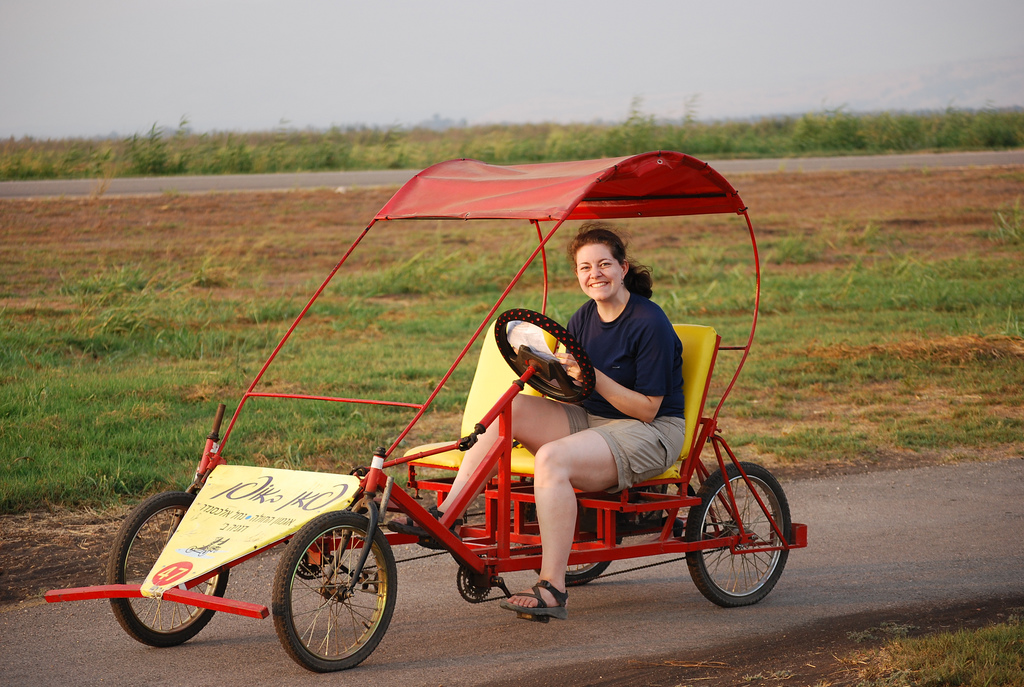
hula valley cycling israel womanCycling through the Hula Valley, a fly-way for Africa’s and Europe’s birds.

Says Tourism Minister Stas Misezhnikov: “The development of a national cycling infrastructure will contribute to enriching the range of tourism products in the periphery and generate momentum for small and medium businesses, while creating new jobs.

“About 80% of all the cycling paths will be developed in the Negev and Galilee and there’s no doubt that this investment will bear fruit both regionally and in terms of its contribution to the economy generally. It’s important to note that creating this infrastructure will also make Israel an attractive destination for cyclists from around the world and a marketing program will also be prepared accordingly.”

The international cycling tourism market is worth billions of dollars a year, with one of the highest growth potentials. About 19 million cycling tourists visit Europe every year, staying in 30,000 lodgings. Put your bike on the plane, train, or bus, and get pedalling. It’s a cheap, healthy and great eco-friendly way to see new parts of the world.

More reading on cycling in the Middle East:
Cycling Hotspots in the Middle East
Great Cappuccinos and Free Bikes for Hire
New Designs and Showers for Urban Cycling
Parents Go for the Taga Hybrid Bike – Stroller

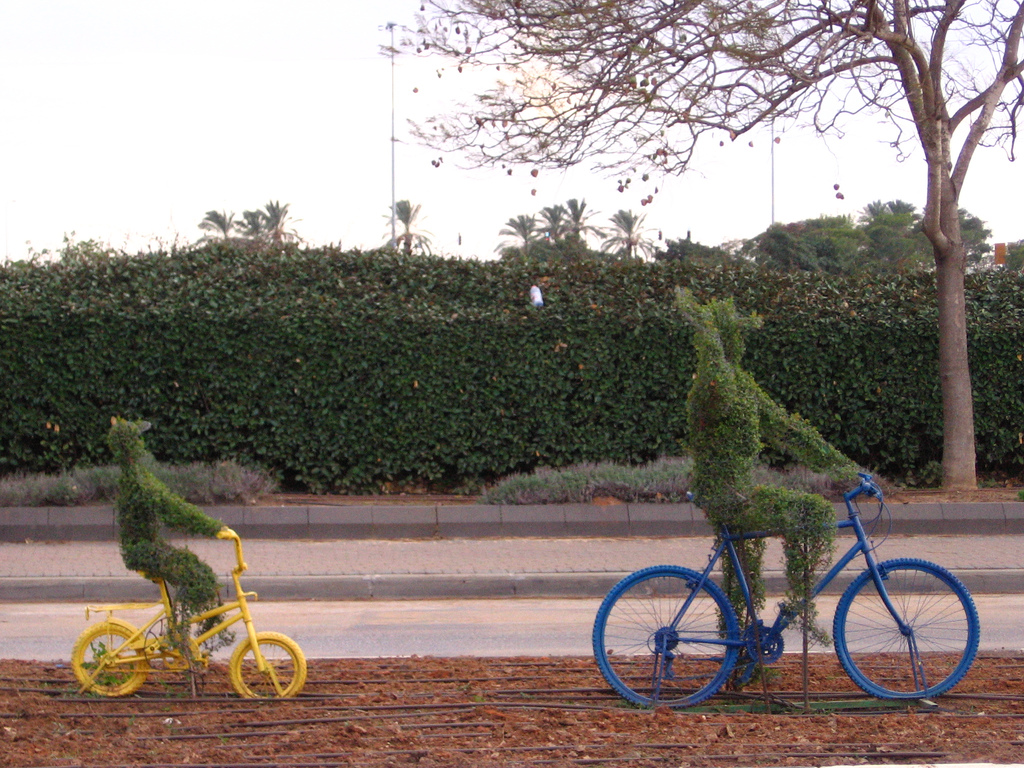
(Above images: cycling on her “ghetto” bike in the Hula Valley, Israel. Image via chadica; and bike sculpture in Herzylia via ronalmog)

Karin Kloosterman
Karin Kloostermanhttp://www.greenprophet.com
Karin Kloosterman is an award-winning journalist, innovation strategist, and founder of Green Prophet, one of the Middle East’s pioneering sustainability platforms. She has ranked in the Top 10 of Verizon innovation competitions, participated in NASA-linked challenges, and spoken worldwide on climate, food security, and future resilience. With an IoT technology patent, features in Canada’s National Post, and leadership inside teams building next-generation agricultural and planetary systems — including Mars-farming concepts — Karin operates at the intersection of storytelling, science, and systems change. She doesn’t report on the future – she helps design it. Reach out directly to [email protected]
1 COMMENT
  1. I live in Rishon LeZion. No mosquitos in Israel? Every evening they line up to bite me. We even have a new kind here, the Asian tiger mosquito (Aedes albopictus).

LEAVE A REPLY

Please enter your comment!
Please enter your name here

TRENDING

Earth building with Dead Sea salt bricks

Researchers develop a brick made largely from recycled Dead Sea salt—offering a potential alternative to carbon-intensive cement.

Farm To Table Israel Connects People To The Land

Farm To Table Israel is transforming the traditional dining experience into a hands-on journey.

Remilk makes cloned milk so cows don’t need to suffer and it’s hormone-free

This week, Israel’s precision-fermentation milk from Remilk is finally appearing on supermarket shelves. Staff members have been posting photos in Hebrew, smiling, tasting, and clearly enjoying the moment — not because it’s science fiction, but because it tastes like the real thing.

An Army of Healers Wins the 2025 IIE Goldberg Prize for Peace in the Middle East

In a region more accustomed to headlines of loss than of listening, the Institute of International Education (IIE) has chosen to honor something quietly radical: healing. The 2025 Victor J. Goldberg Prize for Peace in the Middle East has been awarded to Nitsan Joy Gordon and Jawdat Lajon Kasab, the co-founders of the Army of Healers, for building spaces where Israelis and Palestinians — Jews, Muslims, Christians, Druze, and Bedouins — can grieve, speak, and rebuild trust together.

Explore Balat in Istanbul for a perfect day of coffee, cats, and second-hand clothing shops

Balat is not a neighborhood you would visit in the standard tour to Istanbul. If you want a real taste of Istanbul and the people who live there, wander around a smaller craftsman, artisan, coffee shops and second hand clothing shops on cobblestone streets in the neighborhood of Balat.

Qatar’s climate hypocrisy rides the London Underground

Qatar remains a master of doublethink—burning gas by the megaton while selling “sustainability” to a world desperate for clean air. Wake up from your slumber people.

How Quality of Hire Shapes Modern Recruitment

A 2024 survey by Deloitte found that 76% of talent leaders now consider long-term retention and workforce contribution among their most important hiring success metrics—far surpassing time-to-fill or cost-per-hire. As the expectations for new hires deepen, companies must also confront the inherent challenges in redefining and accurately measuring hiring quality.

8 Team-Building Exercises to Start the Week Off 

Team building to change the world! The best renewable energy companies are ones that function.

Thank you, LinkedIn — and what your Jobs on the Rise report means for sustainable careers

While “green jobs” aren’t always labeled as such, many of the fastest-growing roles are directly enabling the energy transition, climate resilience, and lower-carbon systems: Number one on their list is Artificial Intelligence engineers. But what does that mean? Vibe coding Claude? 

Somali pirates steal oil tankers

The pirates often stage their heists out of Somalia, a lawless country, with a weak central government that is grappling with a violent Islamist insurgency. Using speedboats that swarm the targets, the machine-gun-toting pirates take control of merchant ships and then hold the vessels, crew and cargo for ransom.

Leopoldo Alejandro Betancourt López Turned Ocean Plastic Into Profitable Sunglasses

Few fashion accessories carry the environmental burden of sunglasses. Most frames are constructed from petroleum-based plastics and acrylic polymers that linger in landfills for centuries, shedding microplastics into soil and waterways long after they've been discarded. Leopoldo Alejandro Betancourt López, president of the Spanish eyewear brand Hawkers, saw this problem differently than most industry executives.

Why Dr. Tony Jacob Sees Texas Business Egos as Warning Signs

Everything's bigger in Texas. Except business egos.  Dr. Tony Jacob figured...

Israel and America Sign Renewable Energy Cooperation Deal

Other announcements made at the conference include the Timna Renewable Energy Park, which will be a center for R&D, and the AORA Solar Thermal Module at Kibbutz Samar, the world's first commercial hybrid solar gas-turbine power plant that is already nearing completion. Solel Solar Systems announced it was beginning construction of a 50 MW solar field in Lebrija, Spain, and Brightsource Energy made a pre-conference announcement that it had inked the world's largest solar deal to date with Southern California Edison (SCE).

Related Articles

Popular Categories