Saudi's National Prawn Company Comes Up With An Ecologically Sound Shrimp Idea

shrimpsShrimps aren’t haram for Muslims, and are tasty for a lot of people in the Middle East. But are they safe to eat if they’re bought from China or Thailand? A new Saudi project comes to light.

The imported fish and seafood industry: shrimp, prawns, and various species of both fresh and salt water fish has received some unfavorable attention in the American news media thanks to filthy fish products being imported into the USA and other Western countries (links to Youtube video).

But these kinds of problems could change if aqua farmers in Asia and other locations adopted ideas now being undertaken by Saudi Arabia’s National Prawn Company, noted as one of the “world’s largest integrated pawn farms” in an article in the website ArabNews.com.

Located near the Arabian Red Sea coastal town of Al-Lith, 170 km south of Jeddah, Saudi’s National Prawn Company prawn farm prides itself as using organic methods to grow the prawns without the use of chemicals, fertilizers or antibiotics. The company recently appointed Frederic Millet, a French aquaculture consultant, who has been involved in a number of such projects, including a large shrimp farm off the coast of Ecuador
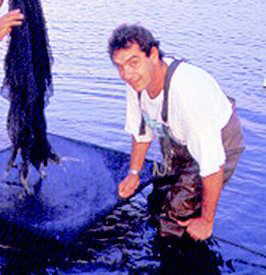
shrimp fred milletMillet at Work

Millet’s aquaculture techniques are part of what is known as the Blue Revolution in which over a third of all fish and a quarter of world shrimp production come from aquaculture, one of the fastest growing farming methods in the world.

The ecological importance of work being done by aquaculture specialists like Millet is to produce a high quality product without using chemicals or synthetic growth stimulants (such as antibiotics) which are also used extensively in poultry farms, and beef cattle production, as well as in aquaculture.

Eating filtered sewage

There is a downside of aquaculture and poorly processed sea foods coming from countries like Thailand and China in which not only chemicals and antibiotics are extensively used, but also using sewage and industrial wastewater grow both fish and shrimp products which wind up in restaurants and on the dinner tables of people living in countries thousands of miles of away. We know how China regards standards of production, getting caught using lead and other fatal chemicals in products and children’s toys, so would you trust them with your food?

Millet’s philosophy involves in working with and not abusing the prawns’ natural ecosystem:

“We do not push the ecosystem to its limit. We prefer to extend the system to the maximum that is sustainable through an “All In All Out” strategy within the capabilities of the local environment in a way that leaves it in good condition.”

The NPC (pictured below) decided to work towards a longer term growth plan (20 years) instead of a shorter “5 year plan” that many aquaculture companies adhere to, which includes careful preparation of the ponds in which the prawns are grown, and the integration of all areas of operation, including breeding, feeding, and cleaning of the ponds in order to prevent the outbreak of disease and to insure a high level of sustainability which results in a high quality product.
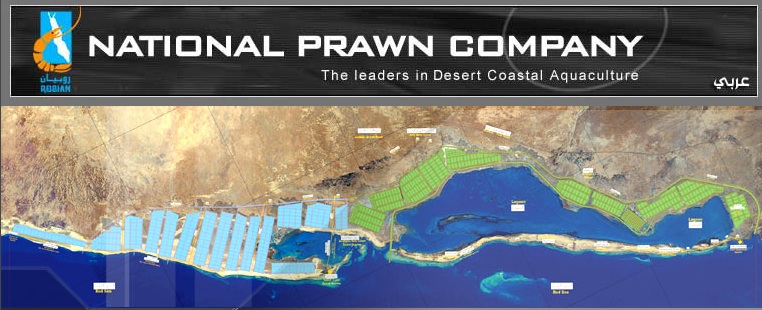
Saudi Arabia’s antibiotic-free shrimp farm. So close to the sea, does beg the question: what is the shrimp “waste” doing to the environment.

What’s haram and kosher about it?

In contrast to Jewish Law in which “only fish with fins and scales” are permitted to be eaten, Islamic Law does allow for shrimps and prawns to be consumed, as well and “fish with scales.”

Other kinds of shell fish, including, crabs, mollusks, as well as smooth skinned fish, like sharks, are considered to be “Haram” or forbidden

NPC, with Millet in charge of quality and sustainability, wants the prawns to have a “minimal impact on the environment, and uses low density stocking in its 10-hectare ponds, strict biomass thresholds, and carefully monitors and manages water quality and oxygen levels 24 hours a day.

::National Prawn Company

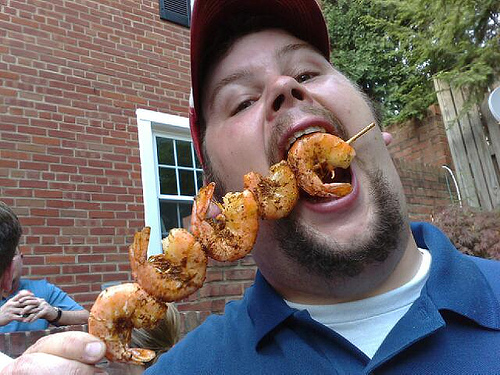
Image via dcmetroblogger

Read more articles on pollution and chemical impacts on fish and marine life:
Hunt for Air France Flight 447 Brings Marine Garbage Problem to The Surface

Polluting Eilat Fish Farms Moved to Mediterranean

Persian Gulf “Mermaids” Face Manmade Environmental Threats

Maurice Picow
Maurice Picowhttps://www.greenprophet.com/
Maurice Picow grew up in Oklahoma City, U.S.A., where he received a B.S. Degree in Business Administration. Following graduation, Maurice embarked on a career as a real estate broker before making the decision to move to Israel. After arriving in Israel, he came involved in the insurance agency business and later in the moving and international relocation fields. Maurice became interested in writing news and commentary articles in the late 1990’s, and now writes feature articles for the The Jerusalem Post as well as being a regular contributor to Green Prophet. He has also written a non-fiction study on Islam, a two volume adventure novel, and is completing a romance novel about a forbidden love affair. Writing topics of particular interest for Green Prophet are those dealing with global warming and climate change, as well as clean technology - particularly electric cars.
2 COMMENTS
  1. Antibiotic-free, premium quality shrimp using only sustainable methods of culture and production
    NPC believes in providing its customers with premium quality, natural shrimp the way nature intended. This means that we produce antibiotic-free shrimp, no hormones and no preservatives using only eco-friendly, sustainable shrimp farming methods.

LEAVE A REPLY

Please enter your comment!
Please enter your name here

TRENDING

Seaweed fashion brands can source from Saudi Arabian sea

From Red Sea seaweed to runway-ready fabric, Saudi Arabia is quietly reshaping fashion’s material future. KAUST scientists, designers, and textile innovators are proving that sustainability can begin in local ecosystems. As seaweed becomes wearable, fashion is learning to grow not from fields — but from tides.

The Line’s 15 minute city failure and the limits of green futurism

The failure of The Line is not a failure of imagination. It is a failure of restraint by western architects and planners who go along with the charade. Who is holding these firms accountable? This is actually a reasonable kind of project for the UN to take on and challenge. 

Musk’s Saudi Mega-Data Center Signals a Desert Arms Race for AI

For now, Musk’s partnership signals a deepening alignment between Silicon Valley and Riyadh — and a new chapter in the Middle East’s data-powered future. The satellites and robots may come later. The energy footprint, however, is already here.

Green finance in Saudi Arabia, can “Davos in the Desert” change the planet?

As world leaders and billionaires descend on Riyadh for this year’s Future Investment Initiative — better known as “Davos in the Desert” — we wonder where the planet fairs in all this political business talk. Saudi Arabia’s Vision 2030 plan has turned the kingdom into an unlikely global stage for innovation and investment, drawing over 20 heads of state, 50 ministers, and hundreds of financiers, tech executives, and policy shapers.

Qatar’s climate hypocrisy rides the London Underground

Qatar remains a master of doublethink—burning gas by the megaton while selling “sustainability” to a world desperate for clean air. Wake up from your slumber people.

How Quality of Hire Shapes Modern Recruitment

A 2024 survey by Deloitte found that 76% of talent leaders now consider long-term retention and workforce contribution among their most important hiring success metrics—far surpassing time-to-fill or cost-per-hire. As the expectations for new hires deepen, companies must also confront the inherent challenges in redefining and accurately measuring hiring quality.

8 Team-Building Exercises to Start the Week Off 

Team building to change the world! The best renewable energy companies are ones that function.

Thank you, LinkedIn — and what your Jobs on the Rise report means for sustainable careers

While “green jobs” aren’t always labeled as such, many of the fastest-growing roles are directly enabling the energy transition, climate resilience, and lower-carbon systems: Number one on their list is Artificial Intelligence engineers. But what does that mean? Vibe coding Claude? 

Somali pirates steal oil tankers

The pirates often stage their heists out of Somalia, a lawless country, with a weak central government that is grappling with a violent Islamist insurgency. Using speedboats that swarm the targets, the machine-gun-toting pirates take control of merchant ships and then hold the vessels, crew and cargo for ransom.

Leopoldo Alejandro Betancourt López Turned Ocean Plastic Into Profitable Sunglasses

Few fashion accessories carry the environmental burden of sunglasses. Most frames are constructed from petroleum-based plastics and acrylic polymers that linger in landfills for centuries, shedding microplastics into soil and waterways long after they've been discarded. Leopoldo Alejandro Betancourt López, president of the Spanish eyewear brand Hawkers, saw this problem differently than most industry executives.

Why Dr. Tony Jacob Sees Texas Business Egos as Warning Signs

Everything's bigger in Texas. Except business egos.  Dr. Tony Jacob figured...

Israel and America Sign Renewable Energy Cooperation Deal

Other announcements made at the conference include the Timna Renewable Energy Park, which will be a center for R&D, and the AORA Solar Thermal Module at Kibbutz Samar, the world's first commercial hybrid solar gas-turbine power plant that is already nearing completion. Solel Solar Systems announced it was beginning construction of a 50 MW solar field in Lebrija, Spain, and Brightsource Energy made a pre-conference announcement that it had inked the world's largest solar deal to date with Southern California Edison (SCE).

Related Articles

Popular Categories