


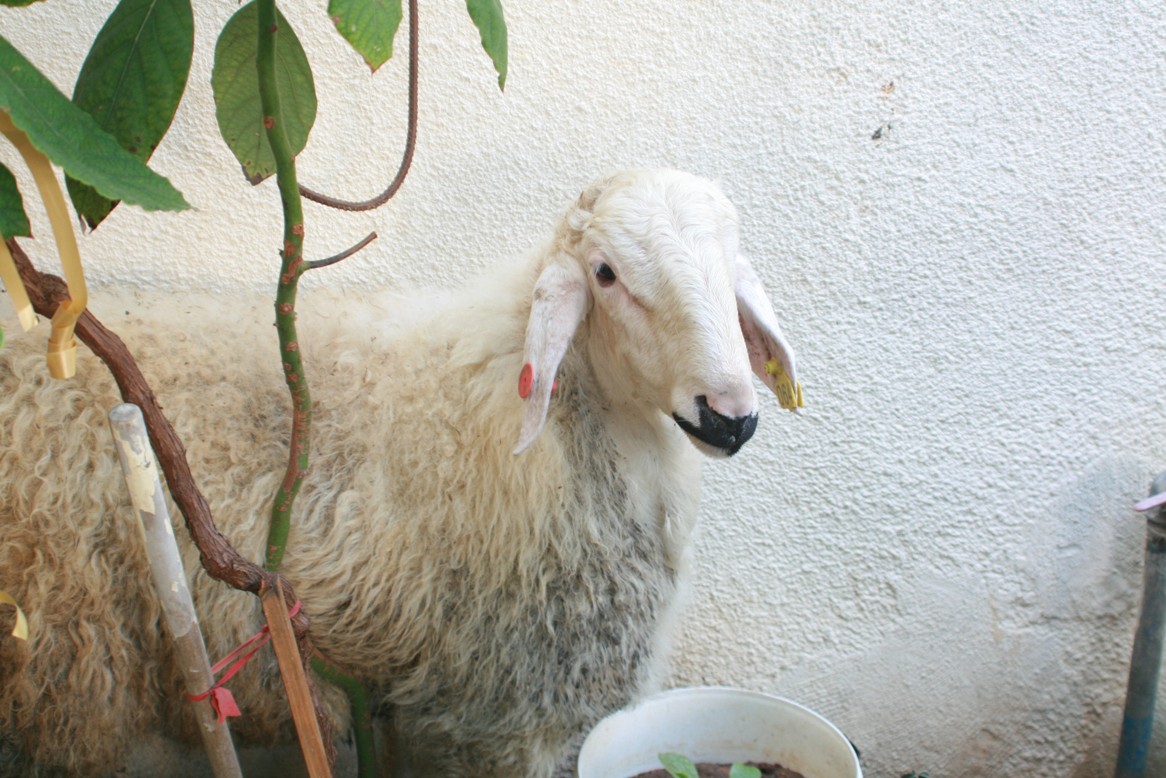
Green Prophet’s Daniella witnesses the Muslim holiday ritual slaughtering of a sheep, in Jaffa.
Last Friday I was determined to find a sheep slaughter. It was Eid Al-Adha, the Muslim Feast of the Sacrifice. The story goes that Ibrahim was about to slaughter his son Ismail, when an angel came and redirected him to a lamb. In honor of that sacrifice, Muslims worldwide butcher sheep and goats on the holiday, and Jaffa, the Arab half of Tel Aviv, was no exception.
I got to Jaffa at 11 a.m. and began walking the streets looking for a family performing the ritual. Many families have stopped killing their own sheep in recent years; some don’t have the money, others don’t want the mess, some live in apartments without a yard, and others prefer celebrating the holiday in a vacation cabin in the north. At any rate, after calling about six families during the week, I still had no destination on Friday, and it was by chance that I saw a white sheep tied to the aluminum gate inside the Jaffaly family home in Shiveti Yisrael street in Jaffa. Two weeks earlier, Jaffar Jaffaly, 35, had paid 1,800 shekels (around $450) for it, and it was delivered the night before the holiday to his home.
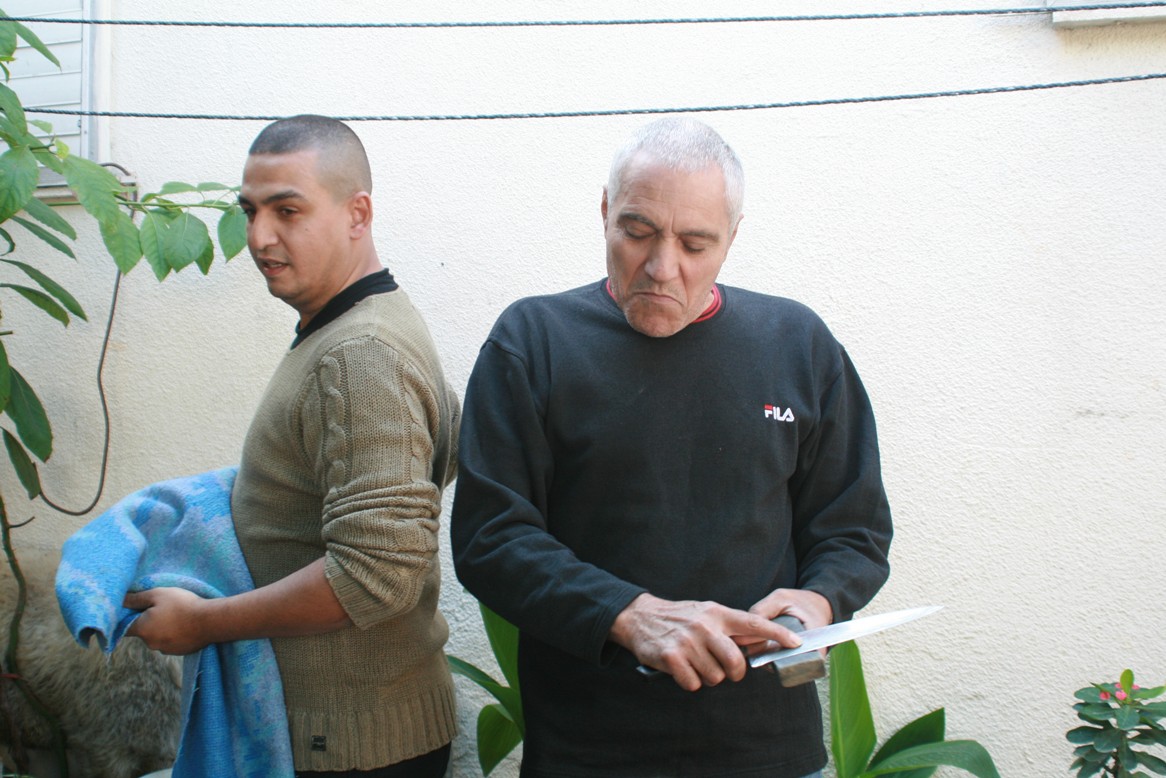 The sheep seemed to know its fate. It nervously ate the potted plants in the courtyard. A few minutes after I got there, the butcher arrived: 65-year-old Mohammad, who has been slaughtering sheep since he was 15. His son-in-law (and my host) Jaffar held a blanket up while Mohammad sharpened his knives so the sheep wouldn’t get scared. It didn’t matter; it ran behind the house.
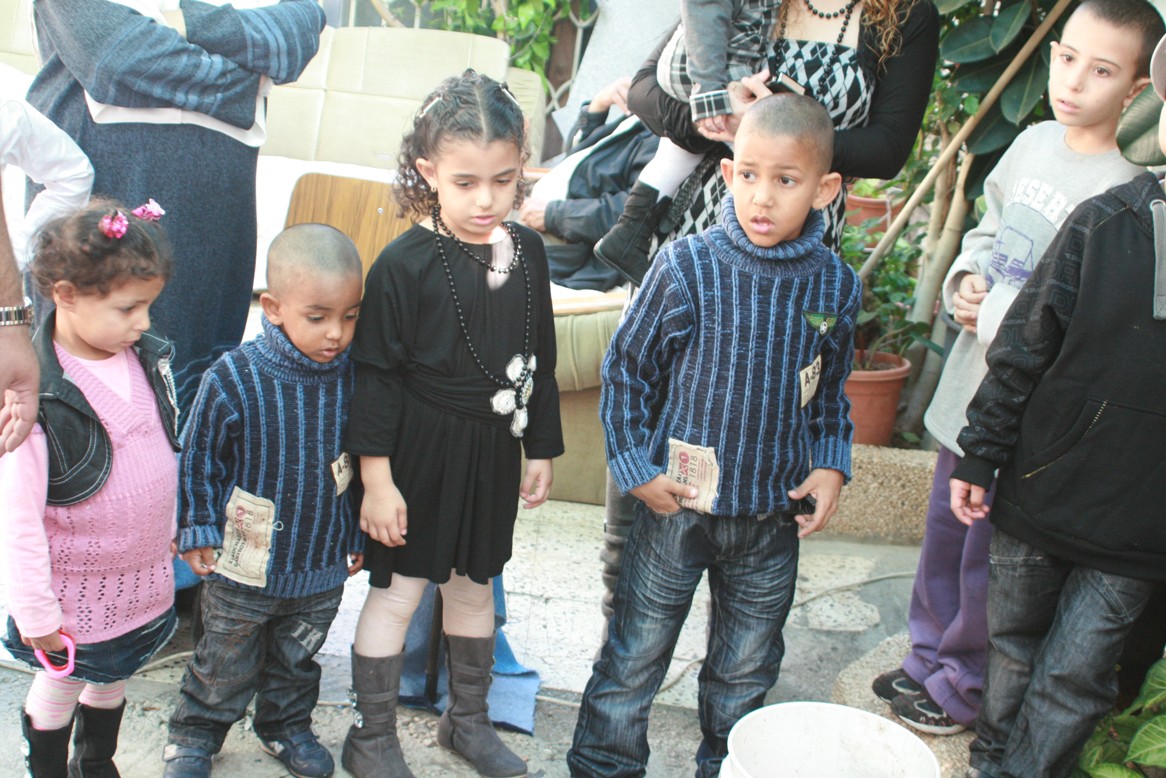
Once Mohammad was ready, he, Jaffar and two other men grabbed the sheep and wrestled it to the ground, next to a sewer whose cover they had removed. In a quick cut, Mohammad dispatched the sheep as about ten children watched. They were Jaffar’s kids, along with his nephews and neices.
Then the real work began. Mohammad and Jaffar took turns blowing air into a long plastic pipe wedged into the sheep’s leg; the animal blew up like a balloon as its skin separated from the muscle inside. Then they slid a butcher’s hook into a leg, and hoisted the sheep until the hook caught the doorframe. Now the sheep would make its transition from animal to dinner.

Mohammad expertly skinned the sheep in one piece, and slid it off the sheep like a sweater. He cut off the extremities, laying them in a plastic basin set on the ground. Jaffar threw the sheepskin in the dumpster across the street. Once, he said, his family would keep the skin and tan it with salt. But the process is labor intensive and stinks, and so they stopped.
The next step was removing the internal organs. As Mohammad pulled them out in one piece, Jaffar caught them in another plastic basin. The kids, who were still watching, asked Mohammad what each organ was. He blew up two glossy pink lungs and showed them the brown liver. Jaffar’s mother took the liver and heart to the kitchen and began making lunch.
Then Mohammad hacked the sheep into quarters, and worked each quarter down to manageable chunks. He did this all sitting at a miniscule picnic table in the front courtyard, and he handled his knife without much emotion. This was not a murder. It was a custom, as his father did before him. Mohammad preformed the whole operation with three knives, a pipe and a butcher’s hook, along with copious amounts of water.
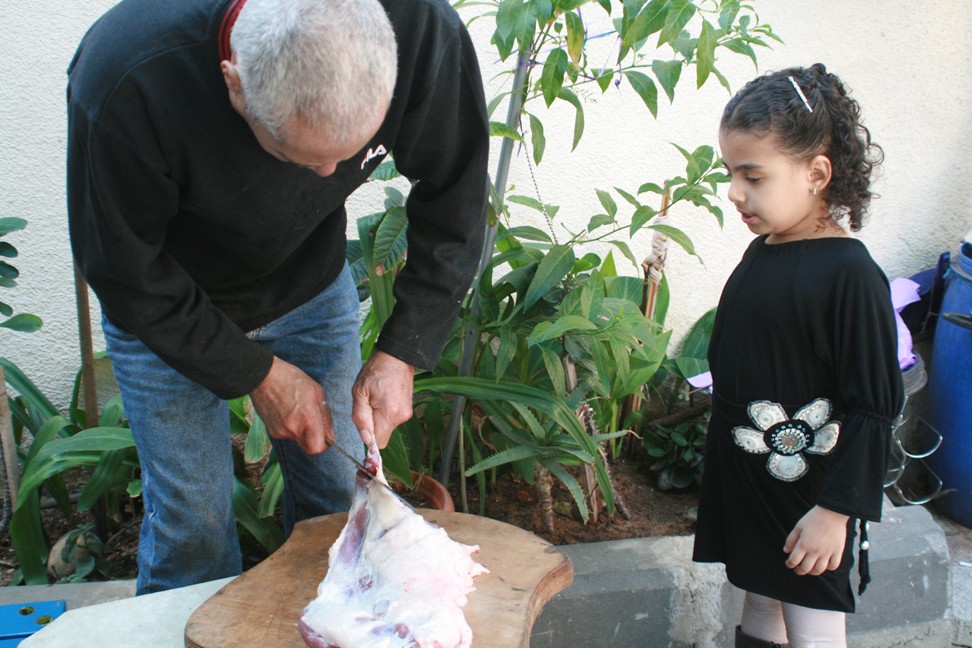 I found it the most interesting to watch the kids’ responses. Before the slaughter, the women told their kids to say “Allahu Akbar” – God is Great – and explained that sheep don’t have souls like people do. Then the kids watched every part of the process, asking questions, poking the skin, touching the legs. Only one said he doesn’t eat red meat because of a previous slaughter. The rest had quietly learned through the years that meat comes from dead animals, and they ate it having made their peace.
The Slow Food movement defines Slow Meat. Sounds like this slaughter qualifies.


[…] you want to know exactly where your meat is coming from, go to a farm and buy a whole animal that can then be packaged and stored in your freezer. Or hunt. This is what men do in Northern […]
[…] Public places and picnic spots received focused attention by 3,000 waste workers on duty across the Emirates for the holiday: waste generation skyrockets during Eid. Eid al-Adha, also called Big Eid, is an important 3-day Islamic holiday that occurs in the last month of the lunar Islamic calendar, after the start of the Hajj pilgrimage to Mecca. The holy days, or days of remembrance, recall the willingness of Ibrahim to obey God by sacrificing his son, Ismail. God of course intervened, and a sheep was sacrificed instead of the boy (read here about one Green Prophet writer who got close to Eid meat). […]
[…] Eid Al-Adha: Getting Close to Your Meat AKPC_IDS += "68705,"; __spr_config = { pid: '4ef1a3d5396cef53f100007b', title: '5 Million Goldfish Die for Nowruz – the Iranian New Year', ckw: 'animal conservation,Festivals,goldfish,holidays,New Year,Nowruz,Persian,Ritual,tradition,Zoroastrianism', chan: 'lifestyle-culture', no_slide: '', slide_logo: false, pub: '2012-03-19 07:26:34', url: 'http%3A%2F%2Fwww.greenprophet.com%2F2012%2F03%2Fgoldfish-nowruz-iranian-new-year%2F', header: 'RECOMMENDED FOR YOU' }; var content = document.getElementById('simplereach-slide-tag').parentNode, loc; if (content.className){ loc = '.' + content.className; } if (content.id){ loc = '#' + content.id; } __spr_config.loc = loc || content; (function(){ var s = document.createElement('script'); s.async = true; s.type = 'text/javascript'; s.src = document.location.protocol + '//d8rk54i4mohrb.cloudfront.net/js/slide.js'; __spr_config.css = 'document.location.protocol + '//d8rk54i4mohrb.cloudfront.net/css/p/4ef1a3d5396cef53f100007b.css'; var tg = document.getElementsByTagName('head')[0]; if (!tg) {tg = document.getElementsByTagName('body')[0];} if (tg) {tg.appendChild(s);} })(); […]
[…] the Islamic faith recognises these concerns and answers them. Traditionally, Muslims carry out a meat Qurbaan (sacrifice) every year for the Eid-ul-Adha festival and slaughter animals for food using the zabiha method any […]
[…] sacrifice of meat is an emphasised ritual for the pilgrims, while Muslim families all over the world slaughter an animal to commemorate Prophet Abraham’s sacrifice, and distribute it to the poor nearby. This is the […]
[…] sacrifice of meat is an emphasised ritual for the pilgrims, while Muslim families all over the world slaughter an animal to commemorate Prophet Abraham’s sacrifice, and distribute it to the poor nearby. This is the […]
[…] sacrifice of meat is an emphasised ritual for the pilgrims, while Muslim families all over the world slaughter an animal to commemorate Prophet Abraham’s sacrifice, and distribute it to the poor nearby. This is the […]
[…] sacrifice of meat is an emphasised ritual for the pilgrims, while Muslim families all over the world slaughter an animal to commemorate Prophet Abraham’s sacrifice, and distribute it to the poor nearby. This is the […]
[…] sacrifice of meat is an emphasised ritual for the pilgrims, while Muslim families all over the world slaughter an animal to commemorate Prophet Abraham’s sacrifice, and distribute it to the poor nearby. This is the […]
[…] sacrifice of meat is an emphasised ritual for the pilgrims, while Muslim families all over the world slaughter an animal to commemorate Prophet Abraham’s sacrifice, and distribute it to the poor nearby. This is the […]
[…] sacrifice of meat is an emphasised ritual for the pilgrims, while Muslim families all over the world slaughter an animal to commemorate Prophet Abraham’s sacrifice, and distribute it to the poor nearby. This is the […]
[…] slaughter animals on the ground, where the meat can become contaminated. Elsewhere the practice of home slaughter is gradually losing favor, though it is still […]
[…] slaughter animals on the ground, where the meat can become contaminated. Elsewhere the practice of home slaughter is gradually losing favor, though it is still […]
[…] halal, but should be mandatory. Ḏabīḥah (ذَبِيْحَة) is the word used to describe how Muslims ensure that the meat they eat is pure and wholesome. According to a Wikipedia entry on the subject, ”this method of slaughtering animals […]
[…] time Muslims from across the world will celebrate Eid al-Adha by sacrificing a sheep or a goat. Eid al-Adha, the ‘Festival of Sacrifice’, commemorates the occasion when god asked Prophet Ibrahim […]
[…] (Green Prophet’s Daniella writes an excellent piece on her experience witnesses a ritual Muslim slaughter). […]
Fine reporting. Thank you for sparing us gore in the pictures. If I were to believe in a soul, I would attribute one to each creature, not just to humans. The ritual reminds me why I don’t eat meat.
[…] religious holidays with a green spin: Green Your Mitzvahs for Purim Getting Close to Your Meat on the Muslim Eid Al Adha What To Do on Tu Be Shevat in […]
[…] soap, I found this book often superficial, even unrealistic. The author recommends buying an entire sheepskin in order to extract the lanolin out of it, for […]
[…] on November 25, just before the start of the Islamic Eid festival and, coincidentally, Thanksgiving in the United States, Dubai’s flagship investment company […]
yam yam
yam yam
yam yam
I should add – I used to live on the actual street where your sheep slaughter took place…for real.
Next time you see a sheep's skin about to be tossed in the dumpster, pick it up for me. I'll boil it to get lanolin. I don't have a centrifuge though or the special fat-removing soap… I understand where Muhammad is coming from…
This is excellent, providing a 'virtual' live slaughter and a personal study. Must admit, it's gross in places – Thankfully it's a man's job!A brilliant, wonderful, hidden website, very glad I found it. Hoping to share this link soon.http://www.muslimness.com =)
News:: Eid Al-Adha: Getting close to your meat http://bit.ly/8M8Uip
Get close to your meat: a Muslim ritual sheep slaughter in Israel: http://www.greenprophet.com/2009/12/04/14130/eid-al-adha-jaffa/