

Being an environmentally-conscious website, many articles posted here on Green Prophet have tried to show the bad side of the overuse of fossil fuels and the damage they have done to our planet – especially in regards to global warming and climate change. This is especially true in respect to my last article where I tried to bring to light the “downside” of trying to produce high grade petroleum from oil sands located deep beneath the ground in a place called Long Lake, in Alberta Canada.
In our present-day energy situation, the need for large quantities of oil for energy is still very much a fact of life. Whether it is found in the Middle East, the North Sea, South America, or even “trapped” inside underground mineral deposits such as oil shale, coal, oil sands or tar deposits like the La Bera tar pits in Los Angeles California, oil company geologists and scientists will continue to find ways to “free” these underground fossilized remains of prehistoric earth for years to come.
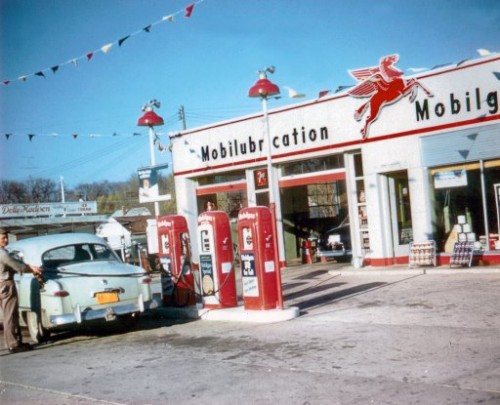
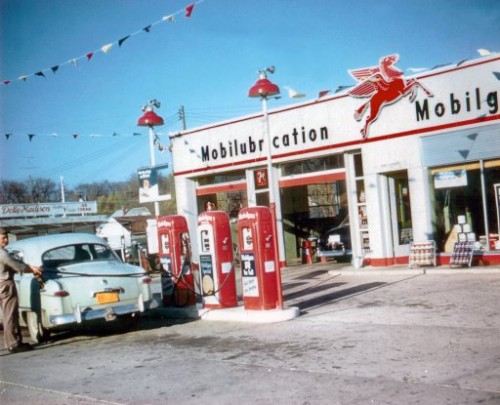
Although the use of oil for energy is raising concern among environmentalists (Peak Oil), it wasn’t so long ago that oil was the driving force behind the industrial and commercial innovations that most of us now take for granted. I grew up in Oklahoma where drilling for “crude” was an important part of an economy that otherwise was mostly agrarian in nature, with wheat, cotton, and cattle raising being some of the important “cash crops”. Back in the 1930’s, when a lot of people, including my dad, got into the oil business, oil could be found in depths as shallow as 200 feet. Oil fields literally sprang up on the Oklahoma prairies overnight and Oklahoma’s State capital building in Oklahoma City is located on what was once a large producing oil field with “donkey” pumping units on the Capital grounds still bringing up crude oil to this day.
Oil was cheap and plentiful back in the 1930’s even though it began to be imported from the “A-rabs” (as the locals called them) in the Middle East, which got its big boost when then President Franklin D. Roosevelt cut a deal with Ibin Saud, the King of Arabia, which later became known as Saudi Arabia, after the Saudi Royal Family. But despite all that, plenty of domestic crude oil was still available in both Oklahoma and Texas, and other parts of the USA as well – including California, where the recent movie There Will be Blood, starring Daniel Day Lewis, was filmed.
All of us in my “baby boom” generation grew up on cheap gasoline and hot cars. In fact, even the most dyed-in-the-wool environmentalist has to admit that literally everything we have today in the way of creature comforts and modern consumer products came in one form or another from oil. Even in the 1960’s, oil was still relatively cheap and gasoline was selling for as low as 30 cents a gallon (even cheaper during “gas wars” between gas station companies).
A few futurist thinkers, including science fiction writer Ray Bradbury, did start warning people in the 1950’s that sooner of later oil would run out (Peak Oil), or become scarcer and thus more expensive. And a few people even talked about possible environmental damage from overuse of oil. But as a whole, people couldn’t care less, and still had plenty of cheap gasoline to drive their cars to the charcoal hamburger restaurants to buy a Theta Burger.
So here we are now, nearly 10 years into the year 2000, with greenhouse gases, global warming, climate change and Al Gore, who won the Nobel Peace Prize in 2007 for his crusade against global warming. But despite all the environmental problems and attempts to develop alternative and renewable energy, the world is still very hungry for that black stuff that folks in my neck of the woods used to call Texas Tea. And for a long time to come people will still want this stuff to keep their economies going. Ask the Chinese, now the No. 2 users of oil in the world after America, and probably one of the main contributors to the present state of the world environment, including melting polar ice and glaciers.
No, I’m not going to castigate companies like Exxon (now cooperating with Ben Gurion University on renewables), BP, and even Opti Canada Inc., for doing what they’re doing. They’re only accommodating to people’s needs; which for the time being is still centered around fossil fuels and not solar energy and wind turbines. Israel has never had much oil, and the newly discovered natural gas deposits in the Eastern Mediterranean have still not been fully explored. So with this in mind, Israel is in a better position to develop other forms of energy, especially in light of less oil being available due to increasing political realities.
Maybe in a hundred years or so, the situation will be different concerning the use of renewable energy over oil – if we all can last that long.
(Photo via www.shorpy.com)


[…] with the idea of making a killing before reality sets in and it turns out that not as much “Texas Tea” is really down there in the 4,000 plus meters deep Mohila strata layer of the earth’s […]
.@greenprophet When Oil Or “Texas Tea” Was Good For Us. Being an environmentally-conscious website, many articles http://j.mp/Qa3Kj
When Oil Or “Texas Tea” Was Good For Us http://ow.ly/t6lF
Great article, I think something you skim over but don’t quite hit on the head is the need to have social responsibility around Oil & Gas as well as environmental.
As it stands giving money to despots and dictators is not a good thing for the world. We have paid for Iran’s nuclear program, although not responsible for their actions, we lined their pockets and the situation we find ourselves in today with them is something we have to attribute not only to them but to ourselves.
When Oil Or “Texas Tea” Was Good For Us | Green Prophet http://ow.ly/t7DB #peak #oil
Gov – When Oil Or “Texas Tea” Was Good For Us – Green Prophet (blog): Green Prophet (blog)When Oil Or “Tex.. http://bit.ly/2kPQm
When Oil Or “Texas Tea” Was Good For Us http://bit.ly/8jgwb
When Oil Or “Texas Tea” Was Good For Us – Green Prophet (blog): Green Prophet (blog)When Oil Or “Texas Tea” Was.. http://bit.ly/2kPQm
When Oil Or “Texas Tea” Was Good For Us – Being an environmentally-conscious website, many articles posted here o… http://ow.ly/15TnDn
When Oil Or “Texas Tea” Was Good For Us – Green Prophet (blog) http://bit.ly/2kPQm
News:: When Oil Or "Texas Tea" Was Good For Us http://bit.ly/ENelh