Netafim to Provide Drip Irrigation for Sugar Cane Ethanol Production in Peru

ethanol production sugar cane peru photo

Last week, Israeli company Netafim, a pioneer in drip irrigation technology, signed a $22 million deal to supply irrigation for a large-scale sugar cane project in Peru.

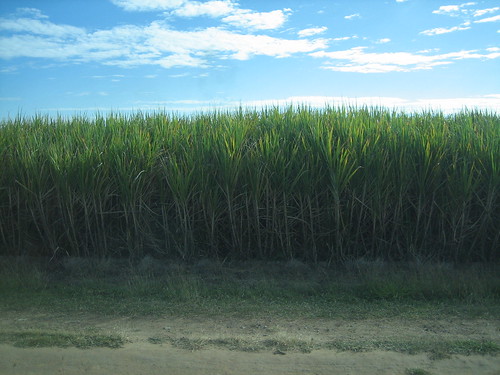
In conjunction with Maple Energy, a Peruvian company that produces energy for industrial clients, the project will cultivate 20,000 acres of sugar cane for the creation of ethanol, an alternative energy fuel.

This project concerns me for a few reasons.

Drip irrigation, the water-saving technology that Netafim and other Israeli companies pioneered, increases water efficiency, but not necessarily sustainability.  Indeed, a study that came out in November found that, contrary to its reputation, drip irrigation actually increases the total amount of water consumed.  In an era when countries all over the world are facing worsening drought conditions, I’m not sure it’s prudent to encourage such large-scale, thirsty agricultural projects, especially in developing nations (like Peru) that are more economically and environmentally vulnerable.

Furthermore, I’m not sure the production of sugar cane for ethanol fuel is a wise choice.  Although the energy balance for sugar cane ethanol is higher than it’s oft-criticised counterpart, corn ethanol, it is still rather low.  This means that, while ethanol is a renewable fuel whose greenhouse gas emissions are much lower than those of petroleum, the process of producing and processing the sugar cane into ethanol is quite energy intensive, and might even produce more greenhouse gases than are saved by burning the ethanol in the first place.

Last but not least, the mono-cultivation of such a large area is dangerous, and could lead to problems like soil erosion, nutrient runoff, and widescale crop infestation and failure.  Also, as the market price for sugar cane increases, it is likely that other lands – even those that grow food for people – will be converted to similar intensive sugar cane production, which could have large economic, social, and environmental ramifications.

It’s good news that Netafim, who recently had to lay off 200 workers, was able to sign such a valuable deal in amidst a global economic crisis.  But I wish economic prosperity didn’t come at the cost of the Peruvian (or the global!) environment.

:: Ynetnews

Image Credit: sheilaellen

More Prophecies related to biofuels:
Squeezing Energy From a Plant’s Metabolism at Hebrew University

Elite Coffee Factory Uses Leftover Beans to Make Great Smelling Energy

Olivebar Rolls Out “Green” Olive Logs To Power Your Wood Stove With Olive Waste


Rachel Bergstein
Rachel Bergsteinhttps://www.greenprophet.com/
When her vegan summer camp counselor explained to a fifteen-year-old Rachel how the dairy industry pollutes the groundwater in poor rural communities and causes global warming, there was no turning back. Her green fire lit, Rachel became increasingly passionate about the relationship between human societies and the natural environment, particularly about the systemic injustices associated with environmental degradation. After snagging a B.A. in Peace and Justice Studies at the University of Maryland, where she wrote an undergraduate thesis on water injustice in Israel/Palestine and South Africa, Rachel was awarded the New Israel Fund/Shatil’s Rabbi Richard J. Israel Social Justice Fellowship to come and spread the green gospel in Israel for the 2009-2010 academic year. She currently interns for Friends of the Earth Middle East in their Tel Aviv office. When Rachel is not having anxiety about her ecological footprint, carbon and otherwise, she can be found in hot pursuit of the best vegetarian food Tel Aviv has to offer. She also blogs about her experience as an NIF fellow and environmentalist in Israel at organichummus.wordpress.com. Rachel can be reached at rachelbergstein (at) gmail (dot) com.
9 COMMENTS
  1. Superb. Rather than trumpet and repeat public relations and research tidbits, your extra effort to examine and understand technology is superb.

    Another example: Was the USA premature to boost corn-ethanol without considering the impact of 2100 gallons of water required for each gallon of ethanol?

    Not expecting it, I was surprised to learn that drip systems can increase overall water losses due to secondary evaporation, can increase solids contamination, and decrease total water resources in a region.

    We truly need to review broad life-cycle analysis as well as immediate benefits before major investments.

LEAVE A REPLY

Please enter your comment!
Please enter your name here

TRENDING

Farm To Table Israel Connects People To The Land

Farm To Table Israel is transforming the traditional dining experience into a hands-on journey.

10 Proven Israeli Technologies to Help Somaliland Build Food, Water, and Energy Security

Israel’s water and agricultural technologies didn’t emerge from ideal conditions. They were developed under pressure: low rainfall, saline water, political isolation, lack of energy resources, and the constant need to feed a growing population with limited land. Over the years, I’ve written about many of these companies not as miracle-makers, but as problem-solvers. That’s what makes them relevant to places like Somaliland. Israel was the first country in the world to recognize Somaliland as an independent state although Ethiopia has been treating the nation as such for decades.

Iran’s holiest city about to run dry as terror chosen over water management

Iran’s second-largest city, Mashhad, is facing an acute water emergency after dam reservoirs feeding the city fell below three percent capacity, according to Iranian state and local media. Officials warn that without rainfall or improved inflows from neighboring Afghanistan, the city’s supply could soon collapse.

The Satellite That Sees Earth Breathe: How NISAR Could Transform Sustainability From Space

Critically, NISAR’s data will be publicly available. That means not only scientists and governments, but also nonprofits, local planners, and startups can build tools and services using the data.

Arab agricultural land is on the brink

Across the Arab world, croplands face a perfect storm of stressors. Excessive fertilizers and pesticides erode soil ecology. Poor drainage and over-irrigation drive salinization, leaving fields crusted with salt. Rising temperatures, dwindling groundwater, and more frequent sand-and-dust storms—all amplified by climate change—compound the crisis.

6 Payment Processors With the Fastest Onboarding for SMBs

Get your SMB up and running fast with these 6 payment processors. Compare the quickest onboarding options to start accepting customer payments without delay.

Qatar’s climate hypocrisy rides the London Underground

Qatar remains a master of doublethink—burning gas by the megaton while selling “sustainability” to a world desperate for clean air. Wake up from your slumber people.

How Quality of Hire Shapes Modern Recruitment

A 2024 survey by Deloitte found that 76% of talent leaders now consider long-term retention and workforce contribution among their most important hiring success metrics—far surpassing time-to-fill or cost-per-hire. As the expectations for new hires deepen, companies must also confront the inherent challenges in redefining and accurately measuring hiring quality.

8 Team-Building Exercises to Start the Week Off 

Team building to change the world! The best renewable energy companies are ones that function.

Thank you, LinkedIn — and what your Jobs on the Rise report means for sustainable careers

While “green jobs” aren’t always labeled as such, many of the fastest-growing roles are directly enabling the energy transition, climate resilience, and lower-carbon systems: Number one on their list is Artificial Intelligence engineers. But what does that mean? Vibe coding Claude? 

Somali pirates steal oil tankers

The pirates often stage their heists out of Somalia, a lawless country, with a weak central government that is grappling with a violent Islamist insurgency. Using speedboats that swarm the targets, the machine-gun-toting pirates take control of merchant ships and then hold the vessels, crew and cargo for ransom.

Leopoldo Alejandro Betancourt López Turned Ocean Plastic Into Profitable Sunglasses

Few fashion accessories carry the environmental burden of sunglasses. Most frames are constructed from petroleum-based plastics and acrylic polymers that linger in landfills for centuries, shedding microplastics into soil and waterways long after they've been discarded. Leopoldo Alejandro Betancourt López, president of the Spanish eyewear brand Hawkers, saw this problem differently than most industry executives.

Why Dr. Tony Jacob Sees Texas Business Egos as Warning Signs

Everything's bigger in Texas. Except business egos.  Dr. Tony Jacob figured...

Related Articles

Popular Categories