

The financial crisis is hurting Americans, but months before the hit fuel costs were already gouging into people’s pockets. Some were forced to carpool to work, others took the bus or train. While creative forms of public transportation help deal with times of fiscal uncertainty (we personally love bikes!), the long-term plan for preserving the American way of life, and its auto industry, may revolve around an Israeli businessman.
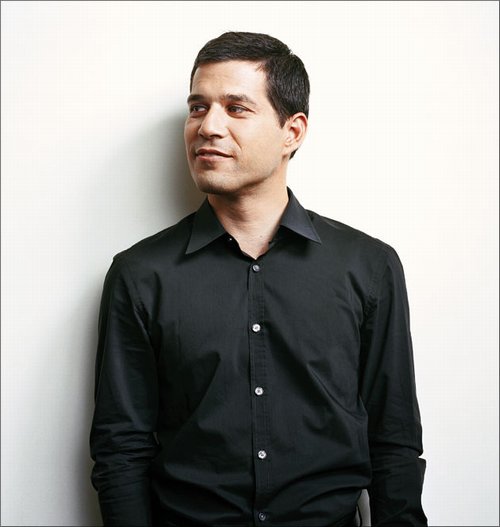
Shai Agassi, the CEO of Better Place, has big plans for America. Last Thursday, with the blessing of California’s Governor Arnold Schwarzenegger, Bay Area mayors met at San Francisco’s City Hall, along with Agassi. Their intent, they said, is to make the California region, already a green beacon in the world, an early adopter of Agassi’s electric car scheme. Israel, Denmark and Australia have already come on board.
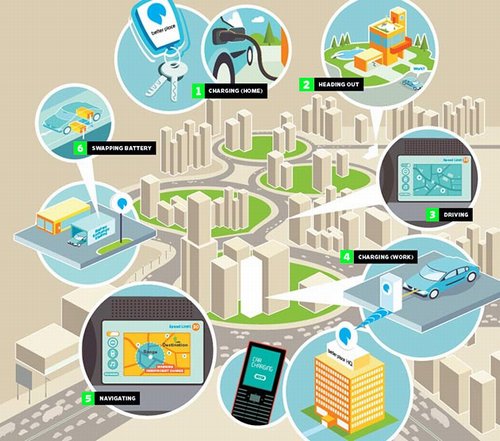
Similar to “minutes” in the cell phone industry, users will pay for leasing a car based on battery use. The scheme calls for electric battery recharging ports, and battery swapping stations throughout the region, but requires infrastructure and support for the project to work effectively.
Will Israel be the capital of electric cars?
The new $1 billion project is expected to encompass the cities of San Francisco, San Jose and Oakland. Similar deals have been signed with governments elsewhere, and now California marks the first stop in the US market. The United States is set to go electric.
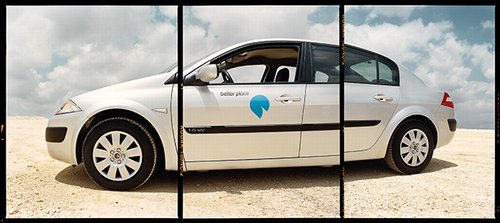
According to media reports, Better Place, which is headquartered in Palo Alto, will begin constructing the charging stations by 2010, with commercial sales beginning in 2012, a few short years away. The electric cars will be built by Renault-Nissan.
The recent announcement to start work with the Bay area did not come as a big surprise. In Israel earlier this year, hybrid-car driving Mayor Gavin Newsom of San Francisco already showed great interest in the Israeli project.
“This is the start of a regional effort to become the capital of electric vehicles in the United States,” he told representatives from federal and state agencies, green organizations and automotive makers such as GM and Toyota, in a recent press briefing.
With factory layoffs hitting car production plants all over America and Canada, an industry revolving around the electric car may breathe new life into the crumbing American economy.
It takes a region to make a great EV
Mike Granoff, head of oil independence policies at Better Place, and the first investor in the company told me: “Gavin Newsom and Shai have been friends for many years. The Mayor wanted San Francisco to be a leader in this, but it was not entirely up to him because our model does not work for just a city – it needs a region. He led an effort over the last year to bring the entire Bay Area on board, and ultimately the entire state.
“We are working with third parties on capital raises for Better Place Denmark and Better Place Australia. We intend to do the same thing in California. We have been inundated by inquiries about investment continuously, even through the downturn,” he adds.
“We absolutely look forward to working with additional automakers. Our goal is for all cars to ultimately be electric. The American auto industry is in shambles precisely because they have not moved toward ‘Car 2.0’.”
Earlier this week Granoff circulated an email explaining why he believes the US government’s response to the crumbling economy should be an “auto bailout, conditional on [a] rapid switch to all-electric, and then create a jobs program in parallel to put that infrastructure in.”
Plug in or swap the EV battery
In order to put the vision into practice, Better Place — already backed with about $200 million in venture capital — will raise additional capital so that charging stations in the three main participating cities, and between them, can be built. The stations will let vehicle owners recharge with ease, or in some cases swap spent batteries for fresh ones during longer trips.
The Bay area mayors are expected to use their authority to push through permits needed to create the charging stations, and also regulations that promote and offer incentives, such as tax breaks for those who install charge stations at workplaces, or who use the cars.
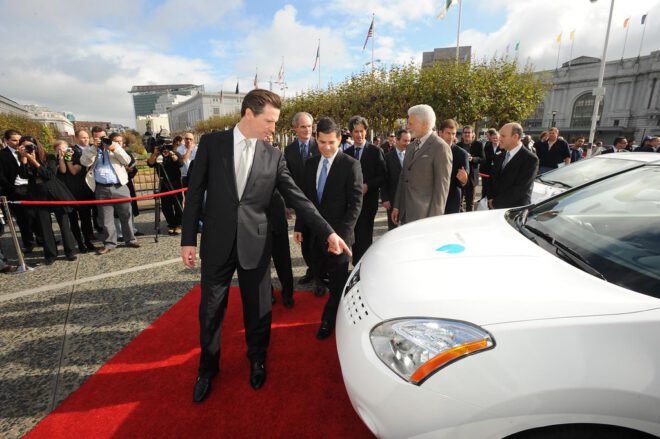
At a press briefing, Newsom told reporters: “We’re going to get serious about advancing our local climate action plans, about getting into the business of alternative transportation. I don’t believe halfway is good enough. I’m a guy driving a hybrid (vehicle) and I don’t feel too good about that. For us to get to the next level, we need unprecedented regional collaboration.”
Aside from long-term environmental rewards, there are other benefits too: Better Place solves in part America’s dependence on foreign oil, owned by a cartel of dangerous countries that threaten global democracy. Agassi said, “We believe this is not just a model for California, but a blueprint for the United States.”
For a somewhat more critical look at Better Place, visit the Green Prophet article, Better Place’s Shai Agassi Gets Wired.




Its a great idea to introduce electric cars in the region as it be cheaper as compared to fuel cars. With increased fuel prices it would be very benrficial for people to switch over to electric cars.
I hope this project becomes a big success so that we may see it in the East also.
What would it take to get the Big Three on board?
They are hurting and need something else to get them going again. What if they do get bailed out on the premise of making hybrids and electric cars only?
I am sure it would take more than that, but it’s a start.
Robert