

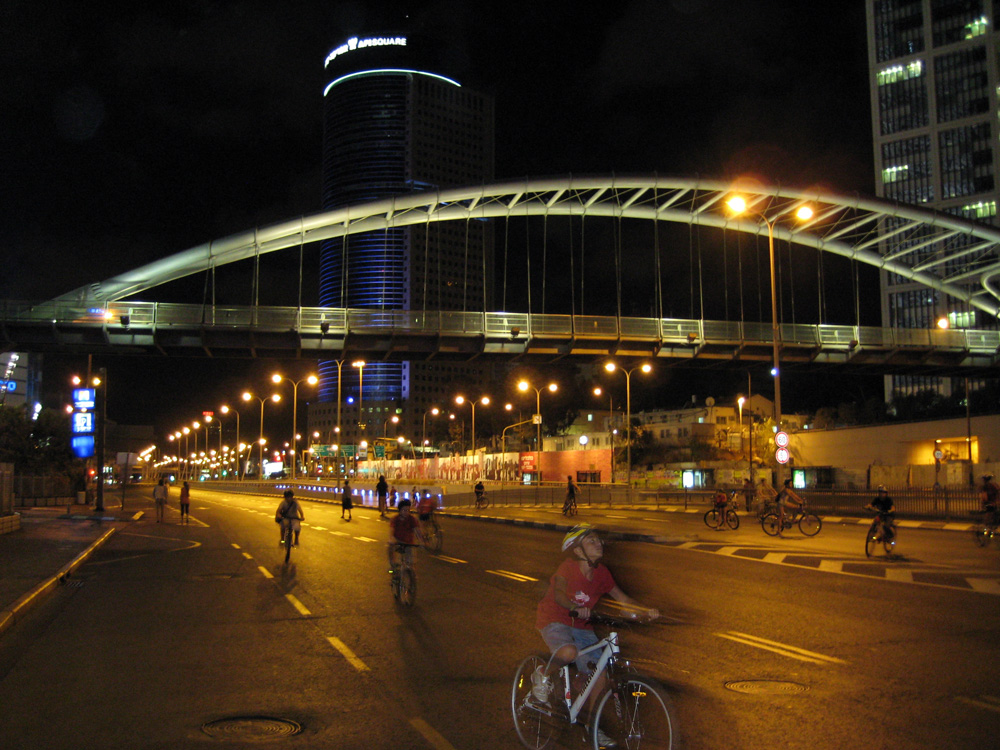
Kids on bikes cruise past Azrieli towers.
A couple of years ago I read a book called Carfree Cities, which put forward a very convincing case for reducing the use of private cars in the city, and set out a whole series of design alternatives which, according to author J.H. Crawford, would obviate the need for automobiles in urban areas.
Around the same time, I read another book – James Kunstler’s The Geography of Nowhere – which bemoaned the loss of place and the banal commercialization of the American built landscape. The central villain in Kunstler’s narrative was (surprise, surprise) the automobile.
These days, everyone knows that the automobile is a problem, and the race is on to reduce the negative side effects of our dependence on our cars: pollution, noise, fatal traffic accidents, etc. However, as we race to build a better car, be it electric plug-in, hybrid, hydrogen fuel cell or even liquid natural gas, we may be missing the bigger picture.
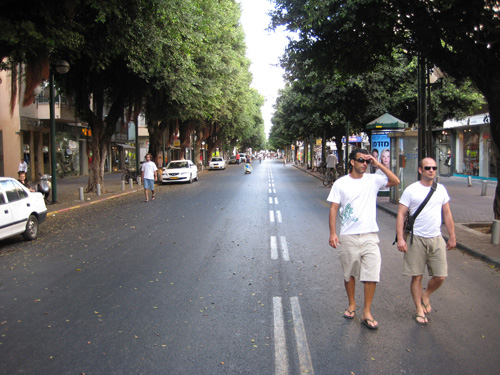
Strolling down Dizengoff Street.
The thesis of Carfree Cities is that the car itself is the problem, for a variety of reasons.
Of course, there are alternatives to car-based cities, and one of them is to integrate walkable cities with modern rapid transit. In other words, building systems that move lots of people around between different places where they can actually get around on foot (or bike).
 Cities built for foot traffic are naturally designed differently than cities designed for traffic propelled by the internal combustion engine. Streets, buildings, lighting, signage – all can be scaled for a car, or scaled for people.
If you want to see a city built according to the needs of cars, visit almost any American city or suburb, with their parking lagoons, strip malls and drive-throughs.
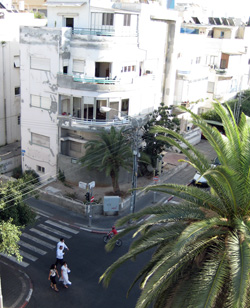
Tel Aviv, like most cities built before the middle of the previous century, was built with human dimensions in mind.
Most of the time, this fact is obscured by the traffic jams, the honking and the fumes that emanate from the city’s streets. On Yom Kippur, the original character of the city becomes visible again – a human-scaled city, with small blocks and medium-rise buildings, street trees and compact storefronts. A city that can be traversed on foot in less than an hour.
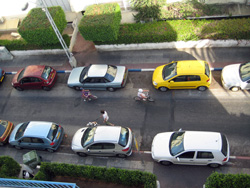
Suddenly, on Yom Kippur, the city no longer feels so very crowded. Even though the city’s residents came pouring out of their apartments and into the streets last week, on foot and on bike, there was none of the usual feeling of stuffiness and stress. The human body takes up much less room, and puts much less stress on its surroundings, than the car.
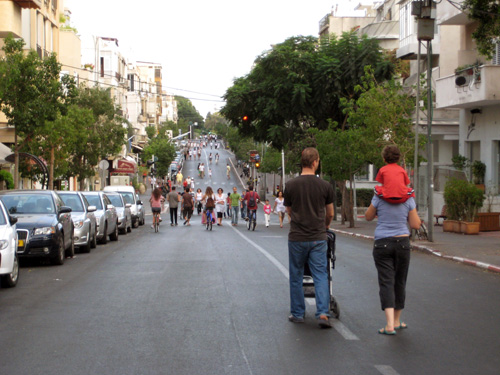
In cities all over the world, a new trend has taken root. Once a week, the city’s streets are reclaimed from motor traffic and given over to its human inhabitants. In Bogotá, they call it the Ciclovia. In Portland, it’s known as Sunday Parkways, and in New York, Summer Streets.
The names are different, but the message is always the same: asphalt, which covers so much of our urban space, can be more than just a carriageway for vehicles, it can also be a recreation space for people.
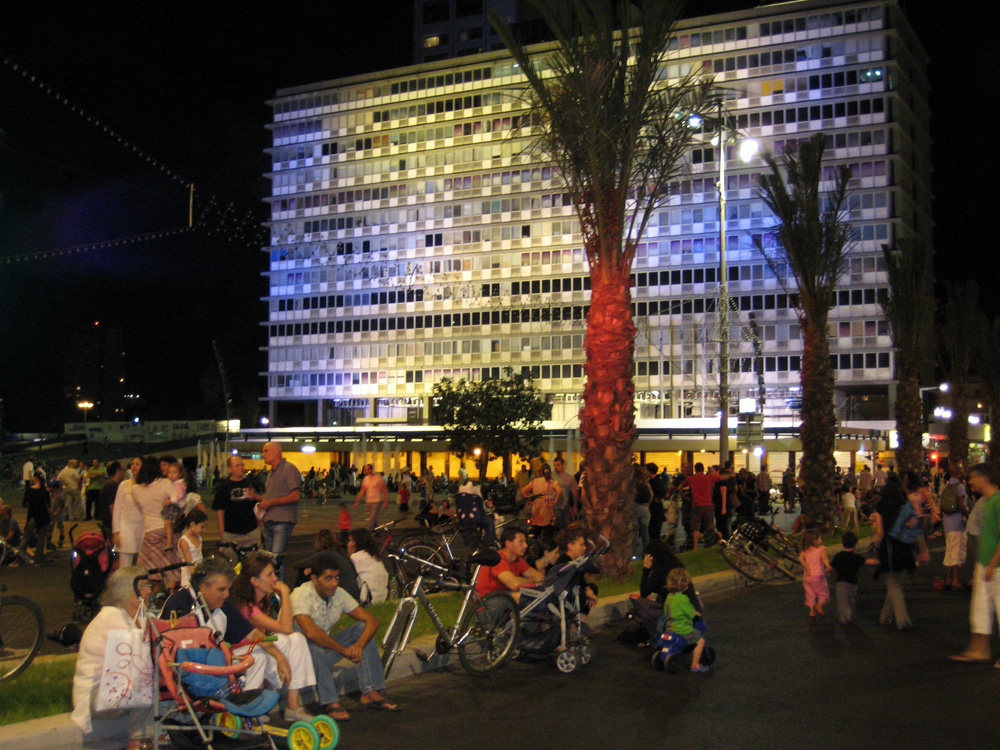
This year, the Israeli blogosphere was full of people expressing their appreciation for Yom Kippur, the local version of Carfree Day, and the one day of the year when the car does not rule the public sphere.
Haaretz also ran a piece entitled “A Day that Connects Man and Place,” which reflected on the charming cityscape that reveals itself once a year when the smog lifts and we can actually roam freely and unmolested through our city.
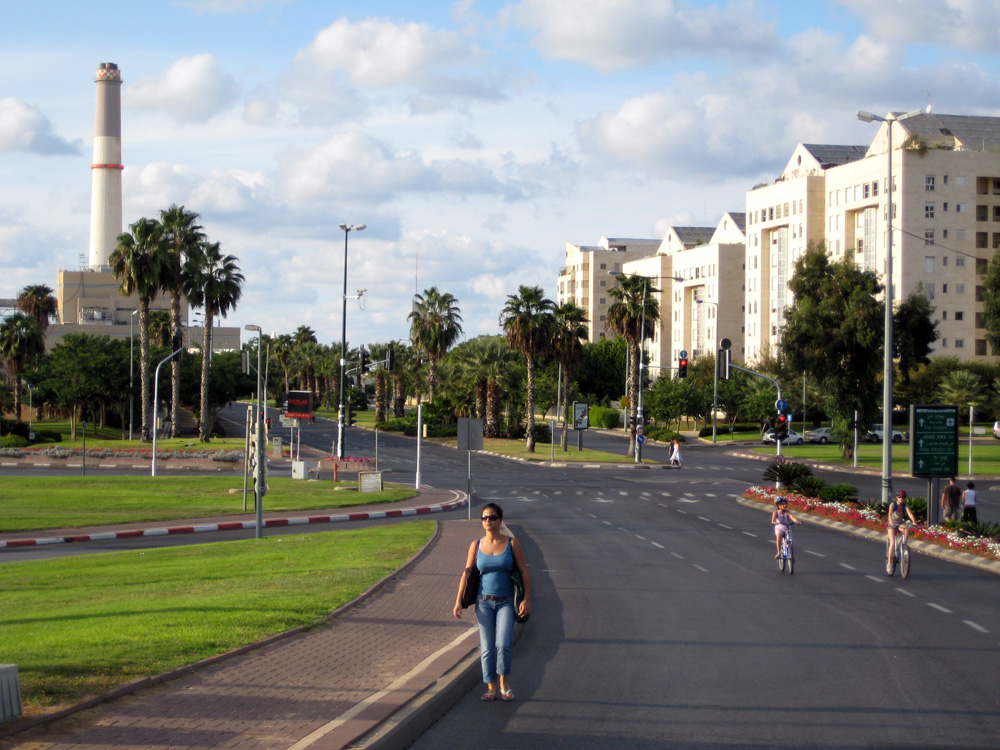
While, of course, I am not suggesting that we abandon the car altogether overnight, it is my hope that the experience of this day without cars will help convince Israeli cities to finally create pleasant, efficient and comprehensive systems to help people get from one place to another, without the soot and the smog.
All photos taken on Yom Kippur 2008 by Jesse Fox.


Great article.
Wow, we are having a real James Kunstler party on this site. Kudos to the man who coined the term oil fiesta, and have you been listening to his podcast, the Kunstlerkast?