Univerve’s Algae to Biofuel Your Car

algae israel univerve olls

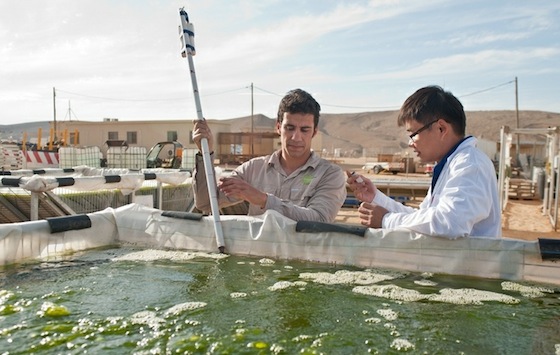
GreenFuel, a US algae-to-biofuel business founded by Israeli Isaac Berzin more than 10 years ago, most likely failed because it was a bit ahead of the zeitgeist. Hoping to reach the market when the product and timing is right, the young Israeli company Univerve plans to turn algae — the green slimy microorganisms you skim from ponds and pools — into the perfect third-generation biofuel. As of 2023 the company’s website was down. But we are leaving the story up so future entrepreneurs and investors can learn from the process.  

Ohad Zuckerman, CEO of the 10-person company based in Tel Aviv, thinks he and his team have the right stuff to make it happen. With a 20-year background in seed breeding, Zuckerman is leading his team in developing a new biofuel from a fatty super-strain of algae that grows robustly in a broad range of temperatures.

As Berzin and the Israeli company Seambiotics know, algae is a good source of biofuel that does not compete with crops for food as does biofuel made from potatoes, sugarcane or corn. Second-generation biofuels are better, because they are made from materials that are typically not edible, such as wood, castor plants or jatropha. However, these feedstocks still require arable land and fresh water, meaning that they could never be cultivated in a high enough supply to meet the world’s demands. Algae have a higher yield per acre over time without taking up precious farmland.

“I knew about first-generation biofuels at my seed business, but when I met my partner in March 2008, he told me about second- and third-generation [biofuels] and that algae might be a very good solution,” Zuckerman tells ISRAEL21c. “We founded the company in 2009 because we believe this could be a good way to change the geopolitical arena, and also for environmental reasons.”

He points out that biofuels are good alternatives to fossil fuels for the short and long term. “You don’t have to make modifications to the engines of cars, ships or airplanes. They are really a carbon-neutral solution [because they consume carbon dioxide to grow and produce it when burned], and we looked to microalgae because they do not compete with food.”

Breeding the right algae is the key
univerve algae biofuel

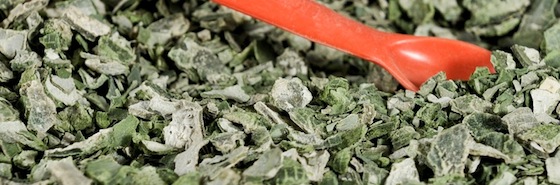
Now the trick is to get to a good biofuel, and this is where Zuckerman’s seed-breeding background comes in handy.

“You can’t just throw seeds to the ground to get a good crop,” he tells ISRAEL21c.

Since 1978, the United States Department of Energy (DOE) has been looking into microalgae-based fuels created in both artificial and natural environments, and the topic was discussed in the ivory towers there two decades earlier. When the DOE’s Aquatic Species Program ended in 1996 without finding a cost-effective solution, researchers and industrialists took up the challenge to turn algae into a viable alternative fuel for the future.

Linked to Ben-Gurion University of the Negev and the Weizmann Institute of Science in Rehovot — and with a Tel Aviv University business dean on the board — Univerve is working to improve the strains of algae it cultivates and also to refine a growth system.

The final step, extracting the oil, would be done in partnership with a third party from the United States.

Oiling the wheels for big algae business

algae israel univerve

Zuckerman won’t be creating genetically modified transgenic crops. He uses traditional plant-breeding techniques to get a hardy strain of algae that can provide the most efficient feedstock. The company will also focus on cultivation and harvesting methodologies.

Univerve has been self-financed till now, but based on current milestones the company is looking for a $5 million investment to continue development of the project and to start the process on leased land with appropriate access to water. The first commercial plant is expected to be built in Israel, where the climate is right.

The algae strains that Univerve grows use saline or brackish water rather than freshwater reserves — perfect for a desert with brackish underground reservoirs.

“We assume we will be able to be commercializing by 2014, but we still need to finish development, optimize production, scale up and make processes automated,” says Zuckerman.

Unlike other algae growers that make a range of products from their plants, such as vitamins, Univerve’s focus only on oils is risky from a business perspective. But that’s a risk that clean-tech entrepreneur Zuckerman is willing to take.

The Univerve pilot plant can be seen in action at the Rotem Industrial Park near Dimona, Israel.


Karin Kloosterman
Karin Kloostermanhttp://www.greenprophet.com
Karin Kloosterman is an award-winning journalist, innovation strategist, and founder of Green Prophet, one of the Middle East’s pioneering sustainability platforms. She has ranked in the Top 10 of Verizon innovation competitions, participated in NASA-linked challenges, and spoken worldwide on climate, food security, and future resilience. With an IoT technology patent, features in Canada’s National Post, and leadership inside teams building next-generation agricultural and planetary systems — including Mars-farming concepts — Karin operates at the intersection of storytelling, science, and systems change. She doesn’t report on the future – she helps design it. Reach out directly to [email protected]
1 COMMENT
  1. Commercialisation until 2014 is an ambitious goal! Especially when I see companies struggeling to get to an industrial scale even with hundreds of millions funding. Anyhow – I appreciate the will to succeed and keep my fingers crossed for Zuckerman.

LEAVE A REPLY

Please enter your comment!
Please enter your name here

TRENDING

What a martian ice age left behind tells us about our future

We have heard that peak climate change might be...

Sea Moss: The New Superfood, Or Just A Trend?

Sea moss became the new super-food when Kim Kardashian...

Ecomondo vs. COP: Where the Climate Transition Actually Happens

In Rimini, the performance drops away. Nobody wins Ecomondo with a pledge or a photo op. You win if your system works, if your process scales, if a municipal department or multinational buyer signs a deal to decarbonize their operations.

What has more protein – spirulina or a steak?

While both spirulina and beef provide “complete” protein (i.e., containing all essential amino acids), the absorption and usability of that protein by the human body may differ. Animal-sourced proteins are often considered more easily digestible and more strongly tied to muscle repair and growth, though the exact difference can depend on numerous factors including cooking method, other dietary components and individual digestive efficiency.

Perseverance Rover Uncovers Ancient Martian Chemistry — And Raises the Question: Could This Hint at Past Life?

On Earth, similar mineral–organic interactions can be biological or abiotic. In Jezero Crater, the long geological timescales suggest the reduced vivianite and sulfides may have formed without biology — but organic compounds could still have driven the chemistry.

Qatar’s climate hypocrisy rides the London Underground

Qatar remains a master of doublethink—burning gas by the megaton while selling “sustainability” to a world desperate for clean air. Wake up from your slumber people.

How Quality of Hire Shapes Modern Recruitment

A 2024 survey by Deloitte found that 76% of talent leaders now consider long-term retention and workforce contribution among their most important hiring success metrics—far surpassing time-to-fill or cost-per-hire. As the expectations for new hires deepen, companies must also confront the inherent challenges in redefining and accurately measuring hiring quality.

8 Team-Building Exercises to Start the Week Off 

Team building to change the world! The best renewable energy companies are ones that function.

Thank you, LinkedIn — and what your Jobs on the Rise report means for sustainable careers

While “green jobs” aren’t always labeled as such, many of the fastest-growing roles are directly enabling the energy transition, climate resilience, and lower-carbon systems: Number one on their list is Artificial Intelligence engineers. But what does that mean? Vibe coding Claude? 

Somali pirates steal oil tankers

The pirates often stage their heists out of Somalia, a lawless country, with a weak central government that is grappling with a violent Islamist insurgency. Using speedboats that swarm the targets, the machine-gun-toting pirates take control of merchant ships and then hold the vessels, crew and cargo for ransom.

Leopoldo Alejandro Betancourt López Turned Ocean Plastic Into Profitable Sunglasses

Few fashion accessories carry the environmental burden of sunglasses. Most frames are constructed from petroleum-based plastics and acrylic polymers that linger in landfills for centuries, shedding microplastics into soil and waterways long after they've been discarded. Leopoldo Alejandro Betancourt López, president of the Spanish eyewear brand Hawkers, saw this problem differently than most industry executives.

Why Dr. Tony Jacob Sees Texas Business Egos as Warning Signs

Everything's bigger in Texas. Except business egos.  Dr. Tony Jacob figured...

Israel and America Sign Renewable Energy Cooperation Deal

Other announcements made at the conference include the Timna Renewable Energy Park, which will be a center for R&D, and the AORA Solar Thermal Module at Kibbutz Samar, the world's first commercial hybrid solar gas-turbine power plant that is already nearing completion. Solel Solar Systems announced it was beginning construction of a 50 MW solar field in Lebrija, Spain, and Brightsource Energy made a pre-conference announcement that it had inked the world's largest solar deal to date with Southern California Edison (SCE).

Related Articles

Popular Categories