

Who was Hassan Fathy, the earth based architect who inspired the Middle East?
Exactly forty years ago, Hassan Fathy published his groundbreaking book on community-inspired mud architecture in Egypt. To mark his book’s 40th anniversary and commemorate his green legacy, we spoke to Salma Samar Damluji who worked with Fathy in Cairo in 1975 and now helps preserve mud architecture in Yemen.
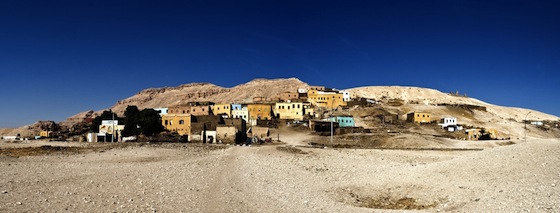
Hassan Fathy was an Egyptian architect who wanted to build a different world using the cheapest material the earth provides – mud. When in 1946 he was commissioned to build a new village in Luxor, he did something which many architects at the time wouldn’t even contemplate. He asked the community what they wanted and integrated the best of their traditional earthen construction techniques with his architectural expertise. What emerged was ‘New Gourna’, a stunning earthen village with natural ventilation, large bright rooms, beautiful domes – and all at low cost too.
In 1972 he published ‘To Build With The People’, a book on this experience as well as his commitment to work with the poorest people in Egypt to secure their right to decent housing. A year later his book was republished by the University of Chicago Press under the new title ‘Architecture For The Poor’ where it triggered a wider international interest in his work and ideas. Hassan Fathy died in his home in Cairo on November 30th 1989. To mark his book’s 40th anniversary, I spoke to award-winning Iraqi architect Salma Samar Damluji who worked with Hassan Fathy in 1975-6 & 1984-5 and now helps preserve mud and stone architecture in Yemen.
I understand that you were ready to end your architecture studies until you came across Hassan Fathy’s work. Is that true?
Well, yes there was a brief stint when I was home [Beirut] from my studies over the summer when I wanted to quit. And I was thinking how am I going to tell my parents, after all the money that they spent sending me to the UK to study at the most expensive school of architecture? I was wanting to break this news to them when I bumped into Hassan Fathy and that changed everything.
 What was it about Hassan Fathy and his architecture that fascinated you and drew back into architecture?
I think he was the first person that made me understand that Islamic architecture and vernacular architecture isn’t history. That it can be part of the present and that vernacular architecture can be developed and is an important resource particularly to people who are deprived. It created a more dignified and luxurious space for them to live than concrete matchboxes (as they call them in Cairo) that were the alternative.
Fathy’s premise was that the peasants – the falaheen – who were the rural people could teach us a lot about living well. They used to live in four/five rooms with a patio and a kitchen and a bathroom, a backroom and a shed for the livestock. But soon as the government and the bureaucracy took over housing them, they were transferred into one/two rooms in horrid multi-store buildings. So this is what he was fighting and he learnt a lot from the rural housing of Nubia and upper egypt, and from the master builders and stonemasons who worked with him.
Why do you think Hassan Fathy had such a big influence in the field of architecture in the Middle East and in vernacular (earth) architecture worldwide?
Hasan Fathy has not had a big influence on the architecture in the middle east. In fact the middle east with its bureaucracy (and contractors) has been busy constructing for profit, without any proper design, planning or thinking, and (apart from a few numbered private clients) there was no real interest in Hasan Fathy’s ideas in the region. I am not sure much has changed there since.
He was the first Arab architect (there was another French architect and a British architect who worked with vernacular architecture in Algiers and in upper Egypt) to bring to the forefront and to the contemporary if you like the importance of earth architecture. He recognised its importance across history from the pre-Islamic era to the present day. He was that astute that he could recognise the fact that in the past, people used to know how to build much better than the kind of destructive construction that has taken over now.
He was also one of the first fighters against the recolonisation of architecture which you see today. He wanted to preserve Egypt’s architectural heritage and save it from concrete. He fought relentlessly and so did we alongside him to stop the expansion of imported ideas, imported architecture and the thinking that came with it.
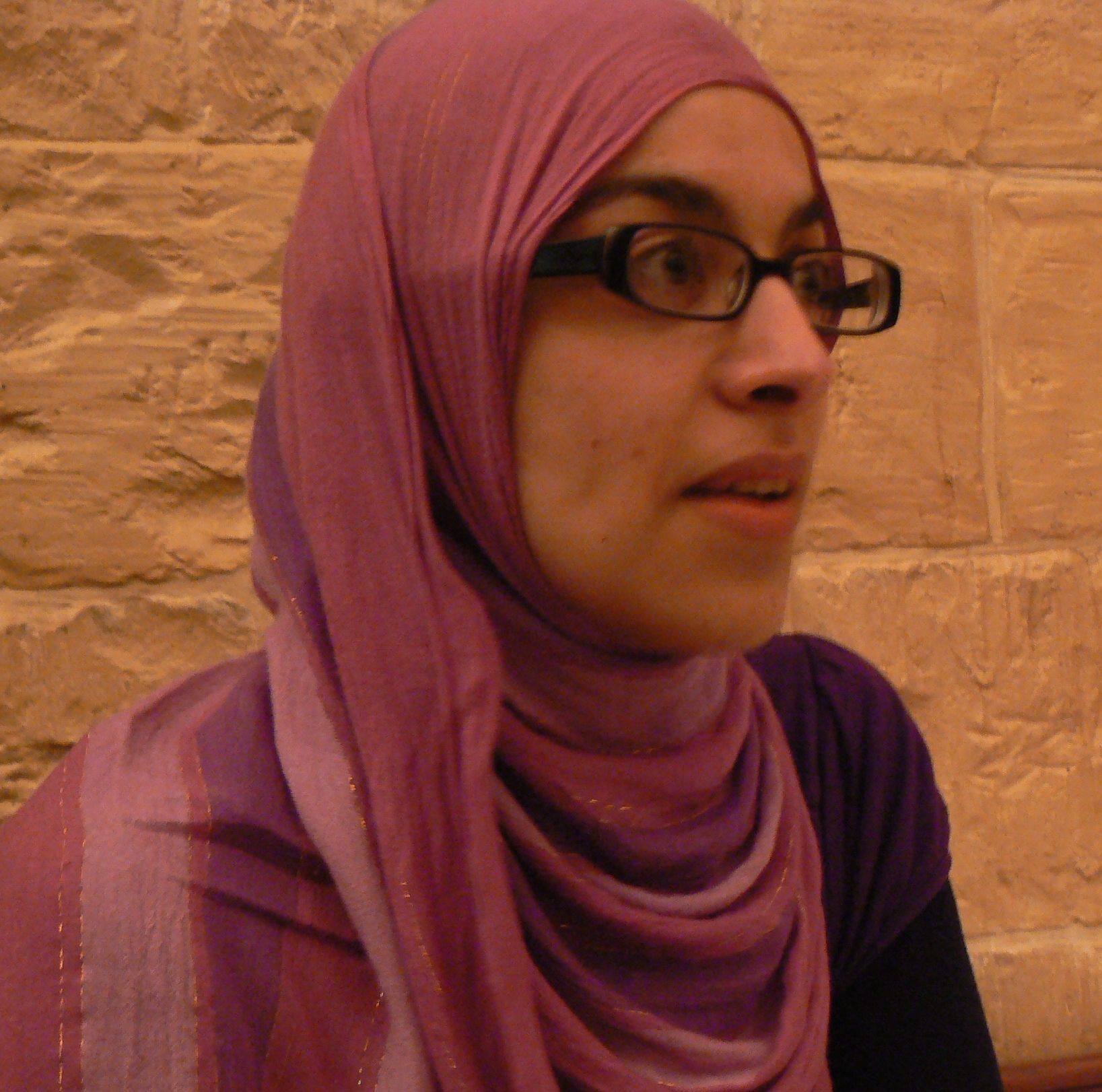
What was it like to work with Fathy and what was he like as a person?
I first went to work with Fathy in 1974-1975, on my year out at the AA (School of Architecture) in London. It was one of the beautiful periods of my life, and I still look back at it with great fondness. I still miss him to this day. He was a delightful person to be and work with, erudite, gentle and terribly entertaining. He was completely pre-occupied with the projects he was working on, and the cause, the importance of Islamic and vernacular architecture and culture, and housing the poor.
I was completely engaged in taking up my role as assistant, student and companion. He was a wonderful tutor and mentor. I don’t recall a dull or boring moment. We always had so much to do. Designing, drawing (drafting), writing, putting together documents, helping him prepare his slides at the very last minute before he left on a trip abroad…And there was the essential listening to Brahms when there were no guests, or after they had all gone or when he was feeling lonely and dejected he brought his violin out.
As close as his heart was to rural and urban Egypt, his concerns where equally universal, and regional. Fathy redefined spaces, features, pavements and walls in a refreshing architectural language, while being outspoken and critical of the bureaucracy, corruption and condition (squalor, neglect and dilapidation) of the run down urban environment of old Cairo’s buildings, (this was prior to the later conservation projects of the Aga Khan Historic Cities programme). He lifted Islamic architecture out of the orientalist, museum and archaeological status it had acquired (after the Ottoman neo-classicist and colonial architecture era, 19th C. onwards), to a living architecture and town planning to be taken up in Architecture departments, and Arab universities. He was a revolutionary and that explains why working with him was so important and compelling for me at the time. However, his battles are now our battles.
For more on Hassan Fathy and green architecture see:
Hassan Fathy is The Middle East’s Father of Sustainable Architecture
Mud Structures of the Muslim World: Spectacular and Sustainable
13 Principles of Sustainable Architecture


Your site is wonderful! I read much about what is happening in the US etc, but have not heard about your part of the planet. You give me some bit of hope that awareness is growing everywhere (not massively here in the US I’m sad to say). I live in Abiquiu,New Mexico, directly across the mesa from the largest contiguous earth building in the USA. It was designed by Hassan Fathy. He came out to this place to help with the work on the buildings many years ago. I wish I lived here when he came. Again, thanks for your good work.