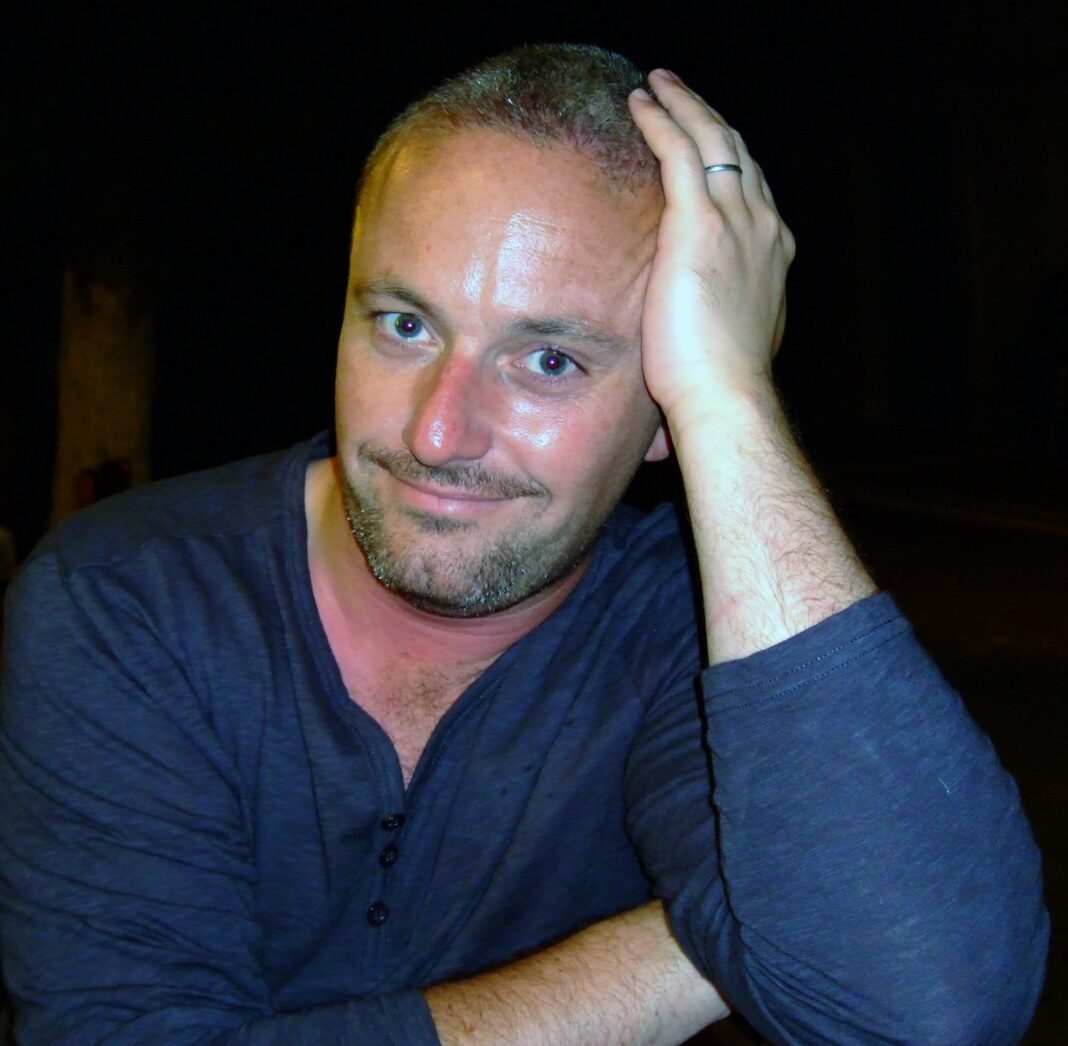

Just when thousands of expatriates were fleeing their Gulf homes during the global economic collapse four years ago, Nick Leech was moving in. He was one of the lucky ones, but that has more to do with his diverse talents than good luck.
Originally from the UK, Nick first trained as an architectural and design historian and studied at the Royal College of Art before doing another degree in landscape architecture. It is in this capacity that he got his first job in Abu Dhabi, where he also started tending his own garden for the first time.
Soon “Nick’s Garden” was born – a bi-weekly gardening column that appears on The National.
Abu Dhabi’s early green days
A self-described landscape designer, writer, and urbanist, Nick’s arrival in the United Arab Emirates coincided with the early stages of Estidama – a government-led building design methodology that ensures more sustainable construction – and the Abu Dhabi Urban Planning Council.
“This meant that things like water conservation and using regionally appropriate and sustainable landscaping was being taken seriously for the first time,” Nick told us in a telephone interview.
As a result, he felt that he could make a genuine difference working in Abu Dhabi. Not only does he promote sustainable gardening through his column, but he has also penned articles about the kind of earth architecture and ancient passive design techniques that we frequently gush about.
When we started discussing examples of unsustainable developments in the Gulf and elsewhere in the Middle East, including glass-clad towers that make little sense in any desert region, Nick was surprisingly defensive.
“I’ve noticed a lot of racism in the UK toward developments in this region,” he said, “as though it’s somehow ok to bash the Middle East. But some of the most advanced developments are happening here.”
The real progress is happening in the UAE
To illustrate this point, Nick talked about The Shard, an energy-intensive, air-conditioned and glass-clad Renzo Piano tower recently constructed in the UK that Ken Shuttleworth, a former Foster and Partner employee and founder of MAKE Architects, claims is already obsolete since it incorporates few of the passive design techniques or technology that can make skyscrapers even remotely sustainable.
“For a building like that to be constructed in London is inexcusable,” says Nick.
“It’s easy to be sustainable in Northern Europe where there is plenty of rain,” he continued. “In the desert it’s more challenging, but what are you going to do? Tell people they can’t live here any more?”
Instead, Nick expressed admiration for the way that Abu Dhabi in particular seems to be taking a genuine interest in turning a corner in the way that its residents live in their extreme environment. He was especially impressed with the work that the region’s next generation of architects and designers are producing.
In an interview with Zayed University design students, Nick was pleased to discover that they are more interested in design that responds to the local environment than they are in fancy imported programs that are at odds with climatic constraints and culture.
One student, Afnan Saeed Amin, told Nick that “The best architecture is about place. The smartest projects take the weather and the local culture into consideration. They don’t take ideas and projects from outside and just put them here.”
Nick’s next step
Nick says this interview experience was among the most inspiring he has had in all his years as an expat living in Abu Dhabi and now he is cultivating dreams to teach again.
“I really enjoyed working as a lecturer, working with students to improve their own work,” he said.
Partially in order to achieve that goal and partially to honor his tendency as a contextual, historical thinker, the father of two is currently working on a PhD through London’s Kingston University.
In the meantime, Nick continues to help UAE residents work through their gardening challenges in one of the hottest and water-scarce regions on earth. Some of the topics he has covered to date are ten of the most beautiful gardens on earth and how to garden in the midst of summer. He is also a talented travel writer whose powerful sense of place must be informed by his training as a historian.
We’re hoping to lure the green-thumbed journalist away from his numerous other responsibilities in order to give Gulf readers a handful of sustainable gardening few tips, so stay tuned for more from the man who wears many hats, and all very well.
More on Architecture and Design in the Middle East:
The Mashrabiya House Beats the Heat With Traditional Arabic Technique
Siemens Headquarters at Abu Dhabi Scoops Coveted Architecture Award
Local Architect Questions the Logic of Qatar’s 2022 Groundwork