
What Abu Dhabi Plans For When The Water Runs Out

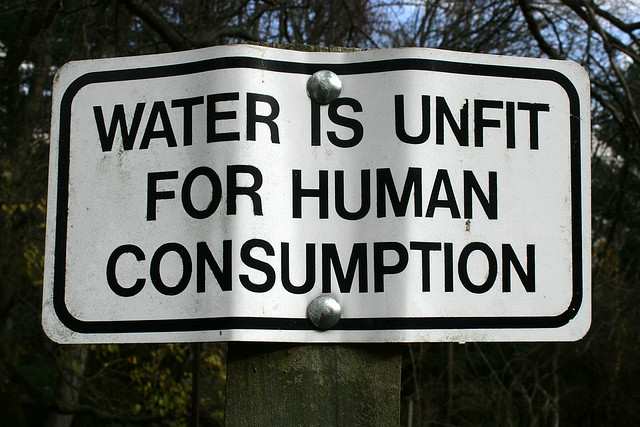
water-unfit-for-drinking Abu Dhabi’s government plans to pump desalinated water underground to prepare for event that its desalination plants are threatened.

Relying almost entirely on desalination plants for drinking water, and with approximately 90% of its groundwater unfit for drinking, Abu Dhabi’s water security is deeply uncertain. A major oil spill or a serious case of sea pollution could ground the plants; without them for even a few days, experts say Abu Dhabi’s constituents will face tremendous suffering.

The government recently announced the details of Plan B: millions of dollars of desalinated water – taken from excess winter supplies – are slated to be pumped into underground aquifers. Though cheaper, less environmentally destructive, and more secure than above-ground holding tanks, this plan does not come without risks.

The Government’s emergency water strategy was unveiled at the recent International Symposium of Managed Aquifer Recharge, according to The National.

Ten times cheaper than water storage tanks, pumping the water underground will prevent exposure to bacteria, provided that Abu Dhabi’s Environment Agency and the Ministry of Environment and Water are able to keep the area surrounding the aquifer free of contaminants.

Pipes inserted from 60-900m deep will pump desalinated water into underground aquifers that have existed for millions of years. There it will mix with existing, dense brackish water.

An estimated one tenth of the water will be lost to create a protective layer between the fresh and salty water, though it will be necessary to monitor this to ensure that expensive desalinated water is not re-salted.

Rolf Herrmann, a hydrogeologist and the technical manager for Schlumberger Water Services has been appointed to develop the piping infrastructure and monitor the wells and pumping stations in three Abu Dhabi locations.

“When you put millions of dollars worth of water into the ground, you want to check if it’s still there,” he told the paper.

The pipes could also erode if left stagnant for too long. As a result it will be necessary to constantly circulate and test the water to ensure its continued viability.

Experts suggest that the underground aquifers will only be effective if water can be accessed easily and quickly. It is also crucial to choose the right location – away from polluting influences.

“If you fail in finding the right location, the project itself will become a failure,” Mr Herrmann told The National.

:: The National

More environmental news from Abu Dhabi:

Abu Dhabi Builds Giant Lightbulb For “Turn It Off” Campaign

Green Abu Dhabi Art Show Aims to Paint the Town Green

Abu Dhabi Building To Achieve All Five Green Building “Pearls”

image via woodleywonderworks

Tafline Laylin
Tafline Laylinhttp://www.greenprophet.com
As a tour leader who led “eco-friendly” camping trips throughout North America, Tafline soon realized that she was instead leaving behind a trail of gas fumes, plastic bottles and Pringles. In fact, wherever she traveled – whether it was Viet Nam or South Africa or England – it became clear how inefficiently the mandate to re-think our consumer culture is reaching the general public. Born in Iran, raised in South Africa and the United States, she currently splits her time between Africa and the Middle East. Tafline can be reached at tafline (at) greenprophet (dot) com.
5 COMMENTS
  1. Dear sirs,I suggest you my sensational discovery. I found in UAE a huge underground lake quality drinking water (100x200km). Help find a buyer. Professor, Doctor. Vladi. dr.vladi @ i.ua

  2. Dear sirs,I suggest you my sensational discovery. I found in UAE a huge underground lake -quality drinking water (100x200km). Help find a buyer. Sincerely,Professor, Dr. Vladi. dr.vladi @ i.ua

Comments are closed.

TRENDING

Jordan’s $6 Billion Aqaba–Amman Desalination Project from the Red Sea Moves Forward

In 2025, the Jordanian government signed agreements with a consortium led by Meridiam and SUEZ, alongside VINCI Construction and Orascom Construction. Under a 30-year concession agreement, the consortium will design, build, finance, operate, and maintain the system before transferring it back to the Jordanian government. The total investment is estimated at approximately $6 billion USD.

The Saudi Startup Turning Desalination’s Toxic Waste Into Its Own Disinfectant

For millennia, the Middle East's water crisis seemed an immutable fact of geography — a region defined as much by what it lacked as by what lay beneath its sands. Today, a convergence of plummeting solar costs, advancing membrane technology, and hard-won engineering expertise is rewriting that story.

10 Proven Israeli Technologies to Help Somaliland Build Food, Water, and Energy Security

Israel’s water and agricultural technologies didn’t emerge from ideal conditions. They were developed under pressure: low rainfall, saline water, political isolation, lack of energy resources, and the constant need to feed a growing population with limited land. Over the years, I’ve written about many of these companies not as miracle-makers, but as problem-solvers. That’s what makes them relevant to places like Somaliland. Israel was the first country in the world to recognize Somaliland as an independent state although Ethiopia has been treating the nation as such for decades.

Dead shark on beach injured by fishing nets

  A dead shark that washed ashore this week at...

Investing in the Middle East? These 20 Energy consultants can de-risk your portfolio

For instance is your clean tech firm or company in wastewater treatment considering an office in Riyadh or should you stick with Dubai?  Below is a curated spotlight on 20 firms that shine for their deep expertise and proven ability to manage the complex risks of sustainable energy investment.

Should You Invest in the Private Market?

startustartup Unlike public stock exchanges, which offer daily trading, strict...

How to build a 100-year-company

Kongō Gumi is a Japanese construction company, purportedly founded in 578 A.D., making it the world's oldest documented company. What can we learn about building sustainable businesses from them?

From Pilot Plant to Global Stage: How Aduro Clean Technologies’ 2026 Expansion Signals a Turning Point for Chemical Recycling Investors Like Yazan Al Homsi

The company's Next Generation Process (NGP) Pilot Plant in London, Ontario, has officially moved into initial operating campaigns, generating the kind of structured, repeatable data that separates laboratory promise from commercial viability.

How AI Helps SaaS Companies Reduce Repetitive Customer Support Work

SaaS products are designed for large numbers of users with different levels of experience, and also in renewable energy.

Pulling Water from the Air

Faced with water shortage in Amman, Laurie digs up...

Turning Your Energy Consultancy into an LLC: 4 Legal Steps for Founders in Texas

If you are starting a renewable energy business in Texas, learn how to start an LLC by the books.

Tracking the Impacts of a Hydroelectric Dam Along the Tigris River

For the next two months, I'll be taking a break from my usual Green Prophet posts to report on a transnational environmental issue: the Ilısu Dam currently under construction in Turkey, and the ways it will transform life along the Tigris River.

6 Payment Processors With the Fastest Onboarding for SMBs

Get your SMB up and running fast with these 6 payment processors. Compare the quickest onboarding options to start accepting customer payments without delay.

Related Articles

Popular Categories