
Is Egypt back-tracking on GM crops ban?

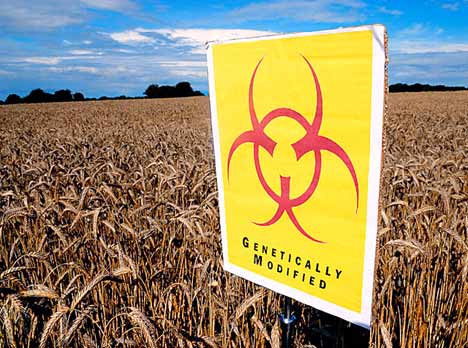
GM biohazard

The Egyptian government has apparently performed an astonishing U-turn on banning controversial Genetically Modified crops from the country. According to reports in the press earlier this month (hat tip: Treehugger and Reuters), authorities declared that Egypt had officially become the Middle East’s first GM-free nation. On 12 August, Egyptian Agriculture Minister, Amin Abaza, told the government news agency MENA:

“…it was necessary that all crops imported from abroad and exported from Egypt be accompanied by a certificate from the country of origin stating they are free of genetically modified materials.”

“No agricultural products especially wheat, corn and soya bean would enter except after examining samples from the cargo.”

But it was too good to be true apparently. The following day Reuters reported that the Ministry retracted these statements which had stirred a storm of controversy over the country’s agricultural policy.

An Egyptian ban on GM imports would represent an important precedent in the region – and a victory for ecology and consumers. Although they are not grown commercially in the Middle East, GM crops such as corn/maize and soya are imported in large quantities, entering the food chain as processed products and animal feed. Some countries, including Israel, have multi-million dollar industries dedicated to developing new GM varieties.

Since GM crops flopped in the western marketplace, notably Europe where retailers refuse to stock them due to consumer pressure, GM companies have been hunting for new pastures to grow their largely-untested technology. Lax regulation and consumer protection in the developing world makes it an ideal GM guinea pig and companies have already moved into India, China and Africa to grow GM. Even in the EU, where food containing GM must be labelled, millions of tonnes still sneak in ‘through the back door’ as imported animal feed. The resulting meat, milk and cheese, however, are not labelled GM. Scientific studies have shown that found animal fed on GMO have experienced “lesions in the gut, damage to body organs, unexplained deaths, and stunted growth in the young of animals reared on GMOs.”

GM imports – whether in Egypt or England – represent the thin end of the wedge. Contamination of organic and other non-GM crops is notoriously hard to control, thus creating a fait accompli, opening the door to more GM, whether people like it or not.

Whilst no consumer market exists GM products, demand for GM-free food is strong. By taking the bold decision to ban GM from its borders, the Egyptian government could give its food industry a competitive advantage by being able to label their products ‘GM-free’. It’s still not too late for Egypt to lead the way – and safeguard the health of its people, farm animals and environment.

:: Treehugger
:: Reuters, Egypt says no GM food exports or imports.
::Reuters, Egypt denies banning GMO crop imports.
:: Soil Association, Silent invasion: the hidden use of GM crops in animal feed and GM crops: the health effects.

Michael Green
Michael Greenhttps://www.greenprophet.com/
Born into a family of auto mechanics and engineers in east London’s urban sprawl, Michael bucked the trend and chose a bicycle instead of a car. A relative newcomer to Jerusalem, he works as a freelance journalist writing for the Jerusalem Post and other publications. Before moving to Israel, he worked for an environmental NGO in England where he developed a healthy obsession with organic vegetables and an aversion to pesticides and GMOs. Michael’s surname is pure coincidence. Michael can be reached at michael (at) greenprophet (dot) com.

Read More

1 COMMENT

TRENDING

Tanner Winterhof on the Custom Harvesters Quietly Holding American Agriculture Together

In late January, in a Des Moines hotel ballroom that smelled faintly of diesel and convention coffee, Tanner Winterhof spent three days hosting the members and attendees of the  U.S. Custom Harvesters Inc. annual convention on his podcast as Farm4Profit’s official media partner for the show.

Make Guarapo De Piña (it’s fermented pineapple juice)

In Cuba, guarapo is simply freshly-pressed sugar cane juice, and is drunk on the spot, without waiting for it to ferment. But in Colombia, Venezuela, Peru and Mexico, they homebrew guarapo from pineapples or oranges, and the fragrant fluid sits on the kitchen counter top to ferment until it's bubbly.

Baby teeth read like tree rings paint a picture of toxins in early life

A new study from the Icahn School of Medicine at Mount Sinai in New York offers a striking insight into how the environments we are born into can quietly shape our brains years later. By analyzing naturally shed baby teeth, the ones tucked under pillows for the tooth fairy, researchers have reconstructed a detailed timeline of exposure to environmental metals during pregnancy and early infancy.

Poop in the East River shows the city’s rat problem and what people like to eat

New York ecology and health can be monitored by a jug of water a week.

Saving Gourmet Wild Plants For The Future

Think of truffles, a gourmet wild food. The European...

Locals From Rishon Fight IKEA

Big Box stores are a pretty new concept in Israel, and thank God that not every Israeli city wants them in their backyard. A word from someone who has see the beautiful farmland around her hometown Newmarket, Ontario stripped and converted into vulgar strip malls of big box shops: they have no place in a healthy and sustainable town or city.

The Jewish National Fund Meets An Inconvenient Truth

According to the JNF, it has transformed thousands of acres of barren land into green forests in Israel. They state that each person emits about 23 tons of carbon per year, estimating that each tree planted can absorb one ton of carbon in its lifetime. That's a whole lot of trees you'd need to be planting. Could so many fit in Israel?

How to quiet noise from construction in your office

Streets need to be resurfaced in New York but the humming and grinding noise is unsettling. Noise is environmental pollution. 

EarthX and a blueprint for sustainable investing

Trammell S. Crow, a Dallas-based businessman and father of four, is focusing his efforts on impact investing, and media that focuses on saving the planet through EarthX.

Mining Afghanistan’s Mineral Discoveries Similar to Avatar

Now that American forces in Afghanistan are commemorating the longest period of any war that America has been involved in, including the 1965-73 Vietnam War, the recent discoveries of large and extremely valuable mineral and metal deposits may finally bring to light a reason to continue the presence of US fighting forces in this war torn and backward country.

From Pilot Plant to Global Stage: How Aduro Clean Technologies’ 2026 Expansion Signals a Turning Point for Chemical Recycling Investors Like Yazan Al Homsi

The company's Next Generation Process (NGP) Pilot Plant in London, Ontario, has officially moved into initial operating campaigns, generating the kind of structured, repeatable data that separates laboratory promise from commercial viability.

Nobul’s Regan McGee on Shareholder Value: “Complacency Is the Silent Killer” 

Why the governance framework designed to protect shareholders so...

Should You Invest in the Private Market?

startustartup Unlike public stock exchanges, which offer daily trading, strict...

Popular Categories