Home Blog Page 724

Twitter For Water at Twestival 2009 in Jerusalem

5

twestival-logo-water-jerusalem imageIf you haven’t caught on to the supremely contagious micro-blogging phenomenon known as Twitter, now’s your chance to Twitter for the environment. This year, on February 12, 2009 over 140 cities worldwide will be hosting Twestival 2009 to raise money for Charity:Water, which provides clean drinking water to villages in Africa.

Jerusalem’s Twestival is unique in that beyond money for this charity, it will also be promoting worldwide awareness highlighting Israel’s contributions in cleantech, writes Yannai,  from the Jewish Climate Initiative:

“I wanted to tell you about Testival ’09- Jerusalem, a Twitter event raising money for charity:water, a water project in Africa. You can read some details below, but as the event will be taking on a water/cleantech-in-Israel tone, we thought perhaps Green Prophet would like to write a piece about it . . . It looks like Jewish Climate Initiative will be involved, as well.”

Twestival has already generated a lot of press in its use of the new social media micro-blogging protocol Twitter to promote a social cause.

Details about the Jerusalem event:

10th Kuwaiti Conference on Natural Resources and Development Kicking Off Tomorrow

2

If you haven’t yet bought your flight (carbon offset of course!), it might be too late to get in on the great action at the Global Development Network’s 10th Annual Conference on “Natural Resources and Development” in Kuwait. But the conference organizers have set up an RSS feed for you to follow. Smart move.

Hosted by the Arab Fund for Economic and Social Development (AFESD) at their headquarters in Kuwait City, Kuwait from February 3 – 5, 2009 (some discrepancy with the poster dates), the conference will provide a platform to further the debate on the crucial relationship between natural resources and development.

We don’t see a lot of details on the website, but imagine there will be talks of solar energy, and other renewables such as wind, that Gulf nations are trying to develop.

Recent Gaza Conflict Has Environmental Impacts, Too!

5

gaza-city-green-prophet-environment-ecologyAs the dust settles on the recent round of violence between Israelis and Palestinians in the Gaza Strip, reports indicate that the environmental damage is another unfortunate byproduct of the war.

The political situation aside, Gaza’s ecological conditions are already conducive to groundwater pollution.  The sandy desert soil tends to absorb water – or pollutants like sewage – easily.  Also, the groundwater is fairly close to the surface, so access wells are fairly shallow and easily contaminated.

Combine this with an aging, poorly maintained, and now war-damaged sewage system, and there is a certain recipe for groundwater disaster.

Due to both a lack of investment and an inability to access materials and equipment for repairs, Gaza’s sewage treatment infrastructure was in a pretty bad state of disrepair before the war began at the end of December.  Israel’s military actions caused even more damage to many of the pipes.  As a result, top water engineers in Gaza report that the entire system is on the verge of collapse, posing a severe threat to Gaza’s groundwater resources.

Turkish Government Gets Ready to Deal with Electronic Waste

2

As you sit in front of your computer now, reading the latest from Green Prophet, we challenge you to hark back to all of your former computers, printers, phones, batteries… you name it. 

Could you say where they are right now?  Unless you’re a pack rat, you probably got rid of them when they stopped working.  And how did you dispose of them?

Innocently enough, many of you probably threw them out with the regular trash. 

Unfortunately, that probably means that the plastic parts of those electronic devices will never biodegrade and will outlive you (and your children), and that the metal parts have disintegrated and trickled into the soil and water system.  Not to mention the clogging of landfills.  Among other bad things.

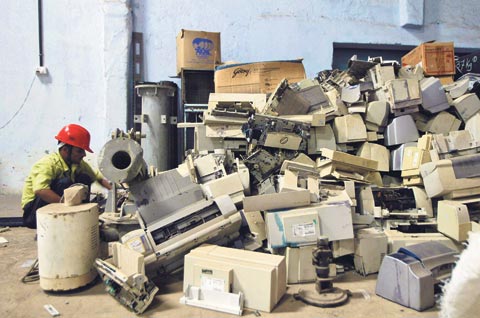
As with many other countries where the fast development of technology and increasing consumption of electronic devices has taken place, Turkey is experiencing a growing problem of electronic waste. 

Or, for those greenies in the know, e-waste (add that term to other green favorites – carborexic and vegawarian).

Abu Dhabi is Proving Ground for Futuristic Podcar People-Mover

masdar-prt-car-photoMasdar’s PRT pod cars.

The playground of the rich, Abu Dhabi, is not just a place for playing kick-the-golden-can. Instead of simply finding ways to spend oil-money on futuristic gadgets and grandiose monuments, there is a lot of interest providing proving grounds for sustainable solutions and new urban paradigms.

Personal Rapid Transit: Our very own Jesse Fox is covering the Abu Dhabi World Future Energy Summit and reported on an unusual system of mass transit – “podcars”, which serve as a personal units for automatic public transportation.  The concept is that small transport units will be available on demand, instead of having to wait for larger, less frequent trains or buses.

For off-peak commuting, this model is reportedly more efficient than having empty buses roaming around, and for peak travel it will provide the comfort of an individual automobile, instead of being crammed into a crowded subway car.  According to the designer of the system, Systematica, the pods will be able to travel freely on the shortest route between points, and will not be confined to a rail, thus melding the qualities of taxis and trains.

Arizona State University Links Israel, Palestine, and Gulf Nations On Sustainable Issues

0

dubai wind rotating skyscraper imageAcademics from Arizona State University are hard at work promoting sustainability and regional cooperation with the United Arab Emirates (UAE), a politically stable and very prosperous Gulf country.

A delegation from Arizona traveled to the United Arab Emirates this past January for a series of meetings to follow-up on last summer’s visit to their university by Sultan Saeed Nasser AlMansoori, minister of economy for the UAE. They also visited Jordan and Israel, along the way.

The Arizona group, the university reports, met with government leaders, university officials and private sector representatives, with a focus on education technology and teacher training; and sustainability, with emphasis on renewable energy and public policy decision-making.

The trip, which included stops in Dubai, Abu Dhabi and Ras Al-Khaimah, explored a range of potential projects and collaborations between Arizona and the UAE.

Among opportunities under discussion with governmental and private contacts was construction of a Decision Theater, modeled on ASU’s facility, at some location in UAE to focus on environmental decision making, urban planning, and possibly connecting with the Masdar City initiative, a new, carbon-neutral city for 90,000 being built from scratch outside the city of Abu Dhabi. The latter is being managed by CH2M HILL, a large, international engineering firm with a presence in Tempe.

“It was a successful trip,” says Anthony Rock, vice president for global engagement at Arizona State University. “This is a critical region and ASU has a tremendous amount it can contribute, not only to economic development, but to fostering regional cooperation and collaborations. We’ve identified a range of opportunities and potential funding that can extend ASU’s global engagement aspirations and the university’s core objectives–sustainability, teacher leadership training, educational technology and public policy decision making—in collaboration with our partners.”

10 breastfeeding products you do not need to buy

15

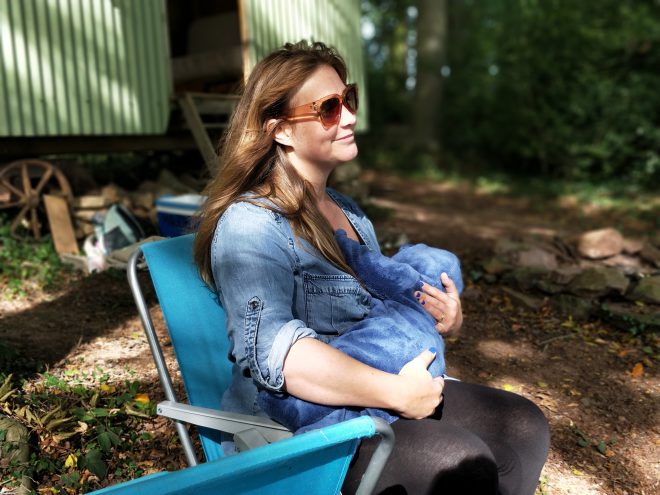
woman nursing or breastfeeding baby A common misconception about breastfeeding and babies in general is that they require special equipment. But we already know on Green Prophet that a mom who buys less is by default acting in an environmentally-friendly way.

So what are the essentials, and what aren’t? A lactation specialist offers you this guide to making breastfeeding truly green. Products you don’t buy, won’t have to be manufactured, packaged, transported, cleaned, or disposed:

1. No Formula. Parents are often advised to keep formula on hand “just in case.” But they are more likely to offer formula to a newborn when they have it in the house, which is why formula companies give out free samples. The first time baby won’t settle down, usually in the middle of the night, parents worry (understandably) that he is hungry and offer him a bottle.

But babies cry for many reasons, and parents need to know the signs that the baby is getting enough milk. Giving a bottle in the early weeks exposes the baby to infection and can interfere with the baby’s natural immune system.

If a supplement is truly needed, the first choice is the mother’s own milk.  And once babies are eating a variety of nutritious solid foods, formula (made from cow’s milk) doesn’t offer anything extra. It’s expensive, highly processed and overly sweet.
2. No Bottles. The cultural association of babies with bottles is deeply ingrained. In some cultures, dolls come with a breast tied on a string (but children who grow up with breastfed siblings simply put the doll to their chest). Babies can drink from a cup from about six months of age.

Mothers who plan to be separated from a young baby will want the convenience of bottles, although a cup or spoon will do in a pinch. Water bottles are not necessary for breastfed babies on even the hottest days. Instead, nurse baby a little more often and check that urine is clear and plentiful.

3. Avoid nipple creams. The breast’s surface is  perfectly suited for baby, and need be washed only with water. Lanolin creams only soothe and don’t cure pain caused by a bad latch, and some creams can cause an allergic reaction.

Pain should always be evaluated because a bad latch can lead to poor milk transfer and low weight gain. Medicinal creams, when prescribed to treat specific conditions like thrush or eczema, should be applied after feedings and do not need to be washed off.

4. Disposable breast pads. It’s better to use reusable cotton pads for the early weeks and months when breasts may leak.  A folded handkerchief who can later wash works too. If you have extra masks on hand from coronavirus, or COVID-19 that are unused, then stuff them with extra padding, use, wash, repeat.

5. No need for pumps. Unfortunately, pumps have made it onto the list of necessary baby items. Some babies whose mothers return to work after six months  may do fine with solid foods and a cup at the babysitter, nursing the rest of the time.

(Mothers who pump at work usually continue until age nine to twelve months.) For short outings hand expression is free and works as well as or better than a pump, with a little practice.

Some working mothers even prefer hand-expression, but it does require privacy.

Good quality pumps don’t have to be purchased new. They can be borrowed from places like Yad Sarah (an organization in Israel that distributes medical equipment) or rented from a lactation consultant. See what’s local to you.

Other types of pumps are difficult to sterilize and may not last through two babies. Try bringing baby along– in Israel, babies are welcomed almost everywhere and a lucky few moms have even managed to bring baby to work.

6. No vitamins and drops. Concoctions for increasing milk are overrated–the way to ensure enough is to nurse often and effectively. Analysis of the milk of mothers from different cultures, diets and socioeconomic levels has shown little difference in quality or quantity. Unless you are in some places where environmental toxins in breastmilk are high like in Tunisia.

A mother’s diet, unless extremely deficient over several years, has almost no effect on her milk. Mothers, like everyone else, should care for themselves by eating well and setting the stage for healthy eating as children grow.

Regarding drops for babies, the American Academy of Pediatrics (AAP) recommends:

In the first 6 months, water, juice, and other foods are generally unnecessary for breastfed infants. Vitamin D and iron may need to be given before 6 months of age in selected groups of infants (vitamin D for infants whose mothers are vitamin D-deficient or those infants not exposed to adequate sunlight; iron for those who have low iron stores or anemia).

7. No Powdered cereals, teething biscuits, and jarred baby foods. “Baby” foods became popular with the advent of artificial feeding, when solids were introduced before babies were developmentally ready.

But after six months of exclusive breastfeeding, as recommended by the AAP and Israel’s health ministry, babies can eat soft table foods mashed with a fork and graduate to finger foods shortly afterward.

8. No need for special nursing clothes and bras. Wear a loose t-shirt that you can pull up — the baby covers your torso. Try a button down shirt on top of a tank top, or slash holes in a t-shirt and wear a loose shirt on top. You can experiment with regular and sports bras (or none–bras don’t prevent sagging, which is caused by pregnancy), but one that is too restrictive can lead to plugged ducts and infections.

9. No need for contraceptives and feminine hygiene products. Some people believe that you can’t get pregnant while nursing, while others insist it doesn’t make a difference. The truth lies somewhere in between. Mothers can learn which factors delay the return of periods, and when and when not to rely on breastfeeding for birth control.

10. No need for breastfeeding pillows. They’re hard to transport, and it’s usually more effective for the mother to support the baby’s weight herself. In the beginning a regular pillow can support her arms and raise the baby to the height of the breast.

The one item I do recommend purchasing, second-hand if possible, is a good quality sling or baby carrier. Mothers get used to carrying babies’ weight as they grow and it’s great exercise. Carriers keep babies calm and eliminate the need for shlepping a bulky stroller to the mall (not that you need anything) or beach.

Consider carefully before buying–your baby needs your loving arms more than any accessory.

For more on breastfeeding:
Breastfeeding and Judaism: Why Moses’ Mother Didn’t Put Bottles into the Ark of Bulrushes
Why Baby’s First Gift Shouldn’t Be Formula From the Hospital
10 Common Misconceptions about Breastfeeding Your Baby

Gulf Nations Look to Tesla’s Electric Roadster to Speed Around Middle East

California-based electric car company Tesla Motors is reportedly (according to the National) in talks which could lead to their vehicles being sold in the United Arab Emirates. Ventures in Abu Dhabi, Dubai and Qatar are looking at everything from bringing the vehicles in as rental cars to starting championship electric car racing.

News of the Gulf interest in the Tesla Roadster comes as Arab states are increasingly aware of the damage caused by air pollution. As Green Prophet has reported, the Emirates has done much work to shift to renewable energies, including licensing the all electric Reva.

Tesla’s Roadster is a sports car that goes from 0 to 60 mph in just under 4 seconds, has a range of around 250 miles, and takes a full charge in just three hours. The car runs on a Lotus Elise chassis and has been in series production since March 2008. In the US car has a base price of $109,000, and the 250 models allocated to the European market are priced at €99,000 each.


European sales and marketing director Simon Rochefort says talks are underway that could allow Middle Eastern buyers to get the cars in their home region within the next few years. He is in talk with the Gold Green Abu Dhabi and Gold Green Dubai ventures to allow them to import the vehicles to the UAE.

The Dubai project is looking to offer Teslas as options to come with thousand flats being sold on an energy independent island being built in the Persian Gulf. In addition they are looking to establish a small fleet of rental Tesla Roadsters, and possibly using a future sedan model to assemble a fleet of taxis.

Meanwhile two separate groups, one in Dubai and the other in Qatar, are talking with Tesla as they vie to create the world’s first electric sports car championships. The Tesla is being credited with having made electric cars sexy to even non-environmentalists, with Motor Trend having written that the Roadster would be “profoundly humbling to just about any rumbling Ferrari or Porsche that makes the mistake of pulling up next to a silent, 105-mpg Tesla Roadster at a stoplight.”

Rochefort says while the cars aren’t yet sold in the Middle East, he has heard of a few individuals who have purchased them in the US and imported them on their own.

Africa Up For Sale, Is The Middle East Buying?

15

jatropha plants africa land grab photo

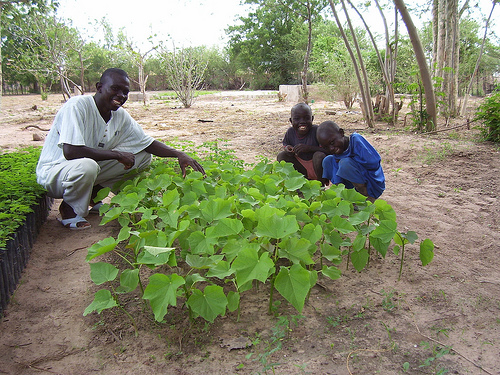
As African nations sell and lease its land, and birthright, to the world’s super-powers, and arguably “dangerous” countries like Saudi Arabia who support Islamic fundamentalism, we are seeing a brand new kind of neo-colonial land-grab, and it scares me.

I’d reported on Galten’s Jatropha seeds for biofuel here, and also on the Israeli conglomerate Ormat, Evogene and Leviev in Namibia planting castor seeds for biofuel, and came out thinking, naively perhaps, that land development for biofuels in Africa was a beautiful thing: Israel doesn’t have much arable land, and the projects create jobs for Africans as well.

Israel is not the only Western country buying into Africa:

  • Britain‘s Sun Biofuels plans to grow about 5,500 hectares of jatropha in Tanzania. The company also grows jatropha in Ethiopia and has similar projects in Mozambique.
  • Sweden‘s Sekab Group, one of Europe’s leading ethanol producers, plans to produce 100 million litres of ethanol a year in Tanzania by 2012 at a cost of $200 – $300 million.
  • British-based energy firm CAMS Group said in September it planned to produce 240 million litres of ethanol a year from sweet sorghum in Tanzania at a cost of up to $600 million.
  • British biofuel company, D1-BP Fuel Crops is also actively planting Jatropha in Swaziland and Zambia, and also has plantings in Madagascar.
  • In November 2008, South Korea’s Daewoo Logistics secured a 99-year lease on 1.3m hectares of land, an area roughly half the size of Belgium, from the government of Madagascar. (This equals about half of Madagascar’s arable land!)
  • Flora EcoPower of Germany, through a local subsidiary, of 8,000 hectares in Oromia province in Ethiopia for the cultivation of castor seeds.

Now I am not a huge follower of crazy conspiracy theories, but something has me a little paranoid about new and aggressive land buying and leasing in Africa, especially when I hear countries like Saudi Arabia (15 of the 19 9/11 hijackers were Saudis), are buying up land in Sudan for agricultural development. Gulf nations are cash-heavy, but water-poor and are looking to secure food and fuel resources on Africa’s land for the coming decades.

Ekoloko Gets Kids To Save A World

0

When was the last time you saved the world? Or motivated your kid or kid nephew to think about positive action for the environment’s sake?

Now, there’s a challenge. Ekoloko, a new virtual world merges two great ideas –– saving the environment and gaming –– with one thing enterprising young Israelis are very good at: creating high tech startups.

Ekoloko not only gives kids a chance to chat and play games, they can also help save the world from destroying itself. And more good news, the game can be adapted to multiple languages, meaning that it could be available in Middle Eastern country languages, like Arabic.

“All of the content is around the environment and social awareness,” says Guy Spira, CEO of Ekoloko. “We feel passionate about the mission. Kids can get involved with the adventures, have a total fun experience and at the same time absorb values and knowledge.”

Visit Ekoloko’s home page, and you will see that this virtual world is also one of the most gorgeously colored, animated graphic worlds out there. It never gets dark in Ekoloko.

The UAE's Zayed Future Energy Prize Awarded to Bangladesh Solar Power Developer

3

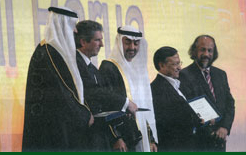
zayed-gareem prize zayed photoA Bangladesh developer in the alternative energy field won the coveted Zayed Future Energy Prize at a recent competition held in the United Arab Emirates State of Abu Dhabi.

Dipal Barua’s non-profit company Grameen Shakti was founded in 1996 to provide alternative energy solutions to one of the world’s poorest nations, where most of the inhabitants get by on less than $2 a day.

Mr. Barua wanted to find an economical solution to provide affordable electricity to Bangladeshis, who up to now have mostly been without the normal conveniences of electric light and power that developed countries take for granted. The US$ 1.5 million award is going to be used by Mr. Barua to provide for more than 100,000 “green jobs” in his country, hiring people such as rural women from impoverished backgrounds.

Eco Rabbi: Parshat Bo – The Power of Symbols and Action

0

pascal-lamb

Each week Orthodox Jews read one segment of the Five Books of Moses so that they can complete the entire Five Books within the course of a year. In last week’s Eco-Rabbi post we discussed Moses’ fight for his people’s freedom. This week continues with discussing the power of symbols.

Moses finally persuaded Pharaoh to let the Jewish people leave Egypt and their state as slaves there.  Moses tells Pharaoh that the final plague will be coming. That on the coming night at midnight God will go through the houses and kill every first born.

Moses tells the people that God commands that they feast that evening on a lamb and place the lambs blood on the door frame of their houses. God explains to Moses that the Jewish people should put the blood on the door frame is as a sign for them.

If you think about it, why would God, the all-knowing, need a sign on the door-frames to tell Him where the Jews are living?

Give "Loli" Organic Sweets to Your Sweet This Valentine's Day

0

loli organic sweets israelWhether or not you’re a fan of the overly commercialized holiday of love, Valentine’s Day, we think everyone would agree that when giving your special someone a loving gift you want it to be something that doesn’t cause potential harm to them.  Candy and flowers are the traditional Valentine’s Day gifts, so why not show your loved one that you really care with handmade organic candy and a potted flower plant?
The flowers are pretty easy to find, but what about the candy?  Enter Loli Natural and Organic Sweets.

Started by two fresh mothers named Liat, Loli grew out of their maternal need to provide a natural alternative to the very unnatural candy options that are already available and which are beloved by most kids.  Kids are going to want candy no matter what, so the candy that they eat might as well be natural, made with organic fruit, sugar and chocolate, and locally handmade.

Abu Dhabi to Build the Gulf's Largest Solar Powered Hot Water Project

4

abu dhabi solar power plant photoJordan’s Millenium Energy Industries (MEI) has announced a project to provide 1.3 million liters a day of hot water for a new development in the United Arab Emirates. Abu Dhabi’s Modern Residential City is to house 25,000 people in 48 buildings, all of which will receive their hot water from the planned project.

The project adds to numerous efforts in the Emirates to green their life. Last week Abu Dhabi announced that 7% of their total power needs will come from renewable energy sources by 2020.

Surveys in the Gulf state show most real estate investors weigh heavily the environmental impact of the buildings they are financing, and plans are underfoot for Dubai to host the Middle East’s largest solar panel plant. Simultaneously, UAE is one of the world’s largest exporters of oil, and is home to heavily critiqued environmental excesses as indoor ski-hills and a refrigerated beach.

MEI Chair Ennis Rimawi says “with the right regional engineering expertise, advanced solar heating technology is currently commercially viable due to its efficiency and reliability.”

Jordan Launches EDAMA Intiative on Energy Independence, Water Conservation

1

Edama jordan water Logo

Fresh on the heels of Israel, Egypt, and the UAE, who have all recently made commitments for a renewable energy future, Jordan recently launched EDAMA,  an initiative to help Jordan reduce energy demand, water usage, and protect the environment.

EDAMA Chairperson Karim Kawar indicates that Jordan is using its energy and water resources in an economically and environmentally unsustainable manner.  Jordan imports as much as 96 percent of its energy, he says, which equaled 20% of the country’s GDP and 24 percent of its total imports in 2007. 

Much of this energy comes from dirty-burning oil, so Jordan produces  13.4 million tons of greenhouse gases just from its energy sector.

Kawar also indicates that Jordan is consuming water from its aquifers at twice the renewable rate.

The EDAMA initiative intends to respond to these challenges by developing a comprehensive strategy “that streamlines efforts towards effective energy sector performance, increases private sector participation and investment and reduces the environmental impact of energy and water use.”