One of the works currently on view at the Farm Gallery
When you think of farms, a lot of things may come to mind. Especially if you’re green. You may think of organic farms, fair trade farms, local farms, urban farms, free range farms, solar powered farms… the list goes on.
But adding the word “farm” in front of the words “art” or “gallery” might not be something that comes to you organically, or naturally.
The Farm Gallery in Holon for Interdisciplinary Ecological Art would have something to say about that. They would probably say, think again.
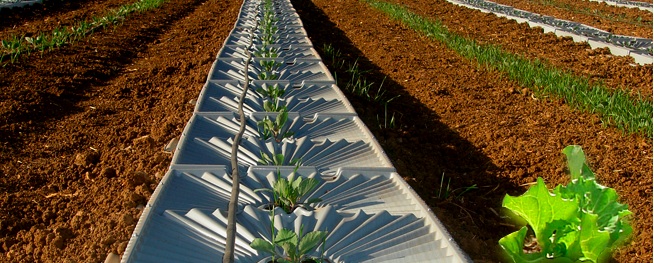
Located in a one-floor, 100 square meter Arab style house built during the beginning of the 20th century, the Farm Gallery opened as an artistic venue earlier this year. Before that, the building had been used by the municipality of Holon as a location for students to visit and grow fruits, vegetables, plants and study natural cycles as well as environmental issues. In other words, as a farm.
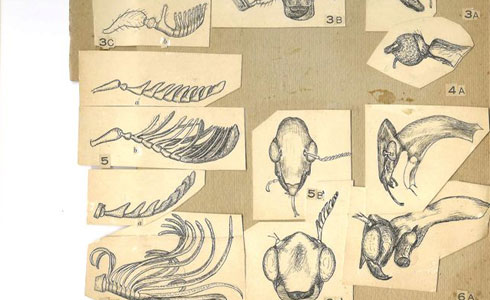
Who said being an environmentalist is thankless? If you’re worried about how global warming may drastically change the Middle East, and you know how to work a reporter’s notebook, paintbrush or computer graphics program, there are two international competitions coming up to raise awareness of climate change.
The first one, which we came across on the Dot Earth blog at the New York Times, is for students enrolled in undergraduate or graduate creative programs anywhere in the world – US citizenship not required. The contest’s organizer, Artist as Citizen, announced the following rules:
The facts are these: Water scarcity is a real and looming threat; while several countries are already below the dreaded 1700 m3 per capita water availability mark, many others are quickly approaching it; most international NGOs have predicted that the worst affected will be those already marginalised, the sick, and the poor, the children and the women.
When discussing the various fallouts of water scarcity, such as its impacts on food security, human health, the global economy and its potential to induce conflict, the one fallout that is rarely discussed is the kind that is suffered by women.
Which is probably why during the discussion of water resources management strategies, women are almost never consulted. And this has proven to be a serious mistake.
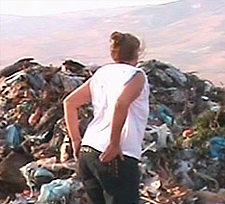
Talk about being down in the dumps: What began as a surprise for an elderly Tel Aviv woman, has turned into an absolute nightmare as the old mattress she had owned for years was thrown into the trash by her well meaning daughter who wanted to surprise her mother with a new one.
Unfortunately, the old mattress is alleged to be holding the mother’s life savings of around a million dollars. Maybe we should think twice before tossing old furnishings to the dump?
We’ve all heard about hybrid energy systems for cars (because we’ve read Karen’s story about her family Prius); but now an Israeli company, Phoebus Energy, located in the coastal city of Netanya, has developed a unique hybrid heating system to produce energy more efficiently to heating and cooling large institutional buildings such as schools, hotels, hospitals and factories.
It is a computerized solution using specially designed algorithms.
As national reports suggest Israel is out for rolling blackouts this summer due to increased energy demands from air cons, a new solution really can’t come fast enough.
In yet another move to reduce solid waste and increase innovative recycling, Israel has joined Nike’s Reuse-A-Shoe project.
The Reuse-A-Shoe project was started in the United States in 1990 as a way to recycle old sports shoes. Instead of allowing these worn-out items to be tossed into landfills, Nike collects the shoes and salvages rubber from the outsole, foam from the midsole, and fabric fibbers from the upper. They then grind these materials into a mixture called “Nike Grind,” which they use to build sports facilities like basketball courts, running tracks, and children’s playgrounds.
Dubai’s mega developmental projects, including several artificial islands complexes, are beginning to cause a number of environmental concerns.
The artificial islands, which when completed will contain large numbers of residential and commercial properties (including vacation resorts) are already having their effect on marine life in the Persian Gulf.
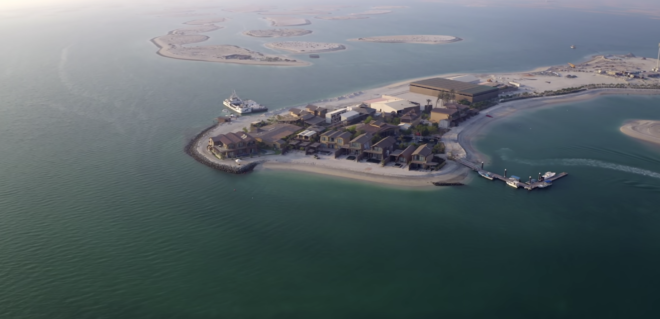
One particular project, The World, encompasses three palm shaped artificial islands which are nearing completion. Shaped to resemble a miniature of the world’s major land masses, the islands range in size from 5 to 20 acres (2 to 8 hectares), and many of the islands are only separated by 50 – 100 meters of water.
Notwithstanding the damage done during the actual construction process (when millions of tons of rock and other debris were used to create them) the man-made, unnatural islands are a serious threat to natural coral formations as well as beds of kelp and other sea weed where aquatic life would normally live and feed.
The construction process has literally buried many of these habitants under layers of silt, severely clouding the normally crystal clear Gulf waters.
Developers of the projects plan to construct a number of artificial reefs to attract marine life, including bringing a number of old ships and sinking them. While this method has proven to be successful in other places, many environmentalists fear that creating artificial sea beds will discourage native marine life and result in the introduction of foreign species that may take over and even be destructive.
Video of empty manmade islands
The Gulf’s coral reefs, especially in the area of the Emirate states, have been in a steady decline during the past 50 years, and were certainly not helped in the 1991 Gulf War, when millions of gallons of crude oil leaked into the waters when many Kuwaiti oil wells were set afire by departing Iraqi military forces.
The delicate eco-system of coral reefs, mangrove coastal areas and sea grass habitats, have been depleted by more than 35%. The Gulf’s sea water’s salinity has also increased, affecting sea life.
Island project promoters plan to import a number of dolphins from the Solomon Islands to add an extra attraction to the project’s marine leisure activities, which will include a special scuba diving park, Snorkler’s Cove, in which a 1 kilogram gold bar will be hidden daily as a “treasure” to be found by a lucky diver.
Gold bars, man-made islands, or dolphins, won’t help to preserve what’s left of the area’s marine life unless a more concerted effort by the UAE and other Persian countries is undertaken to save what’s left of the Persian’s Gulf’s ecosystem.
Whether or not you already know the Bread and Puppet Theater, “Rehearsing with Gods” is a wonderful way to learn more – to see, feel, and almost taste some of the magic of the seminal puppet theater founded in 1962 by German Peter Schumann.
Simon and Estrin have both been a part of the B & P family for a long time (Simon photographing them since the 1980’s, and Estrin a B & P performer for several yrs), and so the writings and photos show deep familiarity with their subject matter.
At the end of every B & P performance, fresh baked bread is generously shared with the audience, with the whole grain subtext that art should be as basic to life as bread. Their shows are almost always outdoors, puppets often much larger than human-size, which means their shows often border on pageant, parade, even ritual. Their home since the mid-1970’s has been a Vermont farm, outside the town of Glover, whose gently sloping fields are perfect for their outsized shows.
Schumann has not been afraid to meld his poetic aesthetic with concrete political causes. Through B & P’s history, his shows and street parades have embraced protest against everything from the Vietnam war, to the Vermont Yankee Nuclear Power Plant, to recently, the WTO (World Trade Organisation).
For GreenProphet readers who come from a journalism background, or who simply read the news, you know that American papers and magazines are facing mass bankruptcies and closings. Environmental journalism hasn’t been spared either, as was reported in April by a former green editor at the Huffington Post:
Last week I received word via a long-winded mass-email missive by a former co-worker that CE Media, the parent company of Conscious Choice (Chicago & Seattle), Common Ground (SF) and Whole Life Times (LA), had finally shut their doors, making them the latest victims of the tumultuously shifting media and publishing landscape.
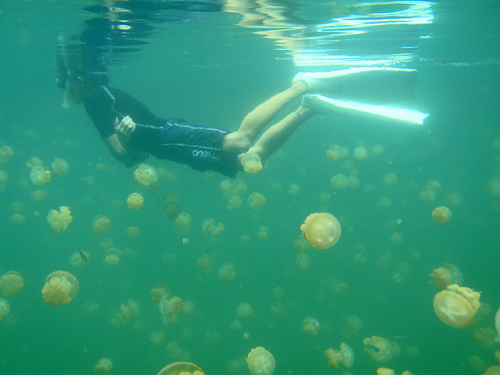
With summer coming on, beach enthusiasts must now begin to be on the lookout for swarms of jellyfish, otherwise known as “meduzot.”
The grey, blob-like masses appear every summer off the cost of Israel, Lebanon, and most other Mediterranean countries as well.
In fact the hypothesized “introduced species” that came to the Mediterranean Sea after the Suez Canal was built, have begun to become so prevalent off the Mediterranean coasts of Spain and other countries frequented by British holiday travelers, that the BBC and other British medias often give warning notices ot be on the lookout for the jellyfish, and what to do if stung by them.
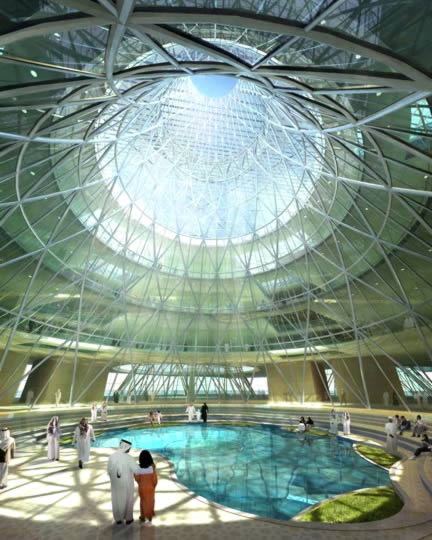
Begun in 2006, and conceived by the Abu Dhabi Future Energy Company, the entire project will eventually house some 50,000 people and 1.500 businesses supplying environmentally friendly products, the first phase of the 8 year project, the Masdar City Headquarters and the Institute for Science and Technology, was originally designated to be ready for habitation this fall.
Noah Dan has not forgotten the tastes of his childhood. He remembers eating brara, the fruits and vegetables bursting with incredible flavor but too “ugly” to package for sale in the cities, on Kibbutz Givat Brenner, where he was born and raised. He also remembers eating creamy, homemade gelato in Trieste, Italy where he spent summers with his Italian grandparents.
Now a resident of the Washington DC area, Noah is the founder and CEO of Pitango Gelato. Pitango, whose namesake is a variety of cherry that grows wild in Israel, recently opened two new shops in Washington, DC and Reston, Virginia after a successful first run in Baltimore, Maryland. In his attempt to reproduce the gelato of his childhood, Noah has found a way to build a business that is sustainable, conscientious, and produces a very high-end product without the use of chemicals or artificial additives.
Although he describes his model as upside down and risky because he invested about one million dollars to build production capacity before serving his first spoonful, Noah believes customers taste the difference, and the expense was well worth it. “Our gelato and sorbets enjoy a clean, balanced flavor and do not leave behind the unpleasant aftertaste and greasy palate associated with industrial-strength ice cream products,” proclaims Pitango’s website. “Our customers understand the difference in quality and price between the pint of fresh local strawberries that goes into our strawberry sorbet and an artificially flavored product that may go by a similar name.”
During the week of May 31, 2009, The Israel Conference took place in California in which over $20 billion was represented that could be used to fund Israeli startups, including cleantech companies. MetroLight raised $3 million and Sunday Energy and Ormat signed a deal to build the largest solar roof in the Middle East. For these stories and more, check this week’s 11 Israel-related headlines below.
Just six months ago, JGooders.com was started as way to build a global, accessible, vibrant, and transparent central Jewish and Israeli arena that would connect needs and generosity; social initiators and social enablers, and allow everyone to Do Good. [from JGooders.com]
JGooders is off to a fast start, as hundreds of Non Profit Organizations have signed up and started to raise money and awareness through the website. According to Tova Serkin, JGooders’ chief business officer, the website is a great way for young adults and people of all ages to get involved in community service and Israeli social action programs. Not only is the website convenient for those looking to contribute through service work and donations, it is also a nice way for NPOs to collaborate, fundraise, and promote their causes and upcoming events.
Turning to their environmental focus, Tova said that environmental organizations were a solid portion of the NPOs involved with the website. So far, around 25 organizations have been promoting environmental causes in Israel and the United States.
Following on the heels of the much publicized Masdar City, the first carbon emissions free city in the world, Dubai (which likes to do everything in larger than life scale) has announced its plans to build the region’s largest solar power plant.
According to the Gulf News, the plant, as announced by Ali Bin Abdullah Al Owais, executive director of electricity affairs in the country’s Energy Ministry, will create enough electricity needs and will have enough left over for other countries in the region, he said.


 Who said being an environmentalist is thankless? If you’re worried about how global warming may drastically change the Middle East, and you know how to work a

 Talk about being down in the dumps: What began as a surprise for an elderly Tel Aviv woman, has turned into an absolute nightmare as the old mattress she had owned for years was thrown into the trash by her well meaning daughter who wanted to surprise her mother with a new one.



 Whether or not you already know the Bread and Puppet Theater, “Rehearsing with Gods” is a wonderful way to learn more – to see, feel, and almost taste some of the magic of the seminal puppet theater founded in 1962 by German Peter Schumann.





 Just six months ago,