Home Blog Page 526

World’s Largest Solar Clock Gives Full Measure To Iraq

2

solar power, cleantech, IraqThe world’s largest solar-powered clock in Iraq will tell time sustainably!

As part of the war-torn country’s restoration plan, Baghdad University in Iraq commissioned the world’s largest solar powered clock. Designed by UK-based Smith of Derby, which has been making and servicing historic clocks for over 150 years, the Beacon Clock will be 3.5m in diameter, and will feature 4 dials and backlit lighting. Powered by building integrated solar panels, this clock tower is just one in a range of EcoTime products that rely on nature big time for its power, lighting, and even a bell sound system.

Iran Lacks Water Planning

2

The importance of recycling used water is understood more today by the Iranian environmental authorities, but converting theories to practice needs more investment. Mohammad J. Mohammadi Zadeh, the head of Iranian Environmental Protection Agency has declared how the water supplies of the country, which is among the arid and semi-arid lands, are wasted: “From 410 billion cubic meters of rainfall of the country, 280 billon cubic meters are evaporated, 92 billion cubic meters flow on the surface, and 38 billion cubic meters are added to underground water reservoirs.”

Jerusalem Train Points to Ancient Underground River

underground river JerusalemJerusalem will get a new railway line, and in the process, geologists find large underground river.

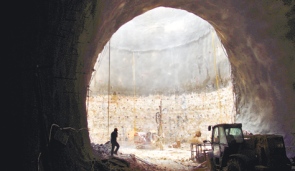
Excavators digging for a new railway station deep under the surface of central Jerusalem have discovered what geologists say is the largest underground river ever found in Israel.

And while its deep canyons and waterfalls may be an impressive find for scientists, it doesn’t contain a significant amount of the precious fluids to affect the water balance in this traditionally parched city.

The river makes sense, because as legend goes the water of the world first emerged from a spring in Jerusalem.

“We found a nice but small underground river,” Professor Amos Frumkin, head of the Cave Research Unit of the Hebrew University’s Department of Geography, told The Media Line.

“In terms of Israel, it’s the longest underground stream that we have ever seen. It is a kind of a canyon that has been cut by the stream of the water over a long period of time, maybe millions of years,” Frumkin said.

Frumkin and his team were called upon by Israel Railways after its engineers chanced upon the cave while excavating an 80-meter (260-foot) shaft close to the city’s main convention centre and central bus station that is being drilled for a huge, underground station that will serve the high-speed Jerusalem-Tel Aviv railway.

“When they reached the depth of 75 meters they cut into this cave accidentally. The water started flowing into this shaft and they had some problems until they found some engineering solution and called us,” Frumkin said.

The first humans to enter ancient Jerusalem cave

“We were the first humans ever to set foot inside this cave. However, it wasn’t very easy. It meant crawling in mud and some rappelling on ropes was required. So you needed some spelunking techniques,” he said. “It was beautiful. One canyon was over 200 meters long and we never reached its end. We found some waterfalls inside, which was nice for our arid country.”

Jerusalem is not known for its water sources and there is only one major spring in the city, the biblical Gihon, which has been gurgling since before King David’s time. With a population of some 700,000, Jerusalem gets its water pumped up from the coastal aquifer.

Frumkin said the cave appears to have developed after water seeped in from the surface and dissolved the underlying limestone. While other major caves have been discovered in Israel, this was the only one with running water.

“This is the longest one with an active stream flowing through it. All the other stalactite caves in Israel are without any stream of water today. They are just dripping water from the ceiling and the stream that formed the cave have long vanished because of geological and hydrological changes in the mountains,” he said.

“This one is still active in terms that the stream which was forming the cave is still active and this is not very common in Israel. It is much more common in other countries that are wetter like Europe and America and tropical countries,” Frumkin said.

Frumkin said the cave was at some points a few dozen meters high and speculated that the water originated from the surface and it was likely rainwater and possibly leakage from pipes and even sewage. Unlike a cave discovered a few years ago in central Israel that contained previously unknown crustaceans, the Jerusalem cavern has been found to host some microbes but no other major forms of life in this cave.

“The study of the cave can help us understand the precise mechanism by which water flows through the aquifer in the Jerusalem area,” he added.

He said that efforts were underway to reseal the cave entrance so that the water channel could be preserved without compromising the railway project.

“The train station will be built, but I believe that we can also preserve the cave by building some doorway to seal the cave but to allow the entry to anyone who needs to get into it for one reason or another. So the cave won’t be lost,” he said.

This story was first printed on the The Media Line, the Middle East News Source.

Cardboard Mounted Deer Heads for the Eco Conscious Decorator

2

"mounted deer head cardboard"Enjoy taxidermy without the guilt, with a recycled (and recyclable) cardboard deer head.

In centuries past, mounted deer (or other animal) heads were considered a type of trophy – an item that illustrated the skills and capabilities of the hunter who killed the deer.  If a man had a deer head on his wall, you would assume that he was virile, manly, capable of taking care of his little woman and kids, and probably a few other things as well.  But what is the modern, eco-conscious vegetarian man to do when he too wants to use interior design to demonstrate his masculine, yet environmentally sensitive, attributes?  Play on the classic mounted deer head and hang a “green” cardboard version.

Donkeys, Not DSL to Get Syria’s News Out

donkey syria photoJournalists are waiting on the Jordan border to get news by donkey, as Syrian activists smuggle out video.

When I traveled to Syria more than 10 years ago, there was no Internet. The young people I met, who talked in whispers, had asked me to send them books from the outside world. Books on anything, art mainly. When I sent them postcards or letters, there were some things I couldn’t talk about, as the censors read everything, they said. Talking about Israel was a big no, no. So I had to avoid recounting my travels to the Middle East in full detail. Now, some of the people of Syria in the middle of a revolution, are cut off from the Internet that they’ve had access to over the last years. To get the word out to the media on what’s happening to them, as the government kills protestors and threatens soldiers with their lives, locals are relying on donkeys to transfer video files from Syria to Jordan.

Are You Eating Arsenic With Your Chicken?

0

arsenic in chickenLooks ‘finger lickin good’; but how much arsenic is inside?

Issues over whether the poison arsenic is being fed to commercial poultry in many countries, has now come to a head again with the USA’s Federal Department of Agriculture (FDA) has now admitted that amounts of the cancer causing poison arsenic is being fed to chickens as part of the commercial poultry feed products given to them. The revelation first became known a few years back (around 2006) and was later reported in both Haaretz (arsenic in chicken feed in Israel), and in Green Prophet, regarding free KFC fried chicken giveaways being promoted on Oprah Winfrey’s own website. With the meat glue scare, and the E.coli outbreak in Europe, how safe is our food?

Bicycle Activists Stop in Istanbul En Route to Palestine

2

“Pollinating” social and environmental justice as it goes, British bicycle activism group P.E.D.A.L. launched a 100-day trip from London to Palestine this spring.

Next month in Jerusalem: that’s the goal of 22 bicycle activists who passed through Istanbul this week. The community organizers, artists, farmers and ordinary cyclists have been visiting communities across Europe where local residents are forced to fight for their land and human rights, gathering and spreading news of the disparate struggles. The group calls itself P.E.D.A.L.: Popular resistance movements, Environmental justice, Direct action on BDS, Art & culture, and Linking stories of struggle.

It’s an ambitious agenda, and P.E.D.A.L.’s members are determined to carry it out in each country through which they pass. They arrived in Istanbul after biking 5,000 kilometers through 15 different countries, including France, Austria, Slovenia and Kosovo.

MENA Is Fired Up For A Solar Boom

0

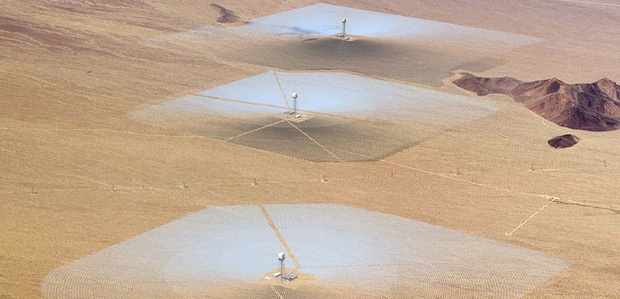
solar eclipseThe Middle East-North Africa region has greater potential for Concentrated Solar Power projects than in another in the world, a new World Bank study finds.

If the MENA region plays smart, it could benefit from a huge influx of Concentrated Solar Power projects, according to a new World Bank study. In cooperation with Ernst & Young, Fraunhofer Institute for Systems and Innovation Research (ISI) and the Fraunhofer Institute for Solar Energy Systems (ISE) found that although Spain and United States are currently leading the solar race, the MENA region has the best potential and widest application.

A pet favorite of the World Bank’s Clean Technology Fund (CTF) and a contender for financing under the  United Nations Framework Convention on Climate Change (UNFCCC), five MENA countries in particular need to take certain steps to realize this solar and financial infusion.

BrightSource-Chevron Joint Solar Project To Extract Heavy Oil, Suffers Losses

0

brightsource solar thermalBrightSource solar thermal illustration: Better than using the sun to soften oil
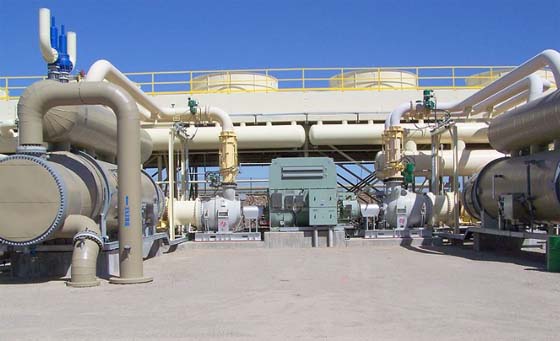
BrightSource Energy, the California based solar thermal energy company whose technology as innovated in Israel, and whose solar “star” was even touted by US President Barack Obama, is now in financial hot water again as its joint oil recovery project with giant energy company Chevron, appears to have incurred “significant cost overruns”, according to Reuters.

The oil recovery project, in which BrightSource’s patented solar thermal technology would be used to inject high pressure steam into oil wells to help Chevron soften the oil, would help pull out deeply embedded “heavy oil”. The company is incurring heavy financial losses of about $40.2 million, which company officials claim is $29.7 million more than “originally anticipated”.

Ormat Lands Its Largest Geothermal Deal in New Zealand at $130 m.

0

ormat geothermal energy new zealandThe US subsidiary of the Israeli company lands the largest geothermal deal in New Zealand, with Maoris.
Geothermal heats up in New Zealand: Ormat has told the Israeli business newspaper Globes that it has developed its biggest deal yet in the geothermal industry – one which uses heat from the earth’s crust to generate power. Our kiwi friends in New Zealand have just ordered an Ormat power plant for $130 million USD. It will be called the Ngatamariki geothermal project.

RECIPE: Eggplant Stuffed with Bulgur and Fruit

0

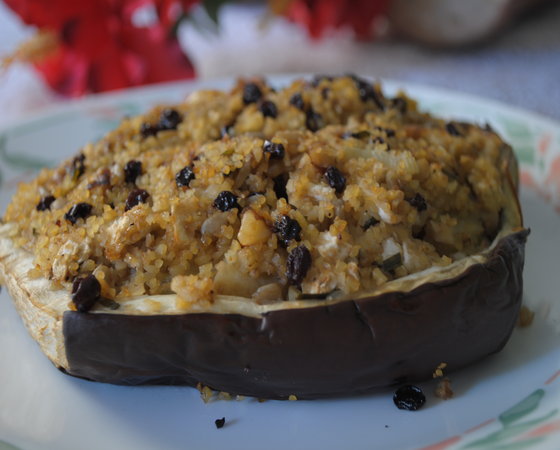
image-stuffed-eggplantThe Middle East’s favorite vegetable, served in a creative new recipe.

We’re fond of stuffed vegetables here on Green Prophet. They’re satisfying to the appetite and pleasant to look at. Like our butternut squash stuffed with quinoa, this stuffed eggplant recipe is an elegant twist on a traditional dish.

Among the myriad Middle Eastern eggplant recipes are those where the vegetable is stuffed and baked.  Eggplant stuffed with bulgur. Eggplant stuffed with bulgur and fruit? Unusual, but very good. The sharpness of eggplant flesh and shallot combines well with sweet dried and fresh fruit, everything held together by the grainy bulgur in an eggplant shell. Just delicious. A powerhouse of good-for-you superfoods. And it’s vegetarian.

Beirut Activists Try to “Green the Grey” of Their Concrete Urban Environment

0

"urban greenery environment"200 Beirut residents reminded others that cities can (and should) be green.

Fed up with the absence of greenery in Beirut, 200 residents of the city gathered this past Saturday in a decidedly concrete Sassine Square to collectively say that they wanted to “Green the Grey”.  Beirut has definitely been taking steps towards being “green” in recent years, including opening a popular local farmer’s market and paving bike lanes to encourage non-carbon emitting forms of transportation.   But some city residents believe that greenery itself needs to spread in Beirut, and that more green spaces are necessary.

Beirut Is Getting Its First Green-Roofed Tower

0

green building, sustainable architecture, foster & partners, lebanonFoster & Partners broke ground on their first project in Lebanon. This new tower will also be the first in Beirut to have green roofs.

The 3Beirut tower in Lebanon will be the first Foster & Partners development in that country. As fans of something a little more earthy, like the mud brick building entrusted to house Timbuktu’s sacred Islamic texts, we don’t always agree that what F&P does is sustainble. But they are certainly making their mark in the Middle East. The designers behind Masdar City, this beautiful bank in Morocco, and scores of other projects in the region, they have just broken ground on Beirut’s very first green-roofed mixed use development.

Bottom Trawlers In Oman Get The Boot

4

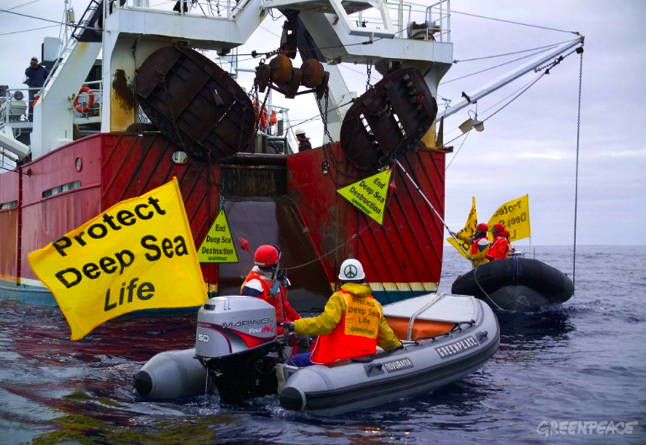
Greenpeace, bottom trawlingGreenpeace activists take on bottom trawlers. But in Oman, they no longer have to.

Bottom trawlers were forced to set sail after Oman effected its ban on this destructive “fishing” practice. A small Gulf country that borders the United Arab Emirates, Oman is renowned for its incredible coral reefs and marine diversity. But 16 large factory fishing boats operating off shore had jeopardized the Sultanate’s marine health and put many fishermen out of work.

First put in place by the Ministry of Agriculture and Fisheries in May 2009, the ban stipulated that licensed bottom trawlers would have to pack up their nets and leave the Sultanate’s waters within two years. And now, their time is up. Oman is the first Gulf country to officially ban bottom trawling.

The Middle East Nuclear Power Boom Without Toxic Waste Strategy

0

the screamLast week, the government of Saudi Arabia announced that it would go ahead with its nuclear energy ambitions and invest more than $100bn in building 16 nuclear reactors over the next two decades. At a time when other countries like Japan or Germany are looking for exit strategies from nuclear energy production, Saudi Arabia and its rich GCC neighbors, as reported by Green Prophet, continue to push on with their nuclear program.

Given that most are seven to ten years away from actual power generation, GCC governments view nuclear power as a way to reduce domestic oil and gas consumption. According official sources from Saudi Arabia, the new planned reactors will cover 20 per cent of its electricity needs, as demand in power grows at an estimated 8 per cent during the next ten years.

One may argue that these countries do not seem alarmed by the Fukushima disaster as they perceive that the risks of tsunami or earthquakes in the GCC are low, that the technology has evolved, and/or that proliferation unlikely. However, even if these risks and dangers are minimized, not much has been declared about plans to dispose of toxic nuclear waste.