
The Shard architect Renzo Piano has partnered with Italy’s Enel Green Power to design a new ultra lightweight wind turbine that has a smaller visual impact on the landscape than conventional wind turbines.
The Shard architect Renzo Piano has partnered with Italy’s Enel Green Power to design a new ultra lightweight wind turbine that has a smaller visual impact on the landscape than conventional wind turbines.

 My hometown of Amman, Jordan has just been slammed as one of the least attractive cities on the planet. Online travel adviser U.CityGuide posted their 10 Ugliest Cities of the World, with Amman nabbing third place.
I have to concede that in the urban looks department, and as much as I love Amman, Jordan’s capital city is pretty craptastic. On the bright side, it’s the only Middle Eastern entry on the roster they self-bill as “unbiased”.
Amman boasts streets strewn with litter and uncollected trash and, like most of our sister cities across the Middle East, uninspired glass towers sprouting with absolute disconnection to neighborhood context or traffic flows.
Our concrete and limestone buildings are coated with soot, sand and car exhaust because, absent the lashing rains of Seattle or Dublin, Amman filth sticks. And don’t get me started on unwalkable sidewalks and minimal green space.
Check out the other nine and see if your town is named and shamed – link here.
And people of Amman, do you think the title is deserved?
Eco artist and designer Pablo Solomon comments: “On ugly cities. We are always horrified to see cities devoid of greenery. As you know, I have preached for decades that planting enough greenery would be the cheapest and easiest way to counter manmade CO2 emissions.
“I put the term vertical greening into the common vocabulary and preached the Trillion Tree Project (now a reality). How one can live in a city without greenery is unimaginable. Gray water, collected rain water, desalinated seawater, etc. can be used to provide the necessary water. However, it takes determination, work, dedication and tenacity on the part of humans to turn their cities/living areas into more beautiful, more healthy and more earth friendly places.
“Being born into an ugly city is sad. Accepting living in an ugly city is even sadder,” he tells Green Prophet.
So what are you going to do about it Jordan?


This is the best pro-women’s rights stuff we’ve seen out of Saudi Arabia, ever. Saudi comedian Hisham Fageeh has posted his excellent No Woman, No Drive video to bring attention to the plight of women in the Middle Eastern country.


Smoking the hookah, nargilah or shisha pipe is a truly fun and social way to connect in the Middle East. It’s an oriental fantasy for newcomers and even for women in private circles who want to wind down and let loose. But one session can be like smoking 600 cigarettes!

Jerusalem’s Festigalgal bicycle riding festival winds up next week with emphasis on using bicycles more for in-city transportation.
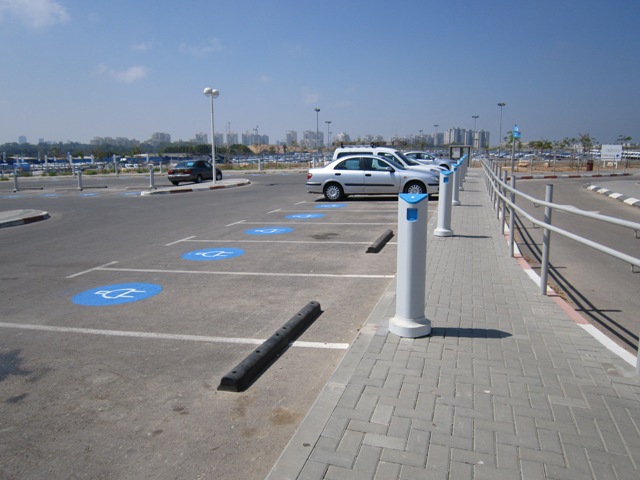
The forlorn photo of empty EV car charging posts says it all. Better Place, the electric car infrastructure company founded by entrepreneur Shai Agassi has still not found a buyer willing to come up with the actual money needed to purchase it.
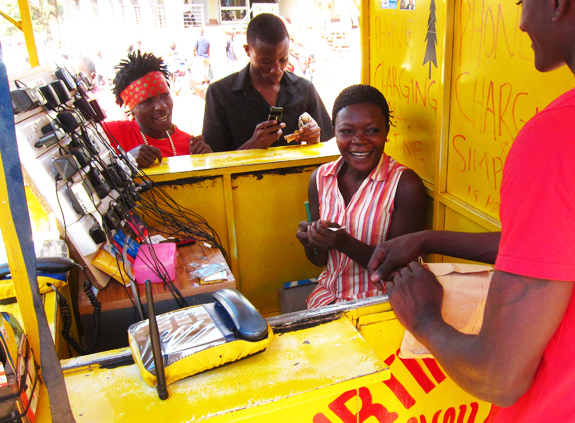
It’s hard to imagine the concept of a “power pimp” in Africa unless you have lived there. But it makes sense and cents on a continent that lacks a unified power system. There is basically no electric power in most rural places unless you are enterprising enough to own a battery and generator of some sort –– making you the “pimp” by letting other people charge their cell phones at crazy inflated prices.
It’s a problem that humanitarians worldwide seek to address, but an Israeli solution would do this using a cell phone. The idea of Nova Lumos is to buy solar power by phone on a needs basis, putting the middleman (that pimp) out of business.
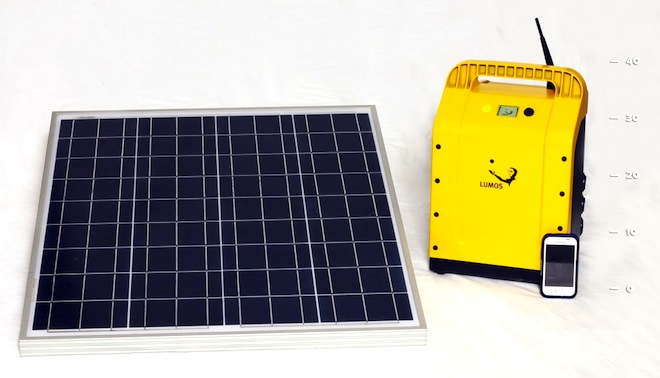
Davidi Vortman, general manager of the company, tells ISRAEL21c that the idea is to sell small mobile solar systems to individuals –– for charging cell phones, lights or small appliances –– paid for in affordable increments using a cell phone.
“The system is small enough for one person to carry and simple enough for a person to put on the roof. Just connect it without any technician; and use a cell phone to operate it through a mobile phone with a simple SMS,” Vortman tells me.
Off-grid and green
Could Lumos save the day for about 1.5 billion people in Africa and Asia who don’t have access to power? The system provides access to green energy, a practical off-grid solution, a security system to protect the mobile pack and a good business opportunity to mobile providers in Africa, who can lease the Lumos pack as a bundled service.
“Africans don’t talk as much as they’d like to, not because they don’t have money to talk, but because they don’t have money to buy the charge,” explains Vortman. “When you think about the alternatives, there are the electricity pimps, a local entrepreneur with a car battery and generator and a kerosene candle for light, or a generator, which 99 percent cannot afford.
“With no grid there is no way to buy electricity. We believe distributed electricity would make more sense,” he says.
Cell phones for Africans are lifelines: a tool for banking, communicating and accessing the Internet. Some 800 million cell phones are being used across the continent, and it is clearly an important emerging market in both high-tech communications and green technologies.
“We need to make technology available in a way that is different,” says Vortman. “If they would have said years ago that 80 percent of Africans would have cell phones today, you’d think they were joking. There are no landlines, but they just leaped to mobile. The same with banking, where they use their cell phone and now have the largest market for that. They just leaped. I think with energy it must work the same way.”
Pilots in two countries
Energy is a harder sell than apps.
While apps from Israel to manage police forces (like Nowforce) or low-tech browsers (like VascoDe) are an easy sell, it has proven harder to get Africans hooked on green power – mainly because of the prohibitive cost.
Paying in increments by phone could eliminate this barrier. The challenging part will be securing the systems and penetrating the market before other companies jump on the bandwagon.
Nova Lumos was founded in 2012 and is now carrying out pilot projects to test the system using several hundred units in Nigeria and Guinea.
In the far future, the plan is to offer this unique approach to developed countries in need of a secure and reliable solution for far-flung locations. For example, Lumos could also be a provider of pay-as-you-go systems that purify water.
Founders of the company all come with expertise in large-scale solar energy installations in Israel, and in the networking and communications high-tech business. Vortman used to work at Nice and Comverse, managing large business units.
“I always felt that I wanted to do something different – something that impacts people,” he says.
Merging the two worlds of green energy and high-tech, as many Israeli companies are starting to do, might just save the day — and the planet.

As Qatar prepares for the 2022 World Cup amid bribery allegations and gross human rights violations, the world is watching every move. Which may explain why the Emir controls every major and minor decision – including the new Doha metro design.
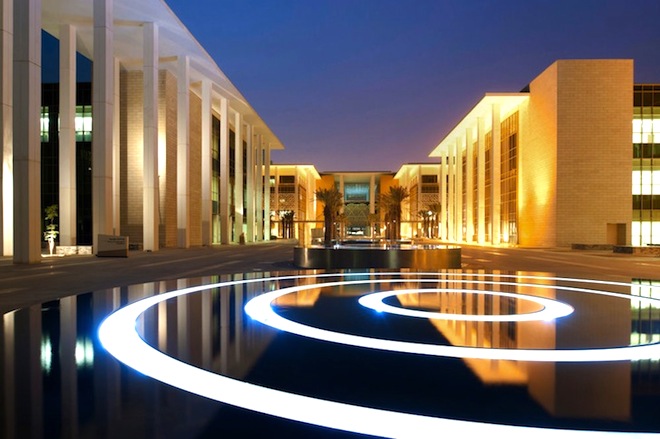
Most westerners imagine that Saudi women are completely deprived of opportunity, and in some cases that may be true, but the world’s largest women-only university in Riyadh, Princess Nora Bint Abdulrahman University (PNU), may steer the kingdom in a more egalitarian direction.
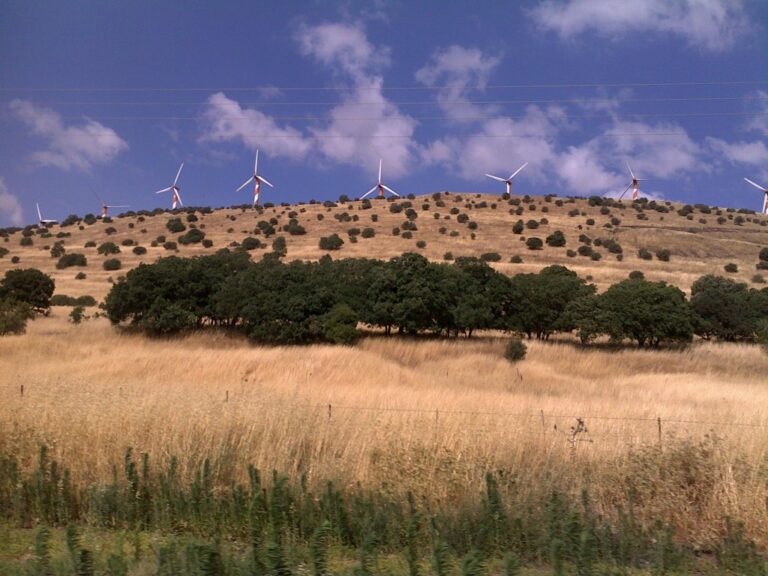

It ain’t Chicago, but Israel does have a little bit of wind potential on the Golan Heights. A local company called Enlight, which has been active in solar energy, has just received a conditional license to build 34 more wind turbines in the Golan Heights totalling some 58 MW of renewable energy.
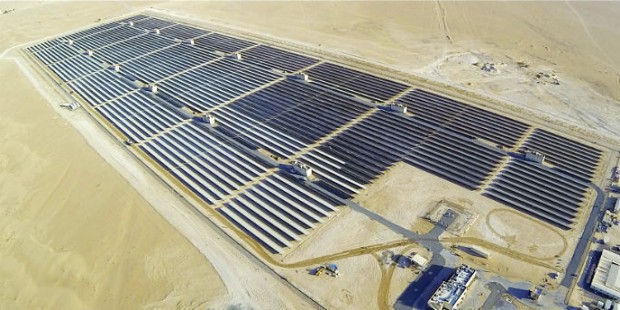
In an attempt to diversify its energy balance, Dubai has just turned on a 13 MW solar energy plant. The oil wealthy nation is an OPEC member, and one of the first to make a bold statement away from oil. This makes it the largest solar photovoltaic (PV) plant in the Middle East North Africa.
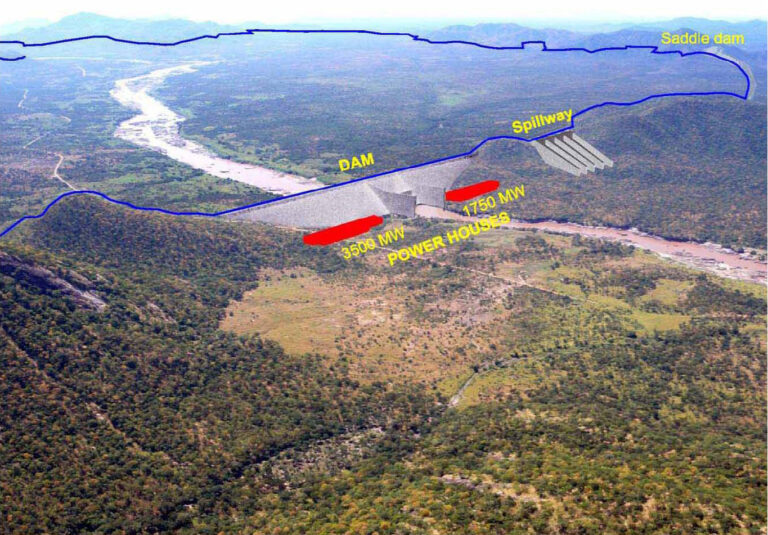
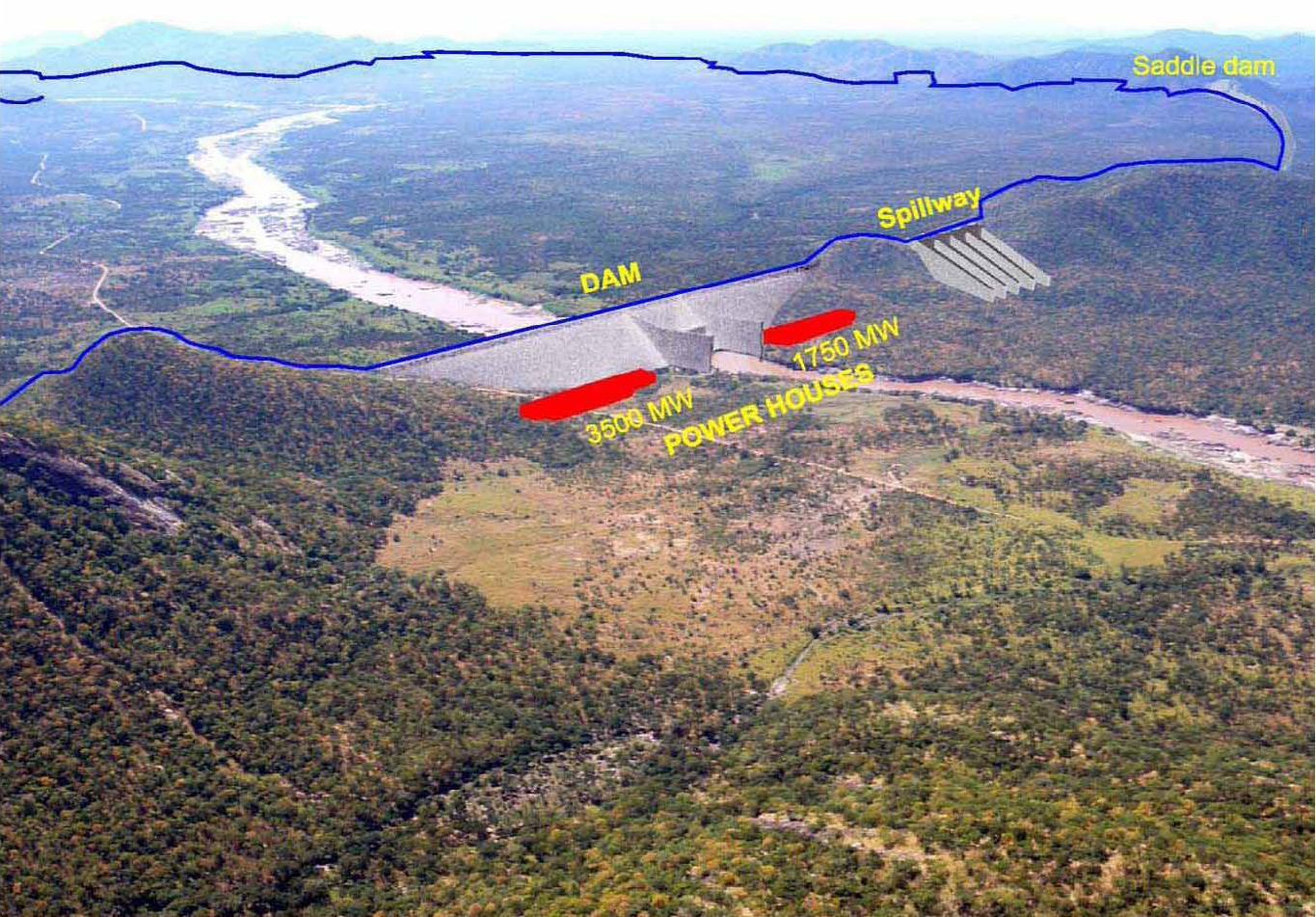
In a strange and surprising twist, Egypt says it will consider participating with its neighbour Ethiopia in the construction of the Renaissance Dam, a project which it had staunchly opposed (and even suggested sabotaging).
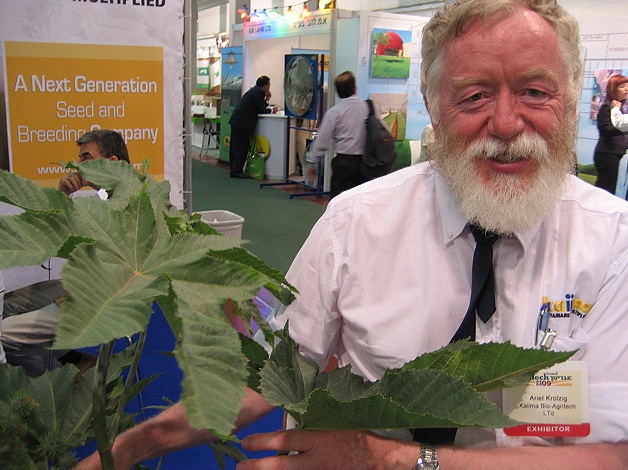
Since the Sixties “green revolution,” when Norman Borlaug introduced the concept of cross-breeding and hybridization of plants to boost output, not much has changed, according to Doron Gal, CEO of the Israeli seed technology company Kaiima Agro-Biotech. Kaiima, which means “sustainability” in Hebrew, hopes to be that change.
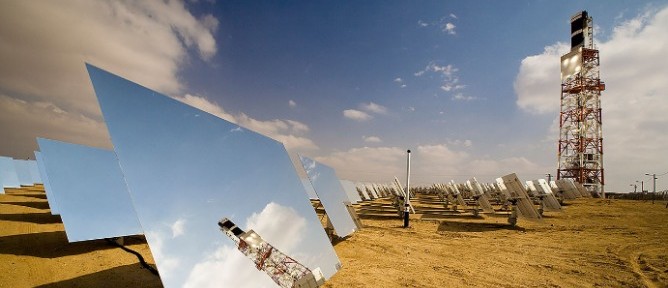
It will be the fifth largest solar plant in the world when done. The earth revolves around the sun, and so does the green-tech industry. Some of the earliest pioneers of solar energy started in Israel 30 years ago with the company Luz.
Luz went on to become Luz II, then BrightSource, which is now a US-based solar power company about to flip the switch on a massive 377-megawatt solar thermal farm in the California desert.
And at the start of 2014, the sun and stars will align and a dream will be coming true for Israeli solar pioneers and visionaries like BrightSource Israel CEO Israel Kroizer.
BrightSource will break ground on one of the world’s largest solar thermal energy plants, in Israel. The Ashalim plant is expected to produce 121 megawatts of solar energy in the Negev Desert by 2016, providing enough “green” energy to fuel 40,000 Israeli homes.
After many bureaucratic hurdles, BrightSource –– which uses mirrors called heliostats to focus the sun’s rays on a tower to create steam to drive turbines –– is finally returning “home” and is fulfilling a dream to help make Israel energy secure, says Kroizer.
He was with BrightSource from its genesis and says that the new solar plant, developed by the Megalim consortium of BrightSource and France’s Alstom SA, is more than a business deal — it’s personal. BrightSource, he notes, employs about 400 people, 300 of whom are engineers and development staff working mainly in Jerusalem, where its international R&D happens.
Sunning the engineers close to home

“The staff is very happy to be working in the country, in Israel. It’s a real help to have a big project next door to us,” he tells Green Prophet. “We will learn a lot from it, instead of flying 10,000 miles to California every time we want to learn something.”
The $1.1 billion solar thermal energy plant being developed in Israel is the country’s first large-scale solar energy field, and one of the biggest of its kind in the world. It will heighten Israel’s prominence on the map of clean-tech entrepreneurship and green energy production.
Kroizer says: “The government gave us a very good structure and we appreciate it very much. The way we will run this project is as though it will be the crown jewel of all our projects. Yes, even over our project in California.
“The Israel project is close to us and everyone involved in it wants to make it the best,” he told me, not disclosing any financial developments still in sensitive boardroom talks.
Putting the BrightSource deal into proportion, Israel’s Ketura Sun was the first to launch a mid-size solar energy field in 2011.
Ketura was developed by Arava Power Company and Yosef “Kaptain Sunshine” Abramowitz. It produces five megawatts of energy, a fraction of what the BrightSource plant will provide. Arava, however, is expected to produce an additional 58.5 megawatts in the future, based on contracts it won in 2012.
Unlike the Suntech photovoltaic (PV) panels used by Arava, which convert the sun’s power into electricity directly, BrightSource focuses the sun’s rays from hundreds of ground-based mirrors to a collection tower. There the solar heat boils water to create steam to drive power turbines.
The solar thermal route is somewhat more complicated, and therefore expensive, than PV panels.
Kroizer says the two types of technology serve two different markets. “Almost every country installing solar energy is installing both kinds of solar solutions, in a certain proportion, to compensate for the grid’s limits,” he says.
Stabilizing the grid
He also argues that thermal storage is more suitable to the grid.
“With PV, you get energy when the sun is ‘on.’ When the sun is ‘off,’ you don’t have energy. The difference in the cost is basically compensating for this value of more stability in the grid, which is what the grid needs.”
Another advantage to the BrightSource technology is that the heliostats can be positioned on uneven ground, unlike PV panels.
Despite its developments in America, BrightSource still faces hurdles there: It pulled out of a recent American IPO, it has lost valuable energy buy-back contracts this past year; and CEO John Woolard recently stepped down, reportedly to spend more time with his family.
Meanwhile, the company is working on the paperwork to win a tender for a second solar thermal plant in Israel to produce about 60 megawatts, at the same time it secures financing for the bigger Ashalim project.
For business travelers and the curious who are coming to Israel, BrightSource has a pilot six-megawatt project in operation in the Rotem Industrial Park built in 2008, open to the public. A new visitor center may be built at the Ashalim plant if there is enough interest, says Kroizer.


Itchin’ to best Betty Crocker by baking up new awareness to the plight of our home planet? Take a page from an Aussie zoologist who’s created an astounding series of planetary cakes with scientific accuracy that goes deeper than sugary frosting.

Have news to share? Renewable energy news, architectural, artificial intelligence, biotech, sustainable design ideas, eco-architecture, green travel?
Email us: [email protected]
Get important news delivered directly to your inbox and stay connected!
© 2007 to 2026 Green Prophet, All Rights Reserved