

 A five star hotel will offer chefs, tennis and golf pros, hairdressers and masseuses, but the Park Hyatt Abu Dhabi just upped the ante by adding a marine biologist to its permanent staff. The resort’s resident marine expert will be organizing workshops and eco-excursions to educate and entertain guests, but her primary mandate is to ensure that the hotel adheres to strict environmental standards laid down by the emirate.
Located on the natural island of Saadiyat, Park Hyatt Abu Dhabi Hotel and Villas sits adjacent to Saadiyat Beach, a nine kilometre stretch of environmentally-protected white sand beach on the edge of the turquoise Arabian Sea. The area is home to an abundance of wildlife including hawksbill turtles and bottlenose dolphins (like the ones found in an Egyptian private pool).
Marine biologist Arabella Willing joined the team from a sister hotel in the Maldives. Previously, she was a volunteer teacher on a remote island in the very north of the country, educating some of the most isolated communities about sustainability, marine life and the effects of coral bleaching.
“Abu Dhabi has amazing wildlife, which many people are not even aware of. Now is the time to engage our guests and employees on how we can be more responsible towards our environment, to make sure that the endangered species that visit our island remain protected. We conduct various educational programs with our employees through our corporate responsibility platform ‘Hyatt Thrive’. We also entertain the children and teenagers in the resort with activities relating to nature and the sea,” Willing stated on the company website.
The marine biologist arrived just in time for the nesting season of one of the most endangered species in the world, the hawksbill turtle (the first of the season’s nests was spotted in April). Nests can contain between 90 and 100 eggs, each nest clearly marked to ensure hotel guests don’t disturb hatching that occurs about 10 weeks after eggs are laid. Every year between April and August, the turtles return to the island to nest, often having travelled half-way around the globe.
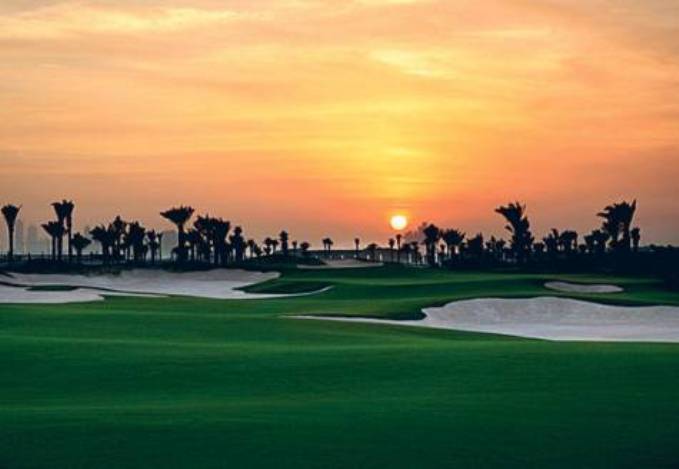
The resort is adjacent to the Saadiyat Beach Golf Club Abu Dhabi which itself doubles as a wildlife sanctuary. The golf club was awarded certification from Audubon International in recognition of its efforts to preserve and encourage wildlife on the course and surrounding areas, bringing the club one-step closer to becoming a fully certified Audubon International golf course.
The course hosts many rare bird species, such as Rufous-tailed Rock Thrush species, which are closely monitored by the club’s agronomy team. Over 50 different bird species have been identified on the course, including the Siberian Stonechat, European Bee Eater, Yellow Wagtail, Woodchat Shrike and European Roller.
Director of Agronomy Director Marcus Hartup said on the club website, “Since opening in 2010, Saadiyat Beach Golf Club has made a significant investment in protecting the magnificent wildlife which is native to the area. Over the past two years we have seen an increase in migrating birds as well as a noted increase in gazelle activity.”
“The influx of birds to Saadiyat Island has been great to witness. Each morning we venture out to the course never knowing what we’ll find that day. Birds particularly love the area and we regularly conduct wildlife inventories to monitor which breeds are visiting the course. Salt water lakes on hole five also provide homes to an abundance of marine life, including fish, jellyfish, mussels and crustaceans.”
World-class facilities designed in full harmony with their natural environment, with dedicated scientists to monitor things are a remarkable step up from chocolates on the pillow.
Reached by a bridge from the mainland, Al Saadiyat Island is another one of Abu Dhabi’s pilot sustainability projects that has drawn a lot of attention to climate and resource issues; so much so that one student designed a site-specific eco-mosque (with no dome or minaret) for the island, which received mixed responses.


[…] Green Prophet […]