Why So Many Fallujah Babies Are Born Deformed

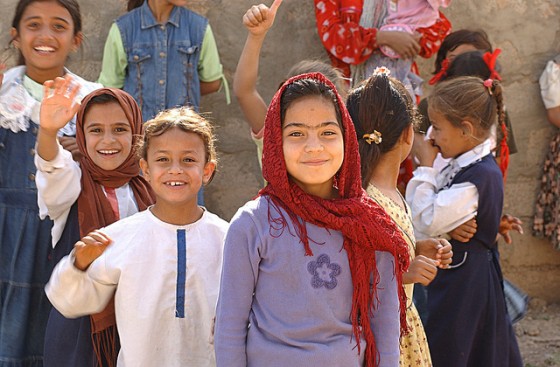
environmental disaster, birth defects, Iraq fallujaThese children in Iraq appear to be healthy, but 15% of all new babies born in Fallujah have birth defects.

Green Prophet writer Arwa has been hot on the trail of the war’s devastating environmental impact on Iraq. She created a profile of environmental problems caused in part by the war and  talked to conservationists Nature Iraq about the requisite steps to restore Iraq’s marshlands.

But the true extent of one of the war’s most horrifying legacies has been kept from the international public’s view. In an excerpt taken from The American Conservative, UTNE describes how the American army has left behind untold (but high) quantities of depleted uranium (DU) that is the most probable cause of babies being born with three heads and other devastating defects.

UTNE lists a variety of cases of Fallujah babies in particular that born with defects. Some reported defects include:

  • Babies born with only one eye
  • Babies born with missing limbs or too many limbs
  • A higher than normal incidence of babies with brain damage or tumors
  • Cardiac defects
  • Missing genitalia

John Simpson, a world-renowned journalist, was presented with a photograph of a newborn with three heads when he toured a Fallujah hospital in March, 2010. And Ayman Qais, director of Fallujah’s general hospital, told the Guardian that “Most [deformities] are in the head and spinal cord, but there are also many deficiencies in lower limbs.”

Authorities have gone so far as to advise women to not have babies at all, at least for now.

Depleted Uranium

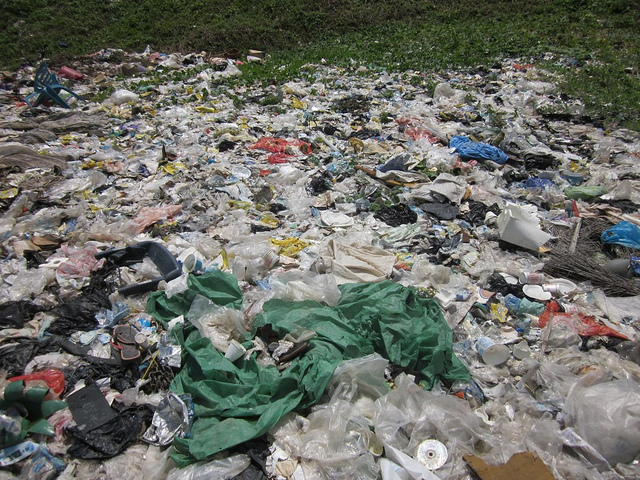
Everyone – scientists, doctors, and aid workers – is pointing to the war and the bevy of weaponry, waste, rubble, burn pits, and oil fires left behind as the culprit of this travesty. Some are calling depleted uranium (DU) this war’s agent orange (an herbicide that caused similar deformations in Viet Nam).

“DU is a dense, highly toxic, radioactive heavy metal that the military uses for its shielding and penetrative capabilities,” according to UTNE, that will not be completely eradicated for 4.5 billion years.

The U.S. left behind 320 metric tons of DU after the first Gulf War, but there’s no real sense yet of how much will be left behind this time. One journalist traveled through Iraq with a Geiger counter that detects radioactivity and found plenty of it, including where children play among the rubble.

The International Journal of Environmental Research and Public Health verifies the notion that congenital malformations can be attributed to war-associated long-term exposure to contamination, but the U.S. Department of Defense denies responsibility.

The consequence of George W. Bush’s decision wage war on Iraq, for all the wrong reasons, are immediately felt by 15% of all new babies born in Fallujah. And they will continue to be felt for literally billions of years.

:: UTNE

More on Iraq’s environmental problems:

A Profile of Iraq’s Environmental Woes

Nature Iraq’s Wildlife Conservation in a Combat Zone

Mining, Silt, and Transformer Waste in Iraq


image via James Gordon

Tafline Laylin
Tafline Laylinhttp://www.greenprophet.com
As a tour leader who led “eco-friendly” camping trips throughout North America, Tafline soon realized that she was instead leaving behind a trail of gas fumes, plastic bottles and Pringles. In fact, wherever she traveled – whether it was Viet Nam or South Africa or England – it became clear how inefficiently the mandate to re-think our consumer culture is reaching the general public. Born in Iran, raised in South Africa and the United States, she currently splits her time between Africa and the Middle East. Tafline can be reached at tafline (at) greenprophet (dot) com.
5 COMMENTS
  1. I find it bizarre, here I sit at my desk lknioog out the window at the ridgeside woods on a cool New England early spring morning when only the white pines show any hint of green, and you men of goodwill are out in the barren wastelands of the world, creating order, exemplfying duty, attempting humanity, and shedding light and communication. It just goes to show the mind numbing work of the trenches, is still where the money talks and the bullshit walks. Good fortune on your journey and thanks for the posts

  2. This too:
    Chris Busby, Malak Hamdan and Entesar Ariabi. “Cancer, Infant Mortality and Birth Sex-Ratio in Fallujah, Iraq 2005–2009.” The International Journal of Environmental Studies and Public Health. 7 July 2010.

    and this:
    Samira Alaani, Mozhgan Savabieasfahani, Mohammad Tafash and Paola Manduca. “Four Polygamous Families with Congenital Birth Defects from Fallujah, Iraq.” International Journal of Environmental Research and Public Health. 2 January 2011.

    this too:
    Cockburn, Patrick. “Toxic legacy of US assault on Fallujah ‘worse than Hiroshima.’” The Independent. 24 July 2010. .

    so yeah… I don’t think you’re right Richard,

Comments are closed.

Hot this week

How Renewable Energy is Revolutionizing the Way We Power Our World

Solar has become the star of the transition thanks to modular hardware and straightforward installation. It fits dense cities and remote towns alike. Many companies are turning to rooftop arrays and carport systems - and exploring commercial solar installation as a practical way to lock in future savings.

How does one start prepping?

Faced with an extreme winter storm this year, Americans wonder how to be prepared for catastrophe. Miriam has lived through wars in the Middle East - so she's prepared on giving you a guide to prepping.

Fishermen sue tire manufacturers on behalf of the salmon

A federal trial in San Francisco has brought US tire manufacturers, fishing groups, and environmental scientists into court over a chemical most drivers have never heard of — but which scientists say may be silently reshaping aquatic ecosystems.

Listening to Water: Tarek Atoui’s Next Work for Tate Modern

Born in Beirut, Lebanon in 1980 and now living in Paris, Atoui has spent years building instruments that don’t sit comfortably in concert halls. Many of them involve water, glass, and ceramics — materials that react to sound instead of simply producing it.

Leading Through a Dual-Energy Transition: Balancing Decarbonisation with Energy Security

Experience in one area of the energy industry isn't enough to guarantee readiness across all the others. That's where a structured program like an MBA in energy can come in. Today's advanced curricula explore energy economics, finance, policy, and strategic management alongside the technical subjects. And when pursuing an energy MBA online, professionals can skill up and retrain without having to step out of the labor market -- an important perk at a time when skilled professionals are already in short supply.

Topics

How Renewable Energy is Revolutionizing the Way We Power Our World

Solar has become the star of the transition thanks to modular hardware and straightforward installation. It fits dense cities and remote towns alike. Many companies are turning to rooftop arrays and carport systems - and exploring commercial solar installation as a practical way to lock in future savings.

How does one start prepping?

Faced with an extreme winter storm this year, Americans wonder how to be prepared for catastrophe. Miriam has lived through wars in the Middle East - so she's prepared on giving you a guide to prepping.

Fishermen sue tire manufacturers on behalf of the salmon

A federal trial in San Francisco has brought US tire manufacturers, fishing groups, and environmental scientists into court over a chemical most drivers have never heard of — but which scientists say may be silently reshaping aquatic ecosystems.

Listening to Water: Tarek Atoui’s Next Work for Tate Modern

Born in Beirut, Lebanon in 1980 and now living in Paris, Atoui has spent years building instruments that don’t sit comfortably in concert halls. Many of them involve water, glass, and ceramics — materials that react to sound instead of simply producing it.

Leading Through a Dual-Energy Transition: Balancing Decarbonisation with Energy Security

Experience in one area of the energy industry isn't enough to guarantee readiness across all the others. That's where a structured program like an MBA in energy can come in. Today's advanced curricula explore energy economics, finance, policy, and strategic management alongside the technical subjects. And when pursuing an energy MBA online, professionals can skill up and retrain without having to step out of the labor market -- an important perk at a time when skilled professionals are already in short supply.

From Green Energy to Healthy Societies: Why old systems thinking is becoming relevant again

Across the Middle East and North Africa, large investments are being made in green hydrogen, renewable energy, water infrastructure and sustainability. Most of these efforts are discussed in the context of climate change, decarbonization and economic diversification. That framing is important, but it may not capture their full value.

We saw peace – an interreligious encounter deep in our eyes

They came from Israel, Palestine, Jordan, Iraq, Yemen, Morocco, Tunisia, Lebanon, Egypt… There are Sunni Muslims, Shiite Muslims, Jews (Orthodox and Reform), Orthodox Christians, Coptic Christians, Protestant Christians, Druze, Baha'is, a Scientologist.

Can biochar reduce ‘Forever Chemicals’ in food if it’s used in farms?

Biochar is produced by heating organic material in a low-oxygen environment so it does not burn. This process, known as pyrolysis, transforms plant matter into a stable, carbon-rich material.

Related Articles

Popular Categories