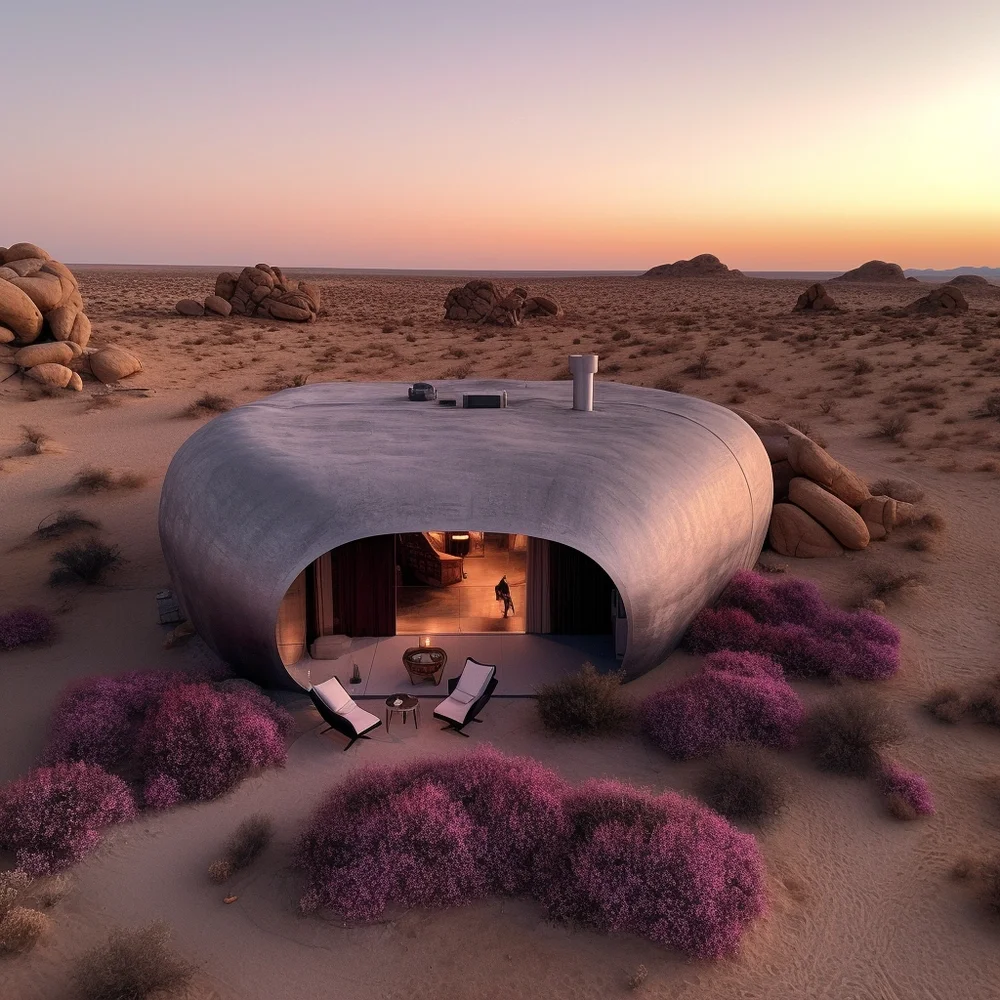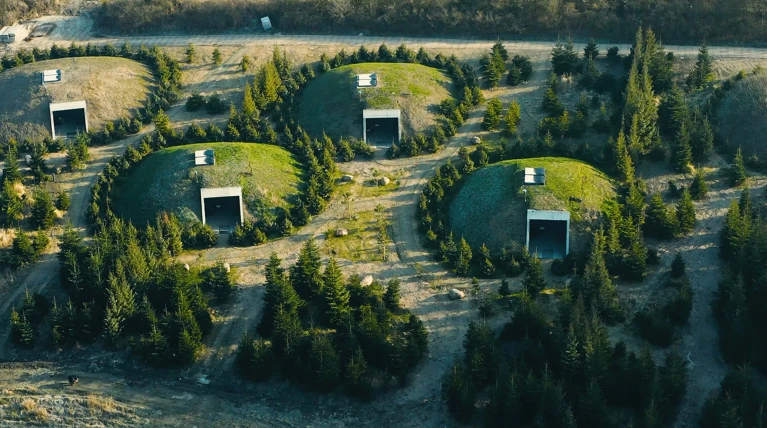
Spend 5 days in a Teletubbies cave and come out more alive. Image via Kiana Aran.
I go to Canada every year and spend at least a month in a forest in the middle of nowhere. The deprivation of the modern world takes time to wear off. After a full week of no stimulation, the effects take hold and suddenly I feel like I can talk with the wind. Every moment seems more alive and worth living. James experienced this at an In the Dark event in London, described as “like a prayer” when you go all-in and listen to music in the dark. Something similar is now being reported by science.
A woman lived in a dark cave for five days and her senses became more alive. Food was tastier.
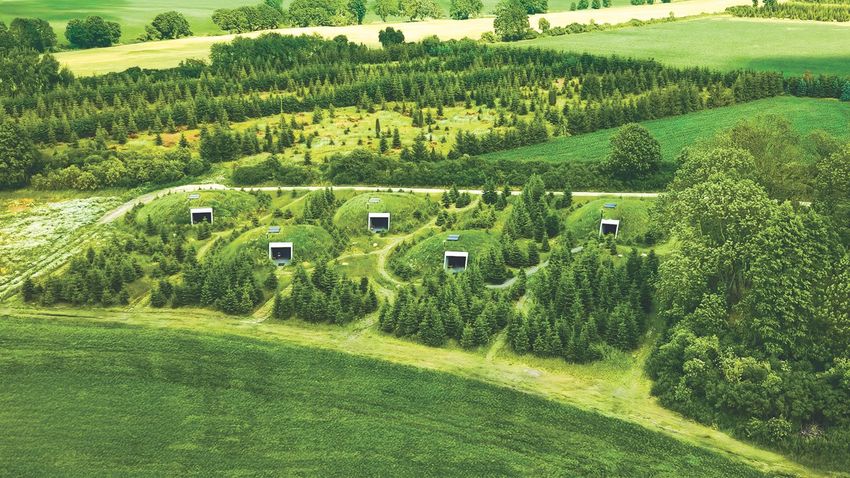
It all started in November 2024, when bioengineer Kiana Aran entered complete darkness. For five days, she lived alone in a cave-like chamber in rural western Poland, cut off from light, sound, and time. She was fitted with a suite of biosensors. (Poland has wonderful underground salt caves, as well, for other health experiments.)
The experiment, later reported in Nature as part of its Sensors Spotlight, was a scientific inquiry into how the human body recalibrates in the absence of external stimuli.
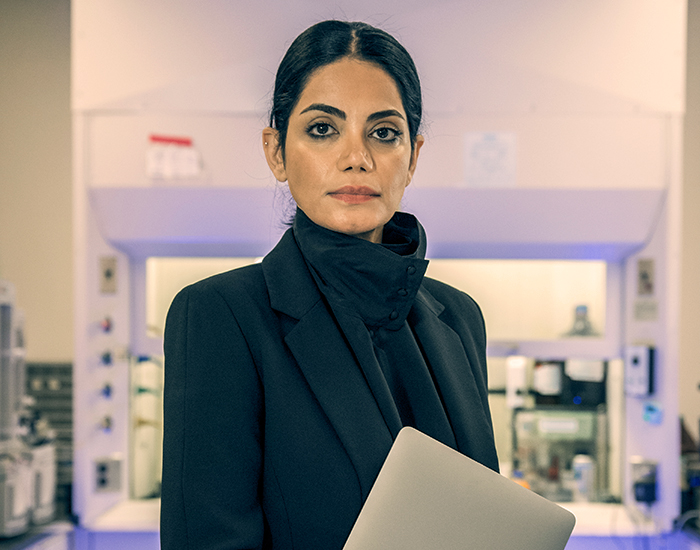
Aran, a scientist at the University of California, San Diego, tracked herself continuously using wearable and molecular sensors, including EEG monitoring, a glucose sensor, an Oura Ring, and multi-omics sampling before, during, and after the retreat.
On entering the cave, my taste perception changed drastically. Food was intense and delicious. I never knew exactly what I was eating, but I remember certain foods by texture alone: the firmness of broccoli, the smoothness of soups, the crunch of nuts. My proteomic data, measured later, confirmed what my senses had been trying to tell me: proteins linked to taste receptors had shifted significantly, mirroring my heightened perception.
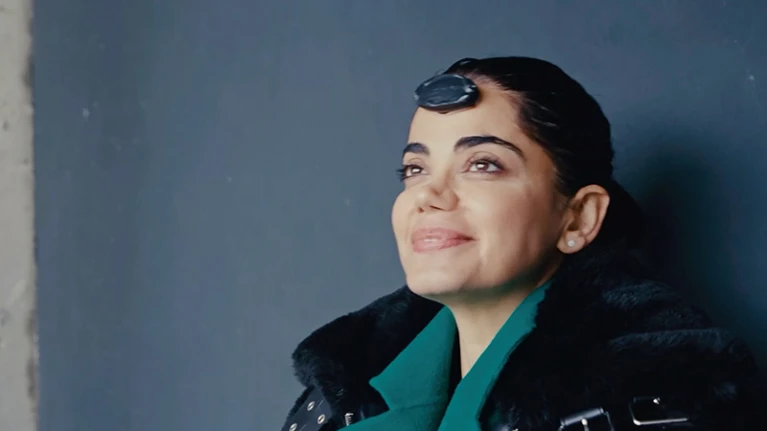
Kiana Aran wore an EEG on her forehead to measure her brain activity while in the cave. Credit: Kinga Janowska and Wojciech Ananda Jay, founders of Darkness Cave Retreat.
What emerged was a rare, data-rich portrait of biological adaptation. With no circadian cues, Aran’s sleep became fragmented, with REM and dream-like states appearing throughout the day. Her glucose levels remained unusually stable, even after consuming sweets, suggesting more efficient metabolic uptake when sunlit cues are not available. Proteomic analysis later indicated changes linked to taste perception, echoing her subjective experience of heightened flavor sensitivity in darkness.
Her microbiome responses varied by body site. While gut microbiota remained largely stable, microbial communities on the skin and in saliva shifted rapidly, acting as early indicators of environmental stress and adaptation. Together, the data showed that different biological systems respond to isolation on very different timelines, she reported.
“The darkness also gave me dreams that were so vivid they felt real,” she said. “One night, I saw my mother, my cousin and my late grandmother, who had long since passed, sitting together, laughing softly over an iPad. They looked so alive, so close, separated from me only by a glass door.”
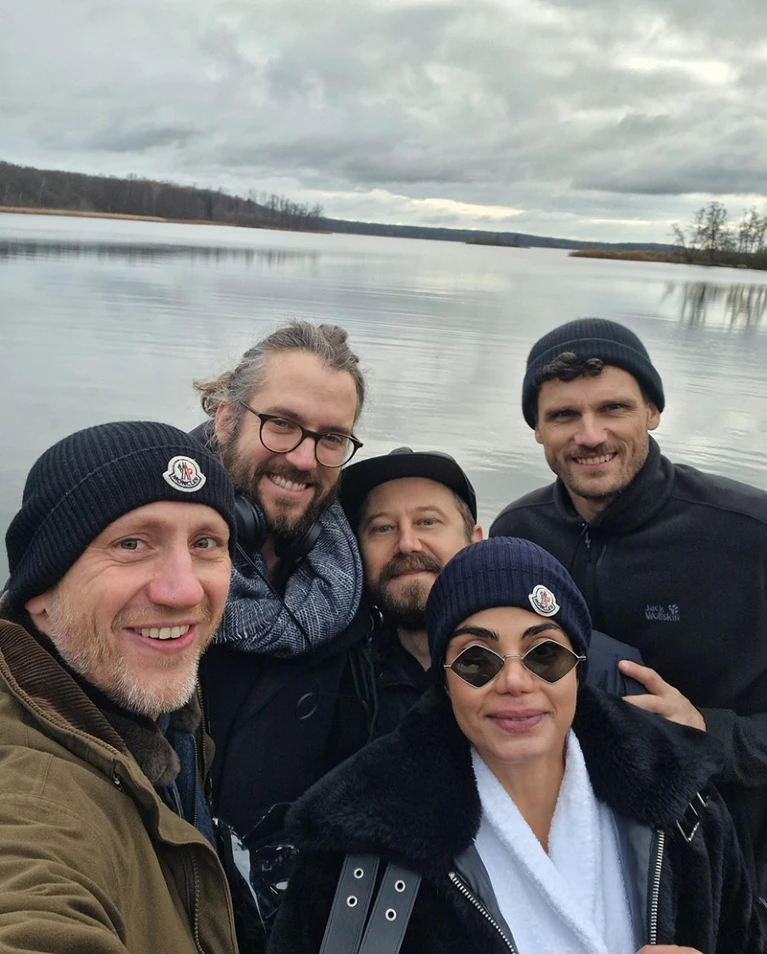
Kiana Aran and crew. Supplied.
Beyond physiology, the experiment underscored the communicative power of environment. While Aran’s internal experience of darkness was deeply personal, marked by vivid dreams and altered perception, the data allowed her to translate that experience into something shareable, analyzable, and comparable.
In an era when sensors increasingly mediate how we understand health, cities, and the environment, the cave experiment offers a striking reminder: technology does not replace human experience, but it can make the invisible visible.
Or as Karin Kloosterman from Green Prophet says: use some common sense and just get out in nature. Drop the sensors — and the need to biohack your life better than the next guy.