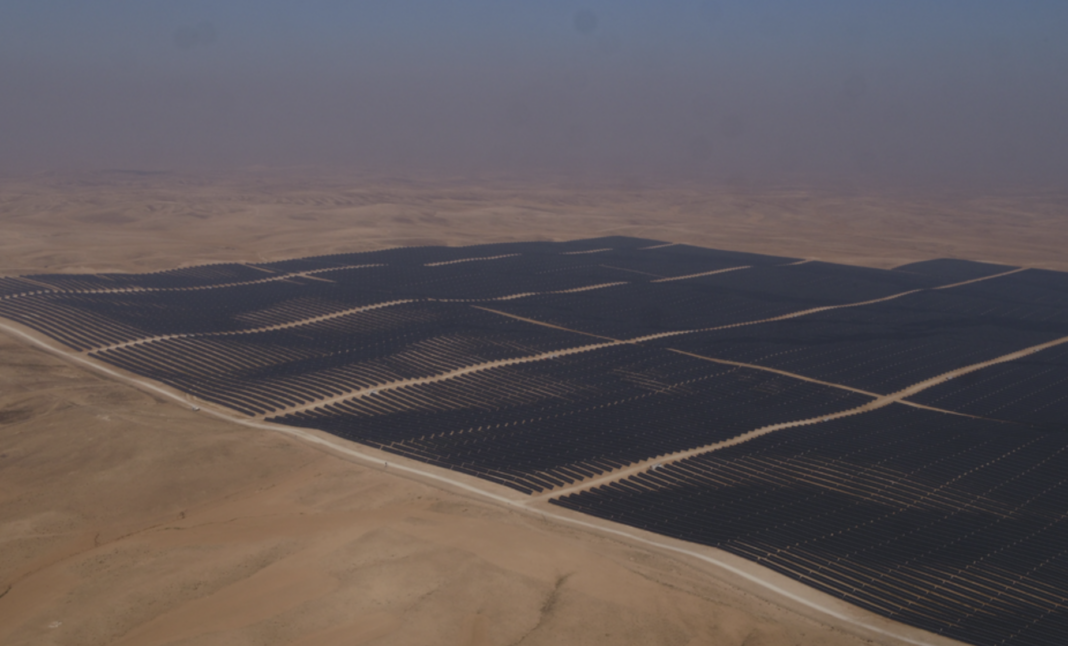


We definitely want to see a lot more news like this: in the heart of a dry, relentless desert in Jordan that gets almost endless days of sun shines a new project to give its people access to clean energy. Thanks to Abu Dhabi’s renewable energy company Masdar, of which zero-energy city Masdar is also named energy-poor Jordan gets a new project under the sun. This month Masdar officially cut the ribbon and inaugurated the Baynouna Solar Park in the Middle East country of Jordan.
The Baynouna project produces enough solar energy annually to power 160,000 homes, making it the largest clean energy project in Jordan. Thanks to the sun, the Masdar-financed project displaces 360,000 tonnes of CO2 per year, supporting the global energy transition towards green energy.
The inauguration was attended by Khalifa bin Mohammed bin Khalid, UAE Ambassador to Jordan, His Sultan Al Jaber, UAE Minister of Industry and Advanced Technology, COP28 President-Designate, and Chairman of Masdar, and Bisher Al-Khasawneh, Prime Minister of Jordan.
Masdar, also known as the Abu Dhabi Future Energy Company, is a UAE-government owned renewable energy company based in Abu Dhabi, United Arab Emirates.
Jordan is one of the poorest countries in the world and unlike neighboring Saudi Arabia does not earn money from oil exploration as most of it is locked up in oil shale.
This new solar energy project is a God-send: Located east of Amman the project started operating in 2020, and commercially was developed as a Power Purchase Agreement (PPA) between Masdar and the National Electric Power Company, Jordan’s state electricity provider. Some $260 million USD in financing now generates 563.3 gigawatt-hours (GWh) of electricity each year, equivalent to 4 percent of the annual energy consumption of Jordan.
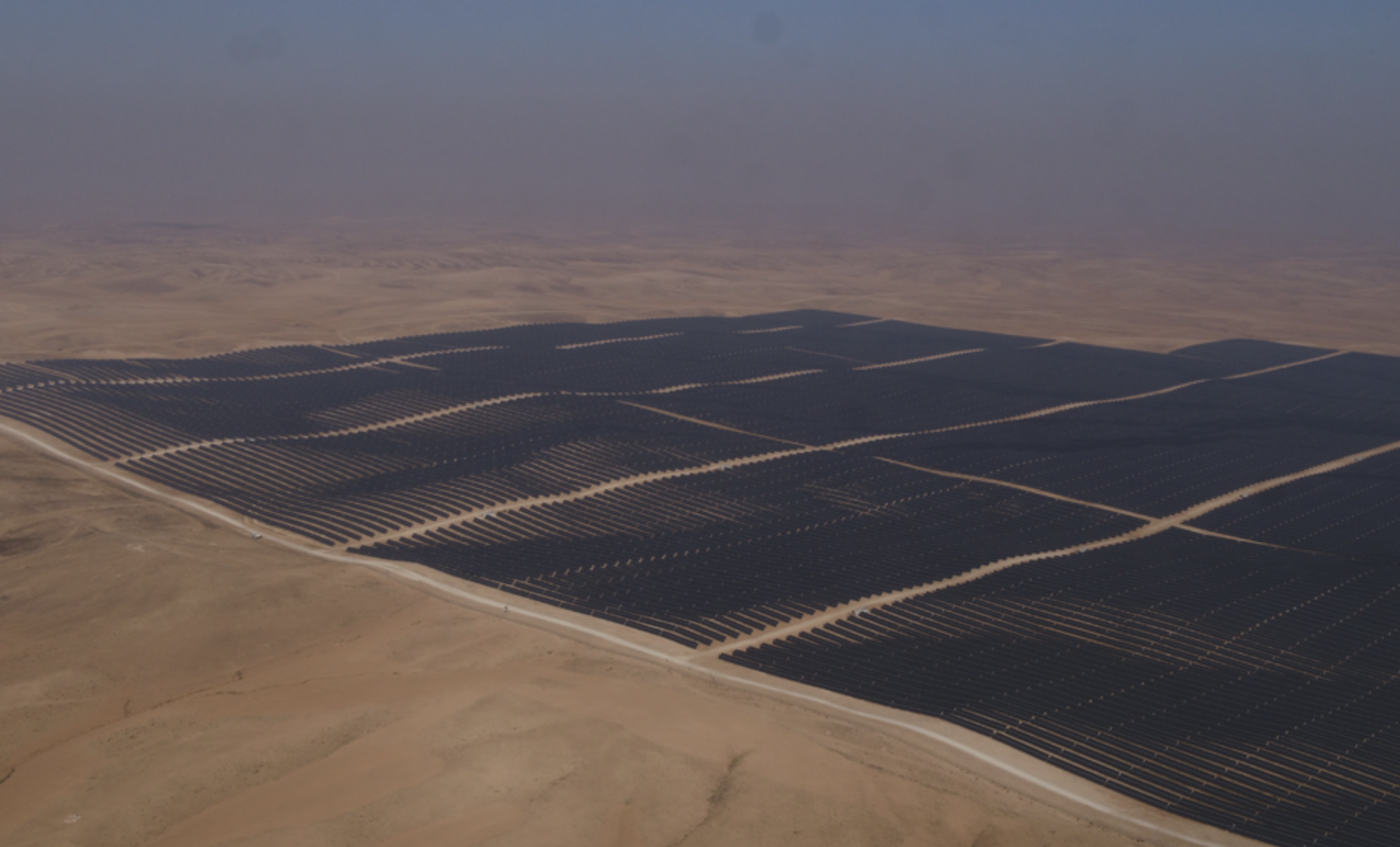
This 200 MW solar power plant along with Masdar’s 117 MW Tafila windfarm in Jordan will help Jordan reach its goal of producing 15 percent of its domestic electricity needs from renewable sources. While Jordan gets plenty of sun and has almost endless desert terrain, wind farms are a problem. One of the largest bird migrations is shared with Israel, Syria and Lebanon as millions of birds migrate from Africa to Europe and then back again every year. Israel was also keen on developing wind farms, but environmentalists have shut most ideas in that direction down.