
If you’re boarding a plane dreaming about joining the mile-high club, go ahead, but first, maybe click here and read this (is sex on an airplane legal?). In some countries and airlines in the Middle East you can get arrested.
In a real emergency, romance takes a back seat to physics, panic, and how fast 150 people can squeeze through a narrow tube. The Federal Aviation Administration says every aircraft must be evacuated within 90 seconds. That’s the gold standard. But new research suggests that in the real world, especially as we age, that number might be more aspirational than achievable.
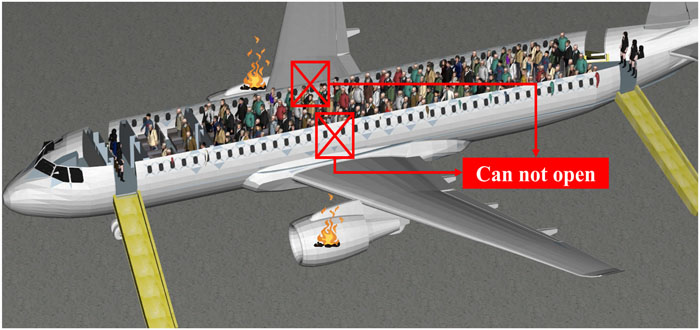
Researchers looked at what happens when things go very wrong: a dual-engine fire on an Airbus A320, one of the most common planes in the sky. Rare? Yes. Ask Captain Sullenberger.
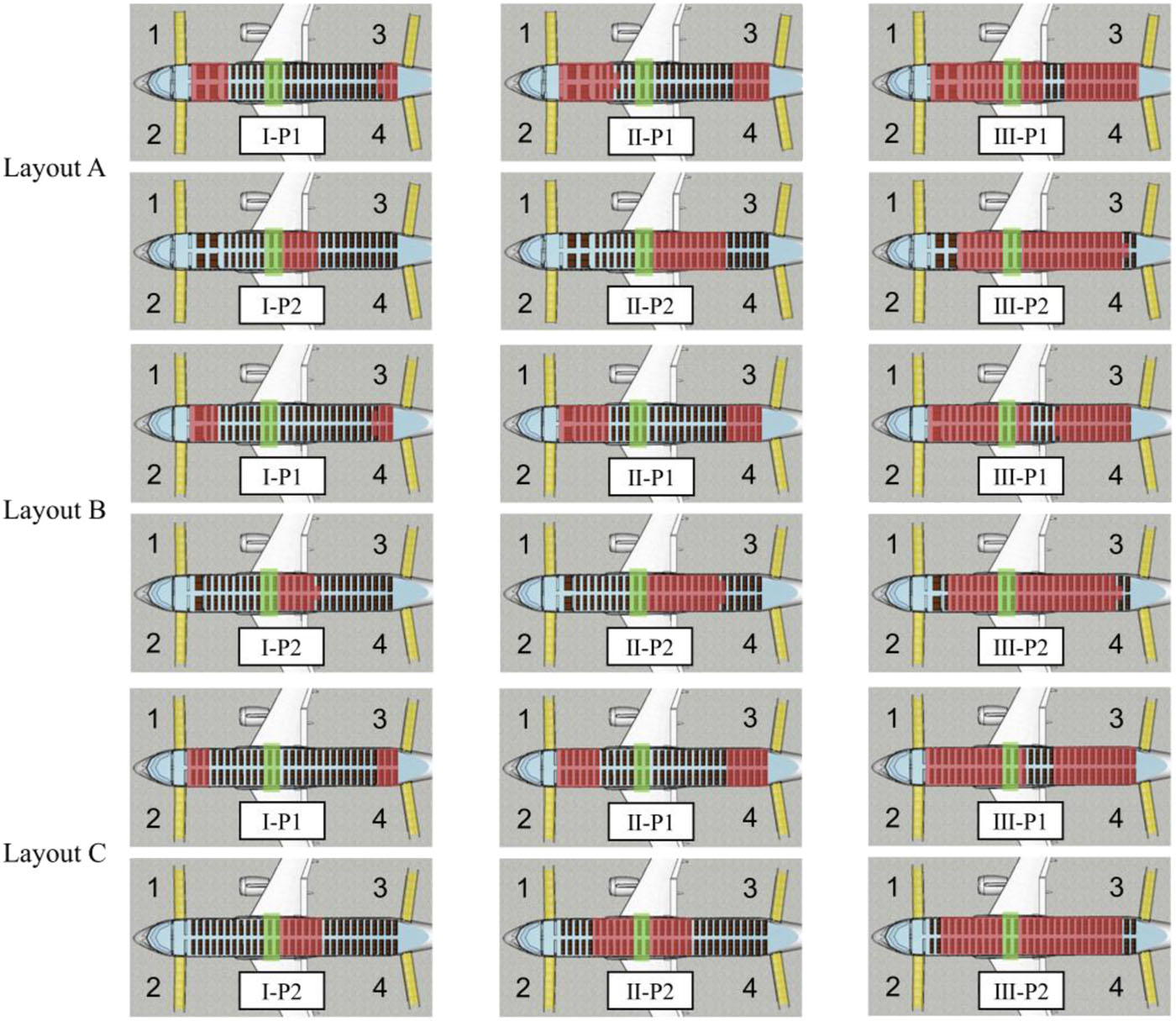
Using simulation software (the same kind used to design safety systems), a team ran 27 different evacuation scenarios. They tested different cabin layouts, different passenger mixes, and crucially different distributions of older passengers.
What they found is quietly unsettling. Even in the best-case scenario, a relatively light cabin with 152 passengers and older travelers evenly spaced, evacuation took 141 seconds. That’s over 50% longer than the FAA requirement.
“While a dual-engine fire scenario is statistically rare, it falls under the broader category of dual-engine failures and critical emergencies in aviation. History has shown that dual-engine failures and emergencies, such as the famous ‘Miracle on the Hudson’ involving Captain Sullenberger, can happen and lead to severe consequences,” says study head Chenyang (Luca) Zhang. “Our study focuses on these low-probability but high-impact events to ensure the highest safety standards.”
As we age, reaction times slow. Decision-making can lag under stress. Physical movement, opening seatbelts, standing, moving quickly – all of this becomes harder. And in an emergencies on board airplanes every second matters because jet-fuel is highly combustable.
It’s not just older passengers. More people are traveling with children, infants, emotional support dogs and all this adds complexity to how people move (or don’t move) in a crisis.
The takeaway is design.
Airlines might need to rethink how they seat passengers. Not for comfort or status, but for survival. Smarter distribution, better briefings, maybe even personalized safety protocols.
According to the computer models they ran based on average times it takes women and men on varying ages to get out of the plane, the shortest total evacuation time was observed in scenario A-I-P1 (top left), which corresponds to Layout A, with 20% elderly passengers, and elderly passengers evenly distributed near the exits.
This scenario required 141.0 s to evacuate all occupants. In contrast, they write, the longest evacuation time occurred in scenario C-III-P1, which involved Layout C, 80% elderly passengers, and the same near-exit elderly distribution pattern.
This scenario resulted in a total evacuation time of 218.5 s.
Because the future of flying isn’t just about greener fuels or quieter engines. Or upgrading you and your kids to more legroom near the emergency exit. It’s about whether we can all get out when it matters most.

And save the mile-high ambitions for when the seatbelt sign is safely off. If you have come here to know if sex on a plane is legal or not, the short answer is, it depends.