
In this Ozempic age, a person may diet themselves down unattractive gauntness. Hip dips, bony shoulders, withered hands; not to mention drooping breasts and flat buttocks: a sad list of body parts needing plumping up to look good again.
“Personal fat banking” is a solution. A person set on losing a lot of weight can have their own fat harvested ahead of time via liposuction and later reinjected into any part of the body that needs a smooth contour. Expensive, but it can be done. Read here about plastic surgery’s environnmental impact.
But what happens when there’s no personal fat left to harvest?
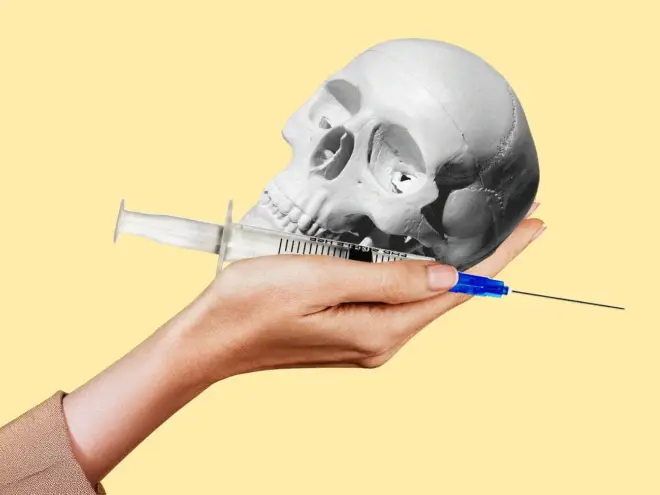
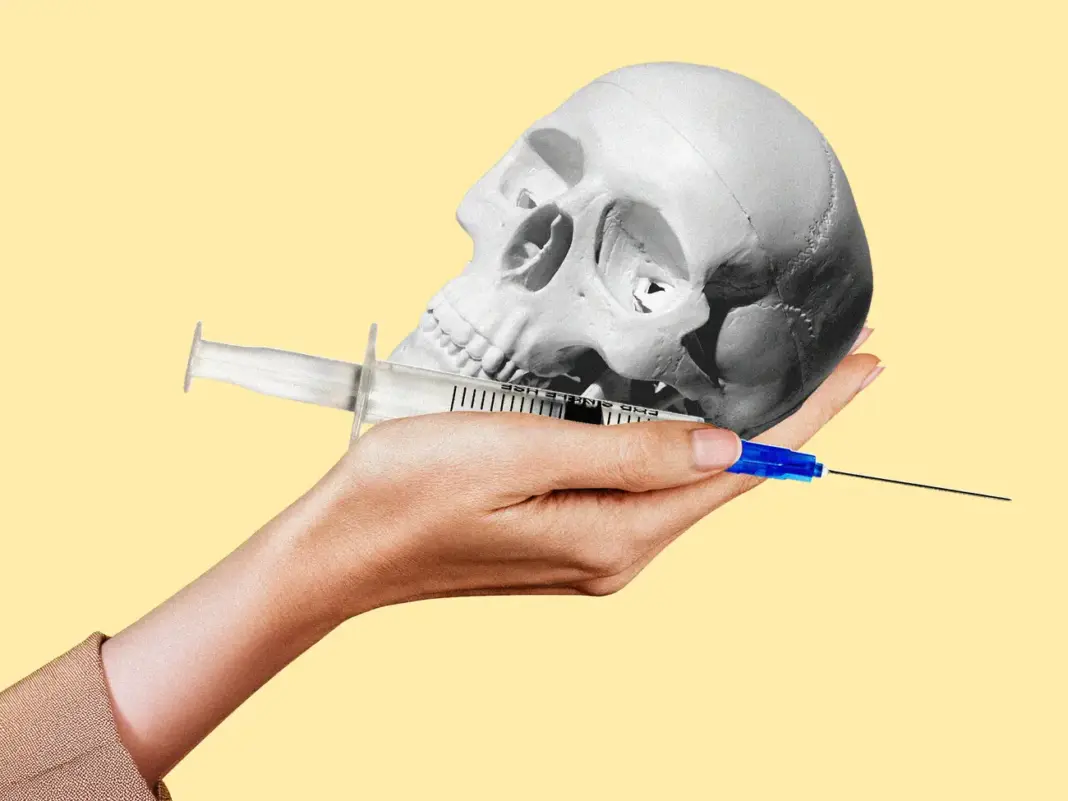
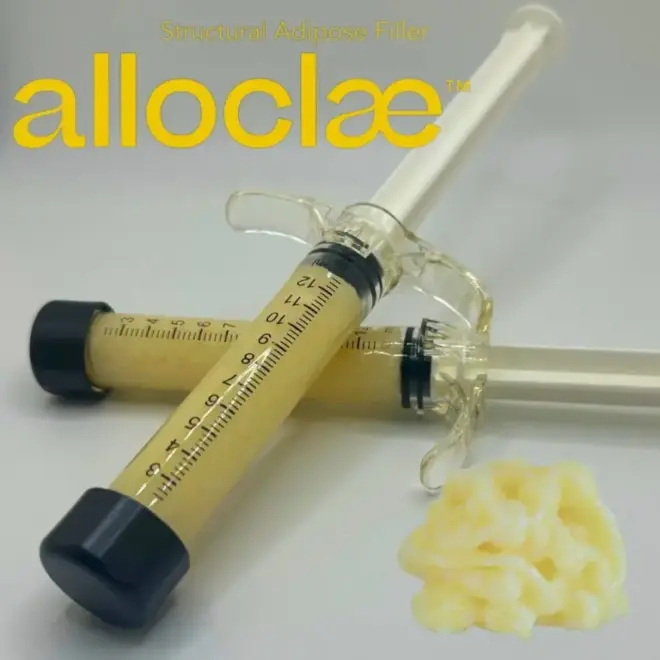
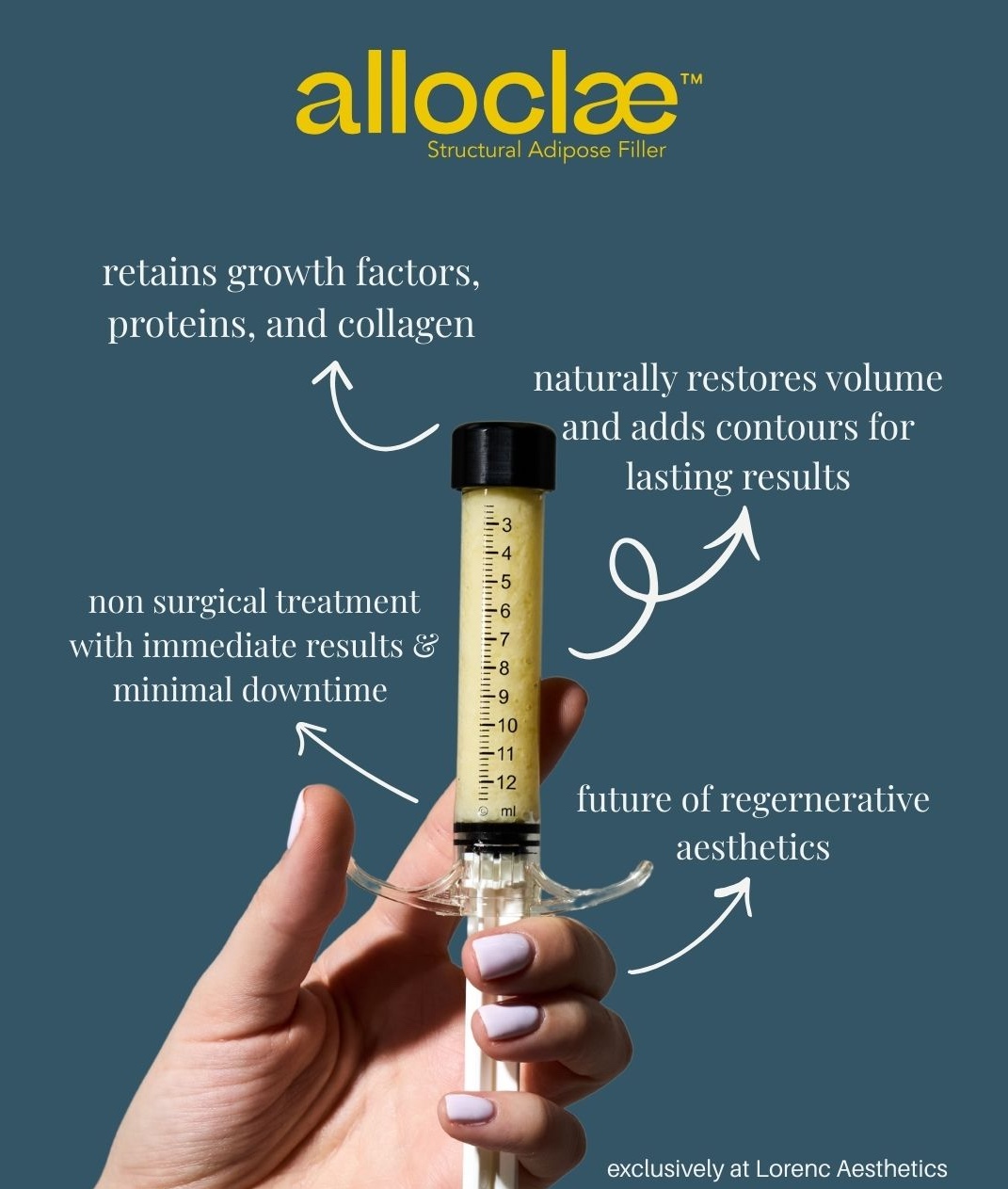
Well, turn to fat harvested from dead people instead. Cadaver fat returns the bounce to the breasts just as efficiently as your own fat. As much as five kilos of fat may be harvested from a corpse. Certified agencies use male and female cadavers from 18-71 years old. The commercial name for processed human fat is Alloclae.
Cosmetic surgeons call it “regenerative medicine. ” Their websites may refer to “donated tissue,” if they mention the fat’s origins at all. To squeamish patients, they soothingly explain that AlloClae is part of a “biologic revolution.” It encourages the patient’s own cells to migrate into the donor matrix, rebuilding tissue.
That sounds so much more scientific, even sort of natural, doesn’t it? It sort of takes the uncomfortable dissonance away, unless you remember that the fat injected into your living body came from a dead person who never consented to its commercial use.
There is no proof that any donor, while living, gave informed consent for companies to make money off their remains; the remains they nobly donated to research and science, not for someone to fill out their bikini.
In fact, it’s not entirely clear if family members who agreed to donate their dear departed’s body are aware that someone may exploit it for sale. The original donors or their families typically do not profit.
Who’s making money from human fat in 2026?

The first parties are companies are known as “body brokers,” officially called non-transplant tissue banks. They acquire, dissect, and sell human bodies and body parts for medical research and education. They are intermediaries between the recently deceased and commercial buyers, such as medical device companies, military researchers, and private surgical training programs.
Tissue banks generate substantial revenue by “parting out” a single body; for instance, a head can fetch roughly $1,000, while a torso might be sold for several thousand dollars. A single corpse can generate up to $10,000 in total sales.
In the United States, no central registry for body brokers exists. Legitimate companies identify themselves as non-transplant tissue banks. If you look it up, you’ll find The American Association of Tissue Banks. They list accredited non-transplant anatomical donation organizations.
Biotech companies buy human fat from body brokers, then process and sterilize it. The finished product, Alloclae, is considered a legal and safe, FDA-compliant human cell and tissue product. It doesn’t technically have to be “approved” or “cleared” by the FDA, per the agency’s web site.
But unlike the organ transplant system, which is strictly regulated by the federal government, this industry operates with significantly less oversight.
Tiger Aesthetics, a subsidiary of the Tiger BioScience company, is the biggest processor of human fat in the USA . They claim that Alloclae, cleansed by detergents, is purified down to DNA residues that may provoke immunogenic response.
And so it may be. The process is still new enough that we don’t have long-term studies on possible secondary effects in patients injected with Alloclae.
The processed human fat is then sold on to specialized clinics and plastic surgeons. Those clinics and surgeons earn big fees for plumping up body parts of the rich and the vain. How much? It depends. Scanning the websites of several clinics, I saw quotes between US$5000 to US$7000 per syringe.
Dr. Sachin M. Shridharani offers the procedure at his Manhattan clinic, Luxurgery. Interviewed by The New York Post, he said that the procedures typically start at $10,000, with costs increase depending on the scope of treatment.
“If you want a full breast augmentation, hip dip and some buttock treatment and you have to use hundreds and hundreds and hundreds of cc’s of AlloClae, well, that’s going to cost tens of thousands of dollars.”
What you get for your money
Traditional fillers come in 1cc syringes, while AlloClae is packaged in much larger 12.5cc and 25cc sizes. This makes it a unique middle ground for “micro-augmentations” – fixing hip dips, “scooped-out” breasts, or post-liposuction dents that are too big for standard fillers but not large enough to justify surgery.
But the effects don’t last forever. While some claim that the “donated” fat is a sort of scaffolding for the patient’s own body to build up tissue, more often the lovely rounded effect wears away and dissolves after 18 months at longest.
Now that can’t be bad for business.
It gets darker.
Brokers frequently target low-income families by offering “free cremation” in exchange for the donation. In effect, the family agrees to sell their relative’s fat to pay for funeral costs. Some funeral directors maintain partnerships with body brokers to provide low-cost burials or cremations for poor families.
Investigations have uncovered instances of families being misled about how bodies would be used, as well as cases of improper handling, such as dismemberment with power tools or the sale of remains to gruesome “exhibits.”
Makes you wonder if any low-income cremations were empty coffins, while the deceased’s body was sold to independent body brokers.
Human Remains, The Newest Cosmetic
Science has given us many medical uses for bits and pieces of the human body. Lives are saved by heart, kidney, liver donations; parts of eyes, of skin, and more. These procedures come from a place of value for human life and dignity.
And maybe you know someone who’s had cosmetic surgery, or had it yourself. Why not; if surgery enhances a person’s appearance, makes them feel more confident and secure, and they can afford it, more power to them.
But would you get yourself injected with Alloclae?