

Remember when everyone was stealing steel in your city to melt it down for the Chinese building market during the Olympics in Beijing? Grates from storm sewers were being lifted, iron gates gone, slides gone missing from Japanese playgrounds. The thing about raw materials is that once they are melted down, you can’t prove the source of the material. Same is true with gold, cucumbers and even forged products that look the same as the real thing. When it comes to steel, and how we produce it, it has a massive carbon problem. What’s happening in Japan right now could change how we think about heavy industry and climate action.
Related: All about green mining
The steel sector is wrestling with an existential question—how do you prove that the product being smelted is actually “green steel”—steel produced with renewable energy and which doesn’t harm people and planet? And more importantly, how do you make sure that environmental value doesn’t get lost, duplicated, or mysteriously multiplied as steel moves through processors, distributors, and manufacturers through endless countries back and forth? You can’t put a barcode on raw material that gets changed but you can barcode the process and that’s what Fujitsu is doing.
It seems transformative but the technology has been around for 10 years. Enter Fujitsu—before your eyes glaze over, this has nothing to do with Bitcoin or crypto speculation. Think of it more like a digital receipt system that nobody can fake.
Starting in December 2025, Fujitsu launched a pilot project—backed by Japan’s Ministry of Economy, Trade and Industry—to trace and track green steel certificates through the supply chain using blockchain. Fujitsu is a technology company that makes computers, servers, IT systems, and digital solutions for businesses—they don’t manufacture steel themselves but provide the digital infrastructure that helps industries track and verify their processes. The pilot runs through February 2026 and involves actual steel businesses testing whether this tracking system works in real-world conditions.
Here’s the problem they’re solving: Japan’s steel industry has developed methods to produce lower-emission steel. One approach, called the GX Mass Balance Method, lets companies pool their emission reductions from various green projects and allocate them to specific steel products. Another method, GX Allocation, distributes emission reductions across different products while keeping total emissions constant.
But the problem is that once a green steel certificate gets issued, it needs to travel through an entire supply chain—from the mill to processors to fabricators to whoever’s building the final product like cars, buildings, bridges, home appliances, or beverage cans. At each handoff, there’s a risk the environmental claim gets duplicated, lost, or disputed. One certificate could theoretically be claimed by multiple parties, inflating the actual environmental benefit. We’ve seen this with BioBee strawberries in Israel. What was once an eco label to show pollinated by bees is now believed to be a symbol for organic strawberries—which isn’t true.
They aren’t organic. Suppliers are printing their own stickers and it’s a forgery that everyone goes along with. It happens in the US too—Kohl’s and Walmart both settled with the FTC in 2022 for $2.5 million and $3 million respectively after falsely advertising rayon products as “eco-friendly bamboo fiber.” McDonald’s also introduced “recyclable” paper straws in 2019 that turned out to be non-recyclable.
What was the Japanese Kobe Steel Scandal?
The Kobe Steel scandal of 2017 exposed how Japan’s reputation for quality manufacturing could crumble when data gets falsified. Employees deliberately falsified strength and durability data on over 600 products shipped to clients, with data manipulation occurring at 23 domestic and overseas plants involving more than 40 employees—a practice that had been endemic since the 1970s according to Wikipedia.
At least 20,000 tons of aluminum and copper products with fabricated inspection data were shipped to around 200 companies =including Toyota, Boeing, and Japan’s bullet train manufacturers. The problem wasn’t poor quality steel, it was lying about the specifications. Products that didn’t meet customer standards were shipped anyway with fake certificates claiming they did. This is exactly why blockchain tracking matters: without a tamper-proof record of what’s actually in your supply chain, you’re just trusting someone’s word.
Fujitsu’s blockchain platform creates a permanent, tamper-proof record of each green steel certificate as it moves downstream. The technology ensures traceability while maintaining confidentiality—companies can verify the environmental value without exposing sensitive business information about who’s buying what from whom. Blockchain allows for complete anonymity while still proving authenticity.
What makes this interesting isn’t just the technology. It’s the recognition that producing green steel is only half the battle. The other half is building trust in those environmental claims across complex, global supply chains. Without that trust and verification, green steel becomes just another marketing claim that buyers and regulators can’t verify.
The steel industry produces roughly 7 to 9% of global CO2 emissions, so decarbonizing it matters enormously. But green steel typically costs more to produce, which means manufacturers need assurance they’re paying for something real. End users—say, a car company promising carbon-neutral vehicles—need proof that the steel in their products actually has the reduced emissions they’re claiming. Otherwise, they are just suckers with a feel-good label that means nothing.
Fujitsu is positioning this platform, which they call the Sustainable Value Accelerator, as potentially expandable beyond steel into other industries facing similar verification challenges. The company employs 113,000 people and reported revenues of 3.6 trillion yen for fiscal year 2025, so they’ve got the resources to push this forward. While products in the 60s from Japan were cheap and lousy, that label has moved to China. Everyone trusts the quality of Japan today like they trust Switzerland. We can trust they will make a system that will be fair and honest and reliable.
Except, not that long ago in 2007, Japan suffered a steel scandal. Top Japanese automakers had to assess the safety of vehicles containing products from Kobe Steel, which has admitted falsifying quality data. Toyota, Nissan, Honda, Mitsubishi Motor, Subaru and Mazda joined aviation firms and defense contractors Mitsubishi Heavy Industries, Kawasaki Heavy Industries and IHI that have used the steelmaker’s products.
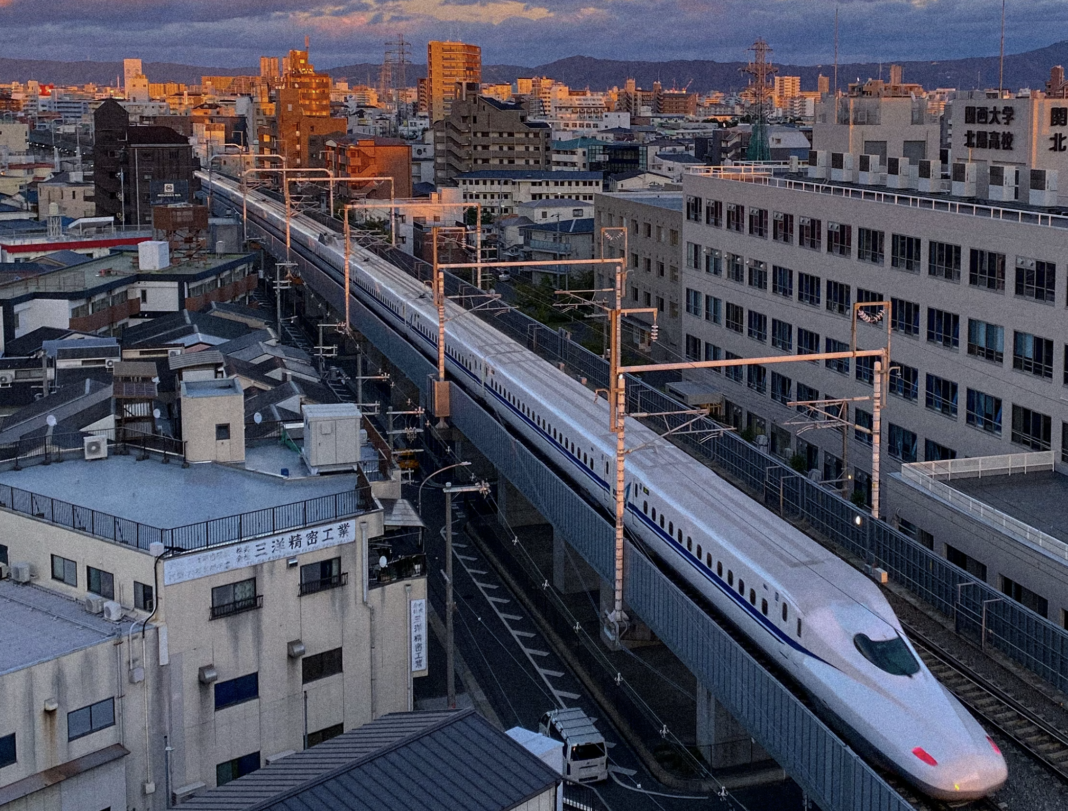
Japan’s famous “Shinkansen” bullet trains also used Kobe Steel’s aluminum, as did high-speed trains in Britain, according to engineering firm Hitachi. “Products used (for both Japanese and British trains) met safety standards. But they did not meet the specifications that were agreed between us and Kobe Steel,” a Hitachi spokesman told the media.
Like what Fujitsu is doing? Do you think this is the right way forward? To invest in Fujitsu, you can purchase its stock (shares) through an international or online stockbroker. Fujitsu Limited is primarily listed on the Tokyo Stock Exchange (TSE) under the ticker code 6702. It also trades on the over-the-counter (OTC) markets in the US under the ticker FJTSY. Green Prophet has no affiliation with the company.