
UNESCO’s virtual museum of stolen cultural objects

unesco, virtual museum, stolen cultural objects, missing artifacts, looted heritage, cultural restitution, provenance research, digital exhibit, online museum, interactive gallery, diebédo francis kéré, kéré architecture, african heritage, global south artifacts, colonial era theft, repatriation of cultural property, cultural history, heritage protection, digital archive, 3d heritage imaging, global museum ethics
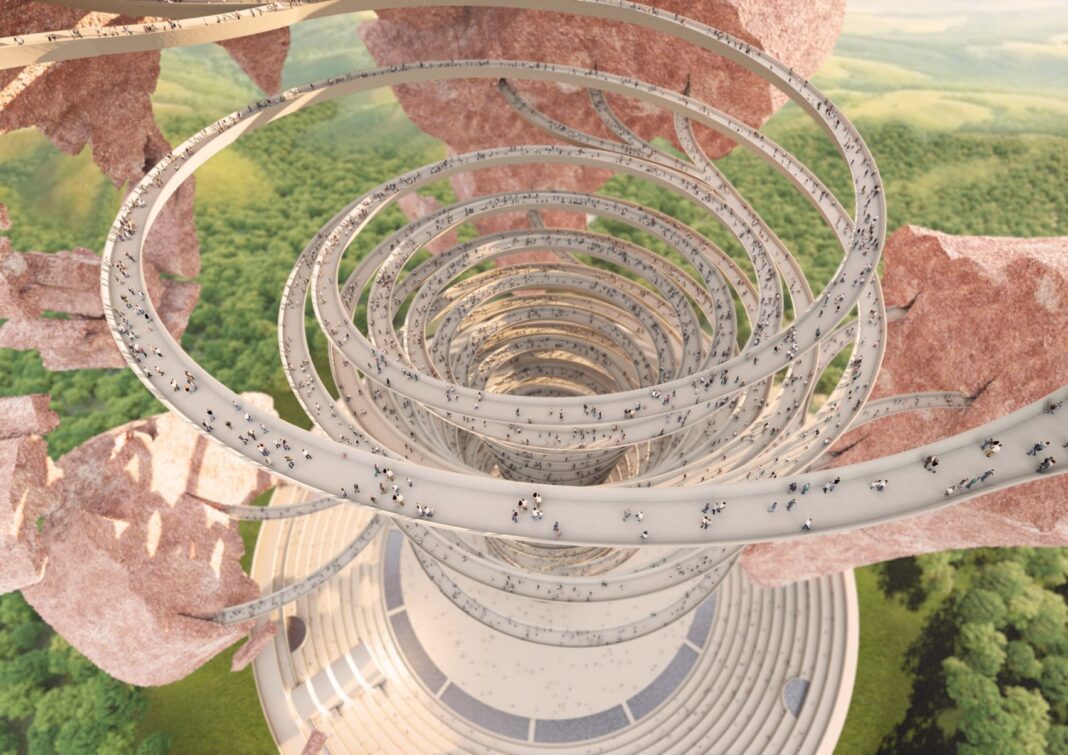
Diébédo Francis Kéré has designed a virtual museum with a spiralling gallery for UNESCO

UNESCO has launched a new kind of museum — one with no queues, no walls, and no climate-controlled vaults humming behind locked doors. Instead, the Virtual Museum of Stolen Cultural Objects, designed by Burkinabè Pritzker Prize–winning architect Diébédo Francis Kéré, lives entirely online. It promises to showcase some 600 missing or stolen artefacts from across the world, using 3D scans, immersive environments, and narrative storytelling to return visibility to heritage that vanished long before many of us were born.

unesco, virtual museum, stolen cultural objects, missing artifacts, looted heritage, cultural restitution, provenance research, digital exhibit, online museum, interactive gallery, diebédo francis kéré, kéré architecture, african heritage, global south artifacts, colonial era theft, repatriation of cultural property, cultural history, heritage protection, digital archive, 3d heritage imaging, global museum ethics

The headlines focus on digital innovation. But beneath the optimism lies something deeper: a global reckoning with the cultural damage of the last two centuries — when objects were taken during war, colonization, forced excavations, “private collecting,” and the grey economies of the antiquities trade. UNESCO frames the museum as an educational tool and an act of restitution, albeit a virtual one. The question is whether this new space can be more than a digital confession booth for the global North.

Kéré’s design concept draws on the symbolic roots of the baobab tree, often called the “tree of life.” Its thick trunk, powerful silhouette, and deep roots represent endurance — the idea that even when an object is uprooted, the culture that created it persists. It’s poetic, but also political: a reminder that heritage exists on the land first, not in the institutions that later house it.

unesco, virtual museum, stolen cultural objects, missing artifacts, looted heritage, cultural restitution, provenance research, digital exhibit, online museum, interactive gallery, diebédo francis kéré, kéré architecture, african heritage, global south artifacts, colonial era theft, repatriation of cultural property, cultural history, heritage protection, digital archive, 3d heritage imaging, global museum ethics

Inside the virtual galleries, visitors will find everything from looted manuscripts to sacred sculptures to objects trafficked across borders and into private hands. Each artifact is accompanied by its backstory: where it was created, how it disappeared, what it meant to the community that once held it. Some pieces have known fates; others are still missing, possibly sitting on a shelf in a Dubai flat or a house in Spain. UNESCO wants to make these absences visible — to show the wounds as well as the artifacts.

There’s also a Restitution Room, a space that highlights successful returns. These are the bright spots — cases where countries and institutions cooperated rather than clashed, and where the journey home wasn’t blocked by bureaucracy, politics, or the quiet resistance of museums reluctant to empty their vitrines.

But the virtual museum raises uncomfortable questions. Does digitizing loss risk sanitizing it? Can a VR gallery pressure powerful institutions into returning physical objects? Or will this become one more place where heritage from the Global South is appreciated — but still not actually returned? It also should ask questions about how past “colonizers” actually managed to save world heritage artifacts that would have been lost as regimes like ISIS and the Islamic State take over by force and blow up sites of cultural significance. See our story on ISIS and Palmyra.

UNESCO’s position, a federation of UN countries which also includes the Taliban and other terror states, is that awareness is the first step toward restitution. Or could this just be a way to politicize virtue signaling?

unesco, virtual museum, stolen cultural objects, missing artifacts, looted heritage, cultural restitution, provenance research, digital exhibit, online museum, interactive gallery, diebédo francis kéré, kéré architecture, african heritage, global south artifacts, colonial era theft, repatriation of cultural property, cultural history, heritage protection, digital archive, 3d heritage imaging, global museum ethics

That’s true. But awareness without political will changes little. Restitution remains tangled in law, diplomacy, and the competing narratives of empires that still do not fully acknowledge the harms they engineered.

And yet, something about this project feels necessary. In a world where climate threats, war, and trafficking still endanger cultural heritage, a digital sanctuary is better than none. More importantly, it gives communities a way to reclaim their stories, even if the objects themselves remain in limbo. Also who owns the past? All of humanity? The last ancestors of a tribe or converts to their new religion? Now that the world has gone globalized should individual heritage and ancestry be thrown to the wind?

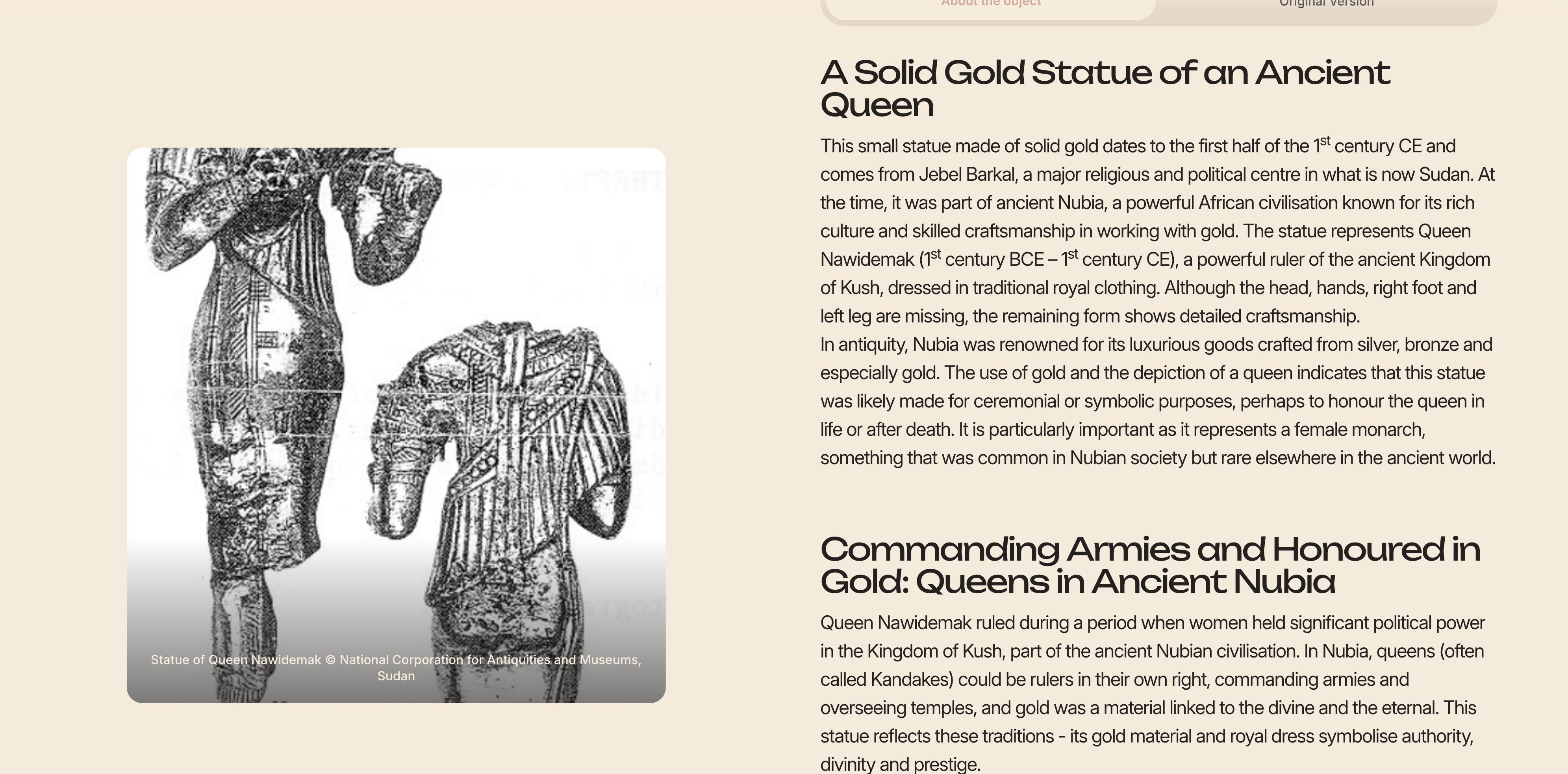
If you jump in and visit the Middle East region, and the Arab world, you will first see an object from Sudan, a statue of a Nubian queen made about 2000 years ago. It does not state who “stole” it and when.
After the rise of Islam in Arabia (7th century), Muslim Arab armies reached Nubia (northern Sudan).
Nubian queen made from gold, 10cm in height. Was it stolen or just melted down for the price of gold by conquerers at the time?

Let the conversations begin.

Visit the Museum of Stolen Cultural Objects

Karin Kloosterman
Karin Kloostermanhttp://www.greenprophet.com
Karin Kloosterman is an award-winning journalist, innovation strategist, and founder of Green Prophet, one of the Middle East’s pioneering sustainability platforms. She has ranked in the Top 10 of Verizon innovation competitions, participated in NASA-linked challenges, and spoken worldwide on climate, food security, and future resilience. With an IoT technology patent, features in Canada’s National Post, and leadership inside teams building next-generation agricultural and planetary systems — including Mars-farming concepts — Karin operates at the intersection of storytelling, science, and systems change. She doesn’t report on the future – she helps design it. Reach out directly to [email protected]

LEAVE A REPLY

Please enter your comment!
Please enter your name here

TRENDING

Astro uses AI to help procure land for renewable energy

For oil-rich, environmentally vigilant Gulf states, Astro isn’t just another startup story. It is a blueprint for accelerating an energy transition that is now existential, not optional.

The Science Behind How Elite Marathon Runners Train

Discover the science behind elite marathon training. Explore techniques, nutrition, and mental strategies that propel top runners to success.

Earth building with Dead Sea salt bricks

Researchers develop a brick made largely from recycled Dead Sea salt—offering a potential alternative to carbon-intensive cement.

The Christ’s thorn (sidr tree) is also a well-known folk medicine

Christ’s thorn jujube (Ziziphus spina-christi) also known as the sidr tree is a real, identifiable tree native to the Middle East, and it appears—directly or indirectly—in Islam, Judaism, and later Christian tradition. The connections between the three faiths are not theological agreements but overlapping uses, names, and symbolic associations rooted in the same landscape.

Farm To Table Israel Connects People To The Land

Farm To Table Israel is transforming the traditional dining experience into a hands-on journey.

Qatar’s climate hypocrisy rides the London Underground

Qatar remains a master of doublethink—burning gas by the megaton while selling “sustainability” to a world desperate for clean air. Wake up from your slumber people.

How Quality of Hire Shapes Modern Recruitment

A 2024 survey by Deloitte found that 76% of talent leaders now consider long-term retention and workforce contribution among their most important hiring success metrics—far surpassing time-to-fill or cost-per-hire. As the expectations for new hires deepen, companies must also confront the inherent challenges in redefining and accurately measuring hiring quality.

8 Team-Building Exercises to Start the Week Off 

Team building to change the world! The best renewable energy companies are ones that function.

Thank you, LinkedIn — and what your Jobs on the Rise report means for sustainable careers

While “green jobs” aren’t always labeled as such, many of the fastest-growing roles are directly enabling the energy transition, climate resilience, and lower-carbon systems: Number one on their list is Artificial Intelligence engineers. But what does that mean? Vibe coding Claude? 

Somali pirates steal oil tankers

The pirates often stage their heists out of Somalia, a lawless country, with a weak central government that is grappling with a violent Islamist insurgency. Using speedboats that swarm the targets, the machine-gun-toting pirates take control of merchant ships and then hold the vessels, crew and cargo for ransom.

Leopoldo Alejandro Betancourt López Turned Ocean Plastic Into Profitable Sunglasses

Few fashion accessories carry the environmental burden of sunglasses. Most frames are constructed from petroleum-based plastics and acrylic polymers that linger in landfills for centuries, shedding microplastics into soil and waterways long after they've been discarded. Leopoldo Alejandro Betancourt López, president of the Spanish eyewear brand Hawkers, saw this problem differently than most industry executives.

Why Dr. Tony Jacob Sees Texas Business Egos as Warning Signs

Everything's bigger in Texas. Except business egos.  Dr. Tony Jacob figured...

Israel and America Sign Renewable Energy Cooperation Deal

Other announcements made at the conference include the Timna Renewable Energy Park, which will be a center for R&D, and the AORA Solar Thermal Module at Kibbutz Samar, the world's first commercial hybrid solar gas-turbine power plant that is already nearing completion. Solel Solar Systems announced it was beginning construction of a 50 MW solar field in Lebrija, Spain, and Brightsource Energy made a pre-conference announcement that it had inked the world's largest solar deal to date with Southern California Edison (SCE).

Related Articles

Popular Categories